Where Does Tea Come From? Plant For The Cultivation And Production Of Natural Tea
Автор: INDUSTRY INSIDER
Загружено: 2023-06-27
Просмотров: 1924
Описание:
Lankaran is a city in Azerbaijan, on the coast of the Caspian Sea.
Lankaran has a hot-summer subtropical climate with cool, wet winters and very warm, humid summers.
Established in December 2010 Astarachay is the owner of the tea gardens and tea processing plant.
The gardens covering about 400 hectares of land are equipped with irrigation, fertilizing, pesticide protection systems, which enables our agronomists to produce high-quality product.
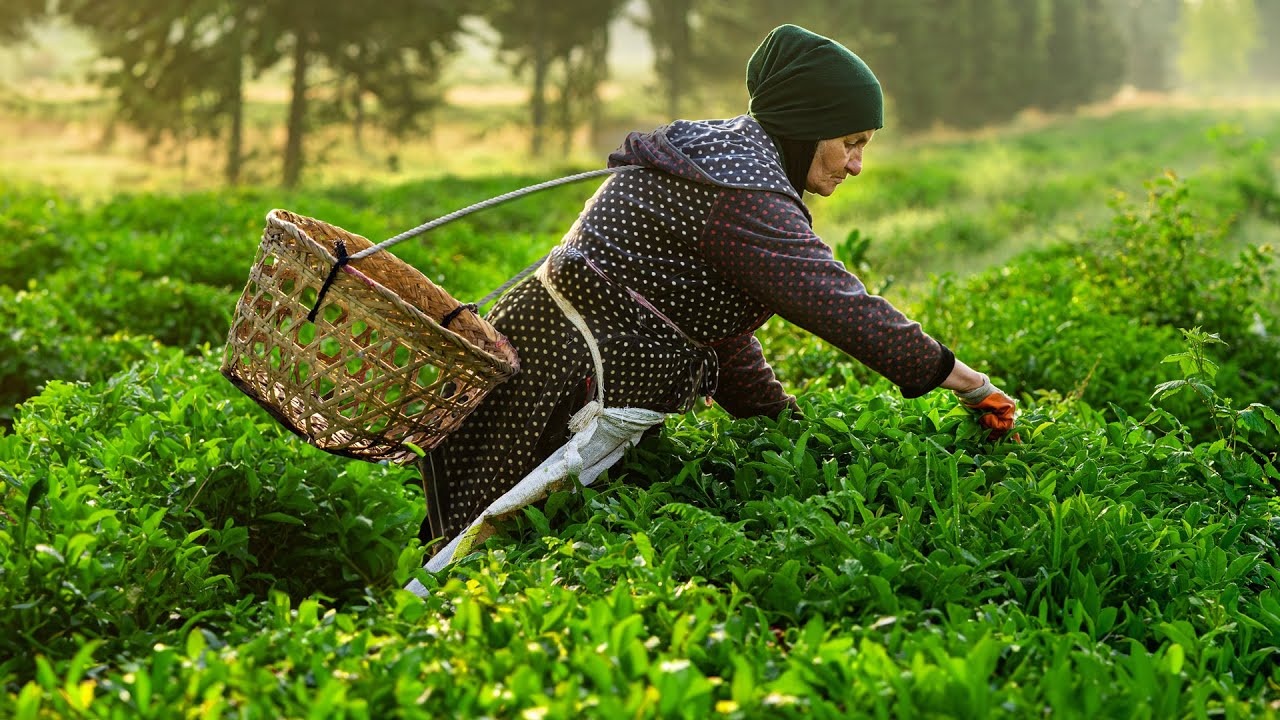
Plucking tea by hand is a traditional way of picking tea leaves. Hand plucking method is not only related to the quality output and economic benefits of tea, but also related to the growth and development of tea trees. The plucking of the soft two leaves and the bud is generally undertaken by well trained women, because of the agility of feminine hands.
Tea is harvested in hot season of the year; May, June, July, August and September.
Tea plants play significant role in restoration of ecological balance of surrounding settlements and has positive impact on wellbeing of the population.
At first stage, the harvest collected from the garden goes through initial assorting and cleaning process.
Then tea leaves taken to the facility for processing.
No sooner it is received at the factory, the leaf is weighed and spread on troughs.
There are 5 main technological processes during Black tea production:
Withering
Withering, is a process, where conditioned air is circulated between the leaves, initially to remove any surface moisture. It takes 10 hours to 14 hours for the changes to take place, and bring the leaf to soft and rubbery condition suitable for the next stage of manufacture.
Rolling
Is the process by which the leaf is twisted and the leaf cell walls ruptured to bring the juices to the surface of the leaf. Thereafter to separate the twisted leaf from the untwisted, and to reduce the heat build up, the rolled leaf is passed over a roll breaker.
Fermentation
Of the tea juices is an essential process in the manufacture of black tea. Fermentation is the oxidization of the enzymes in the juices, which bring out the flavour, strength and the color. As fermentation progresses there is a colour change of the leaf from greenish to coppery brown. The degree of fermentation is judged by the colour and aroma.
Drying
The primary objective of drying is the extraction of moisture and the arresting of fermentation. The fermented leaf contains from 45% to 50% moisture. The leaf is passed through driers, which have circuits of trays with perforation, on which are conveyed the fermented leaf. The drying process takes about 20 to 25 minutes and the initial temperature is about 120 Degrees F(50 Degrees C) and is finished off at a temperature of 200 Degrees F (93 Degrees C) to 220 degrees F (105 Degrees C). The moisture content of the teas when drying is completed is approximately 2% to 3% and the coppery brown fermented tea particles are now back.
Grading
On completion of the grading, teas are stored in airtight bins of boxes. The sifting is carried out on a series of grading and cleaning machines, which have several trays of different mesh sizes, to separate the tea particles to the various grades of tea.
Astarachay Tea Processing Factory is also situated in Lankaran district. The plant was built in 2015.
Annual harvesting capacity is approximately 177 tons. Daily processing capacity is 7 tons. The main purpose of Astarachay is to supply the local market and export high quality products abroad.
Повторяем попытку...
Доступные форматы для скачивания:
Скачать видео
-
Информация по загрузке: