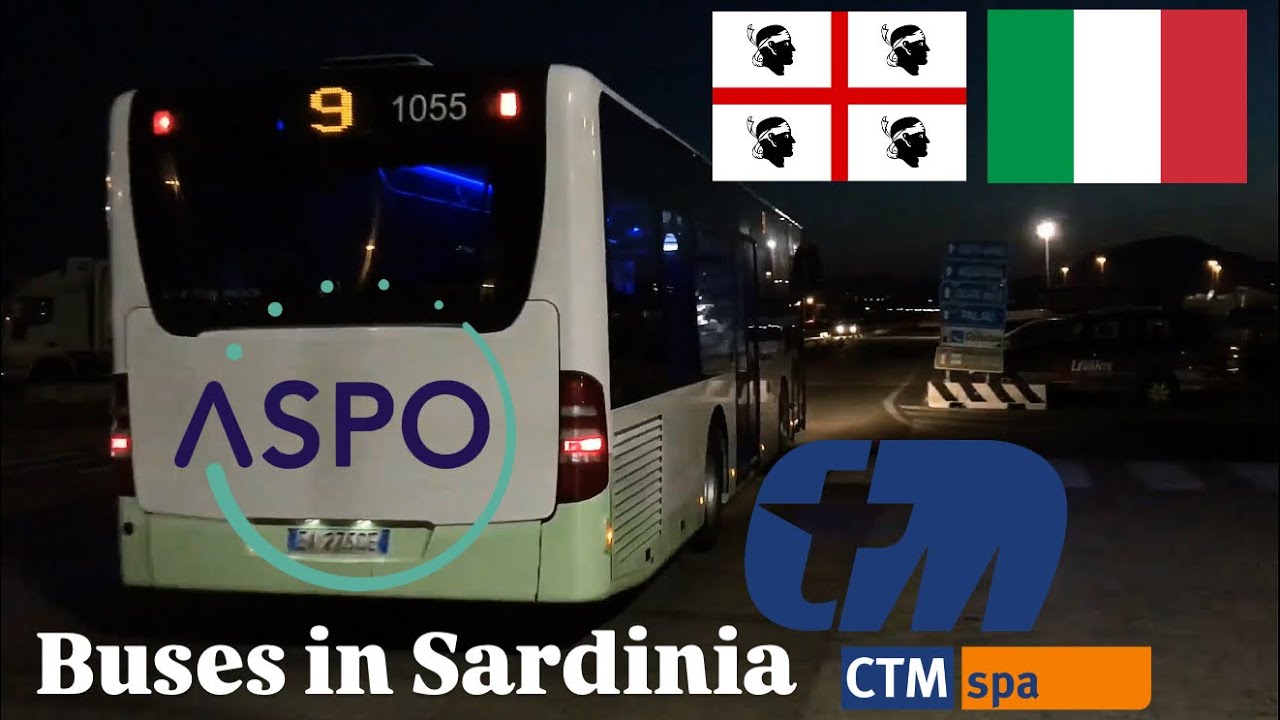
Cagliari - Sardinia
Автор: Damir Medurecan
Загружено: 2023-02-17
Просмотров: 800
Описание:
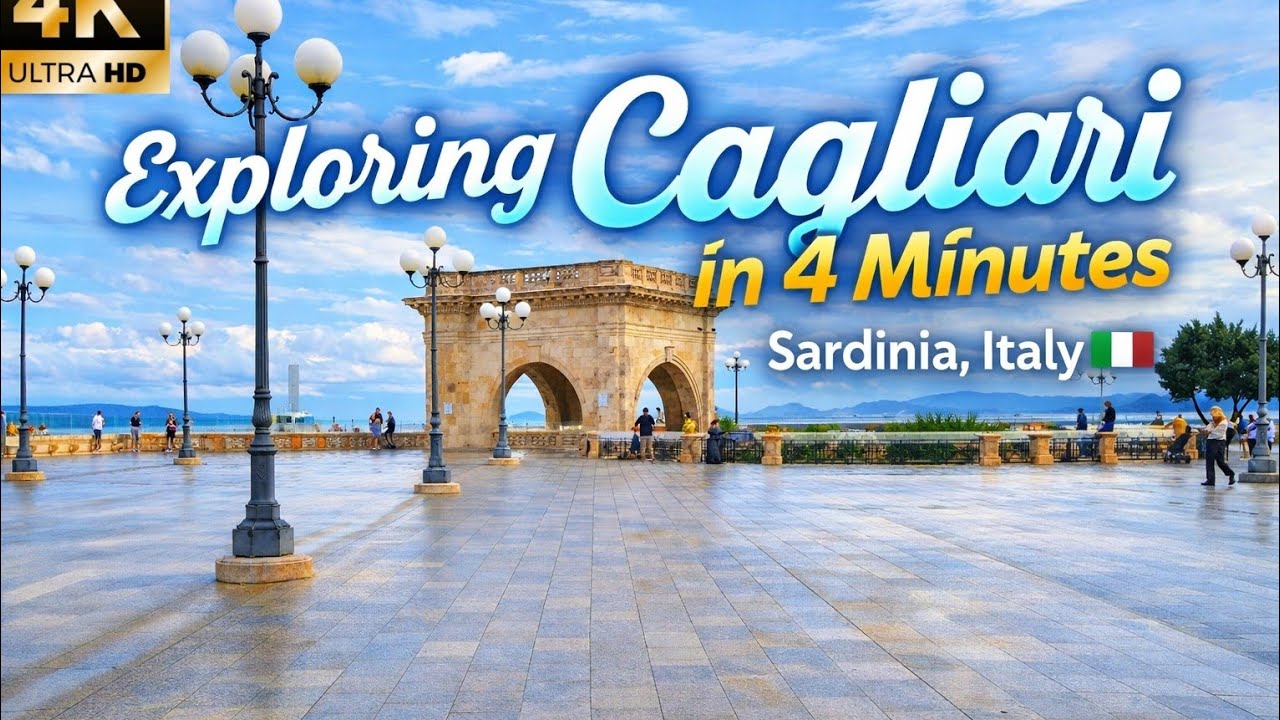
Cagliari is an Italian municipality and the capital of the island of Sardinia, an autonomous region of Italy. Cagliari's Sardinian name Casteddu means castle. It has about 155000 inhabitants, while its metropolitan city (including Cagliari and 16 other nearby municipalities) has about 420000 inhabitants. According to Eurostat, the population of the Functional urban area, the commuting zone of Cagliari, rises to 477000. Cagliari is the 26th largest city in Italy and the largest city on the island of Sardinia.
An ancient city with a long history, Cagliari has seen the rule of several civilisations. Under the buildings of the modern city there is a continuous stratification attesting to human settlement over the course of some five thousand years, from the Neolithic to today. Historical sites include the prehistoric Domus de Janas, very damaged by cave activity, a large Carthaginian era necropolis, a Roman era amphitheatre, a Byzantine basilica, three Pisan-era towers and a strong system of fortification that made the town the core of Spanish Habsburg imperial power in the western Mediterranean Sea. Its natural resources have always been its sheltered harbour, the often powerfully fortified hill of Castel di Castro, the modern Casteddu, the salt from its lagoons, and, from the hinterland, wheat from the Campidano plain and silver and other ores from the Iglesiente mines.
Cagliari was the capital of the Kingdom of Sardinia from 1324 to 1848, when Turin became the formal capital of the kingdom (which in 1861 became the Kingdom of Italy). Today the city is a regional cultural, educational, political and artistic centre, known for its diverse Art Nouveau architecture and several monuments. It is also Sardinia's economic and industrial hub, having one of the biggest ports in the Mediterranean Sea, an international airport.
The city of Cagliari is situated in the south of Sardinia, overlooking the centre of the eponymous gulf, also called Golfo degli Angeli (Bay of Angels) after an ancient legend. The city is spread over and around the hill of the historic district of Castello and nine other limestone hills of the middle-to-late Miocene, unique heights of a little more than 100 metres above sea level on the long plains of Campidano. The plain is actually a Graben formed during the Alpine orogeny of the Cenozoic, which separated Sardinia from the European continent, roughly where the Gulf of Lion is now. The Graben filled in the course of tectonic movements associated with the breakup of the ancient island Paleozoic skeleton.
Considerable remains of the ancient city of Karalis are still visible, including those of the Tuvixeddu necropolis (the largest Punic necropolis still in existence), the Roman amphitheatre, traditionally called Is centu scalas (One hundred steps), and of an aqueduct used to provide generally scarce water. Still visible are also some ancient cisterns of vast extent, the ruins of a small circular temple, and numerous sepulchres on a hill outside the modern town that appear to have formed the necropolis of the ancient city.
The Palaeo-Christian Basilica of San Saturnino, dedicated to a martyr killed under Diocletian's reign, Saturninus of Cagliari, patron saint of the city, was built in the 5th century. Of the original building the dome and the central part remain, to which two arms (one with a nave and two aisles) were added later. A Palaeo-Christian crypt is also under the church of San Lucifero (1660), dedicated to Saint Lucifer, a bishop of the city. The church has a Baroque façade with ancient columns and sculpted parts, some of which came from the nearby necropolis.
About what to see in Cagliari, the pink flamingos are one of the most exciting.
Flamingos are the most famous inhabitants of these ponds and it could not be otherwise. Even if you are not fond of nature you will be charmed by them. They are among the biggest flying birds in the world, they are about 150 cm high and live in groups of thousands of specimen. They are present all year round in Cagliari but their number varies. They move from Molentargius to Santa Gilla and to other wetlands in the Mediterranean and Africa. The ponds in Cagliari are an important habitat for these birds, in some periods as many as 15000 are hosted here.
A Film by Damir Međurečan
Cagliari - Sardinia
Date: 04.02.2023. - 11.02.2023.
Facebook: / damir.medjurecan
Повторяем попытку...
Доступные форматы для скачивания:
Скачать видео
-
Информация по загрузке:






![Cagliari, Sardinia Walking Tour - 4K - with Captions [Prowalk Tours]](https://imager.clipsaver.ru/lMbCJA-svYM/max.jpg)