How to read mri report of lumber spine.report ko kaise dekhe
Автор: Dr Gautam Physiotherapy
Загружено: 2025-10-01
Просмотров: 496
Описание:
How to read mri report of lumber spine.report ko kaise dekhe
Findings:
This is the most crucial part. It describes everything the radiologist saw. It's usually organized from top to bottom (L1-L2, L2-L3, L3-L4, L4-L5, L5-S1) and will cover:
Vertebral Bodies: The bones themselves.
Alignment: Is the spine straight, or are there curves (scoliosis) or slipping (spondylolisthesis)?
Bone Marrow Signal: Normal bone has a certain signal on MRI. Abnormal signals could indicate inflammation, fracture, or other conditions.
Fractures/Lesions: Any breaks in the bone or suspicious growths.
Intervertebral Discs: The cushions between the vertebrae.
Disc Space Height: Normal or narrowed (indicating degeneration).
Disc Signal: Healthy discs are bright on T2 images. Darker signals suggest dehydration/degeneration.
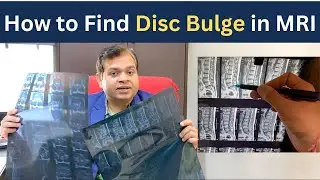
Disc Bulge: A generalized outward protrusion of the disc, usually not pressing significantly on nerves.
Disc Protrusion/Herniation: A more focal displacement of disc material.
Central: Towards the center of the spinal canal.
Paracentral/Subarticular: To the side, often where nerve roots exit.
Foraminal: In the opening where the nerve root exits the spine (foramen).
Extrusion/Sequestration: More severe forms where disc material breaks off.
Annular Tear: A tear in the outer fibrous ring of the disc.
Spinal Canal: The space where the spinal cord and nerve roots run.
Stenosis (Narrowing):
Central Canal Stenosis: Narrowing of the main canal, potentially compressing the spinal cord (though the cord usually ends at L1/L2) or cauda equina (nerve roots below the cord).
Foraminal Stenosis: Narrowing of the nerve root exit openings.
Severity: Mild, moderate, or severe.
Facet Joints: The small joints at the back of the vertebrae.
Arthritis/Degeneration: Wear and tear.
Effusion: Fluid in the joint.
Cysts: Sometimes benign cysts can form here.
Ligaments: Connective tissues supporting the spine.
Ligamentum Flavum Hypertrophy: Thickening of a ligament that can contribute to canal narrowing.
Neural Elements: The nerves.
Thecal Sac: The sac containing the spinal cord and nerve roots. Is it compressed or deformed?
Nerve Root Compression: Is a specific nerve root being pressed upon? This is often correlated with symptoms like sciatica.
Sacroiliac (SI) Joints: Joints connecting the spine to the pelvis (sometimes included).
Paraspinal Soft Tissues: Muscles and other tissues around the spine
#drgautamphysiotherapy #physiotherapy #kneepain
Повторяем попытку...

Доступные форматы для скачивания:
Скачать видео
-
Информация по загрузке: