Inside Denmark’s Super-Efficient S-Tog System
Автор: Railways Explained
Загружено: 2025-05-17
Просмотров: 21094
Описание:
📢NEW📢: Railways Explained e-book now available on: https://payhip.com/b/mTDPX
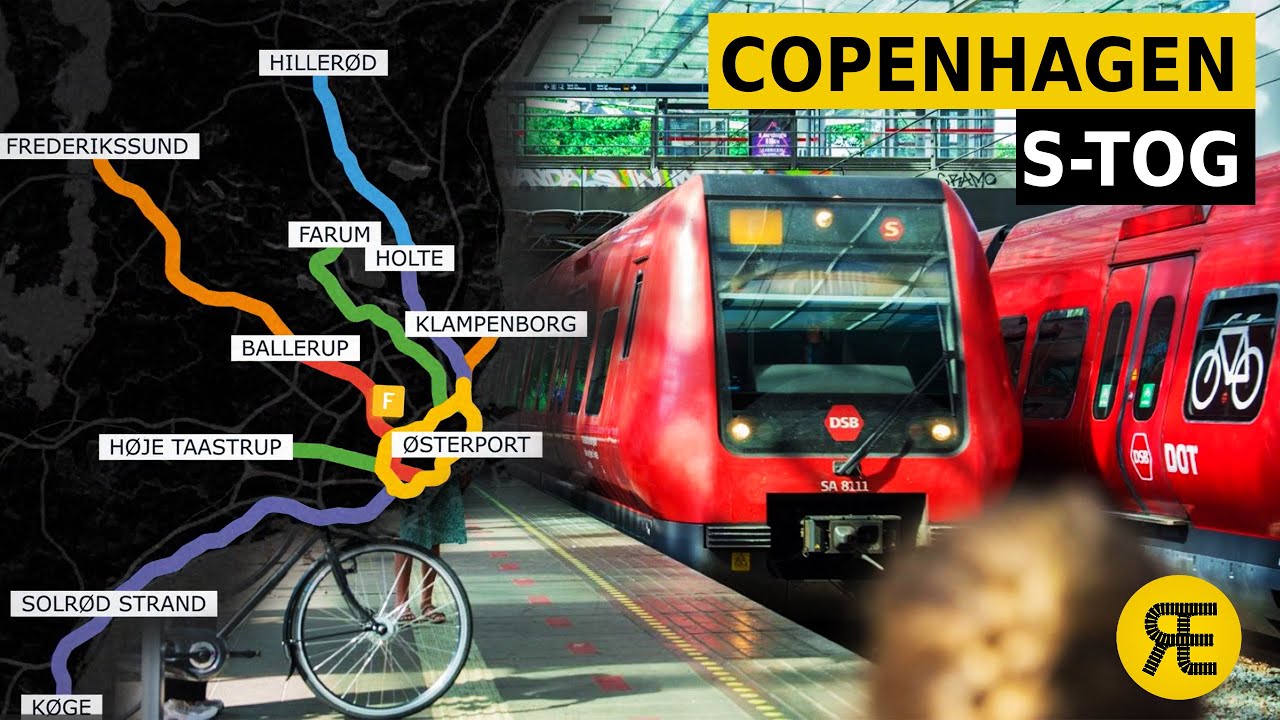
Copenhagen is a city where trains arrive so frequently that you hardly ever need to check the timetable — a city where sleek, red trains glide smoothly between vibrant city streets and peaceful suburbs, creating an urban rail network that operates like a well-oiled machine.
Operating on a fully grade-separated double-tracked system, this system known as S-tog, avoids sharing tracks with freight or long-distance trains. With zero level crossings, the network ensures a high level of safety and significantly reduces delays.
Serving as the backbone of Copenhagen’s extensive public transit system, the S-tog carries approximately 350,000 passengers every day—a number that continues to grow. This increase reflects the expansion of the metropolitan area surrounding Denmark’s capital, which is now home to more than one-fifth of the country’s population. In 2024, the S-tog achieved an impressive punctuality rate of 96 percent, setting a new benchmark for reliability and efficiency.
But how did this network become such an essential part of everyday life in Copenhagen? What makes it so dependable, and why is it often seen as a model for urban rail systems across Europe? This is exactly the topic of this video.
🛤️ What You’ll Learn in This Video:
🔹Copenhagen’s S-tog is one of Europe’s most efficient rail systems, with 96% punctuality in 2024.
🔹No level crossings or freight traffic mean safer, faster, and smoother operations
🔹S-tog has an extensive network: 87 stations over 170 km with trains every 2–10 minutes, serving as the city's transit backbone.
🔹Smart tech upgrades such as CBTC signaling allows tighter train intervals; full automation starts in 2030
🔹Copenhagen has a simple, integrated fares system: one ticket works across trains, buses, metro, and ferries—digital and user-friendly.
🔹Future planning - expansion, new tunnels, airport links, and driverless trains keep the system evolving.
📢 Which topic should we cover next? Let us know in the comments!
📺 Subscribe for more global railway stories, infrastructure insights, and project updates.
Support Us & Get Exclusive Benefits:
👉 Become a member on Patreon for exclusive content, behind-the-scenes access, and more: / railways_explained
👉 Join our YouTube membership to support the channel and get special perks: / @railwaysexplained
👉 Donate via PayPal: PayPal.Me/railwaysexplained
Check out our official merch and show your love for all things railway: https://railways-explained.creator-sp...
📺 Subscribe for more in-depth railway stories and analyses from around the world.
Big thanks to our Patrons:
Walid, Mind K, An Oni Moose, Julian Baumann, Hendrik Hinrichs, Robert P. Walsh, Xosé F. Estrada, Mårten Hammarstrand, Lucas Richter, Korawich Kavee, Alex Zaslavsky, Dale Winke, Ben M, Nathan Walls, Bill, Tim McKeoun, August Bigelow, Brendan McKeon, Linda Vainomae-Hoffmann, Linda Vainomae-Hoffmann, Reinforcedconcrete, Alex McDonald, Martin Pelles, Alice Conalbi, Declan Crowley, Martin Hinge, William Rohe
Follow us on Social Networks:
Facebook: / / railwaysexplained
Instagram: / / railways_explained
Linkedin: / / posts
#denmark #copenhagen #train
Повторяем попытку...
Доступные форматы для скачивания:
Скачать видео
-
Информация по загрузке: