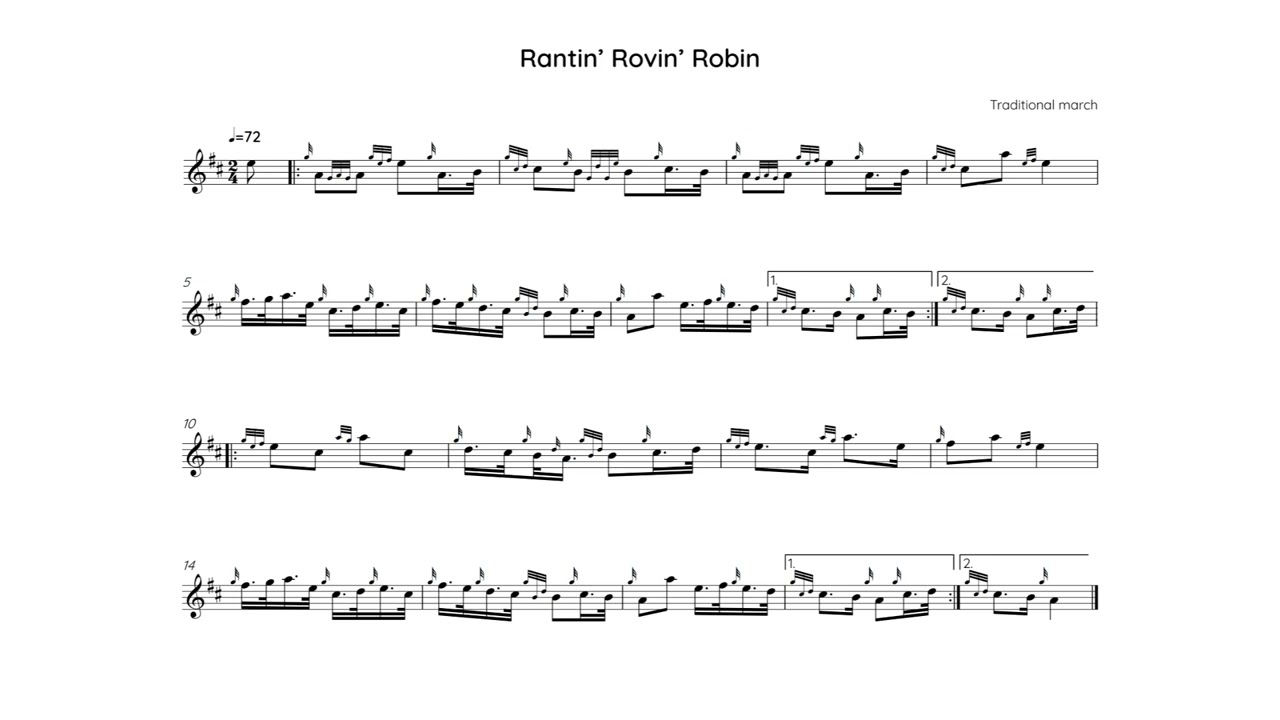
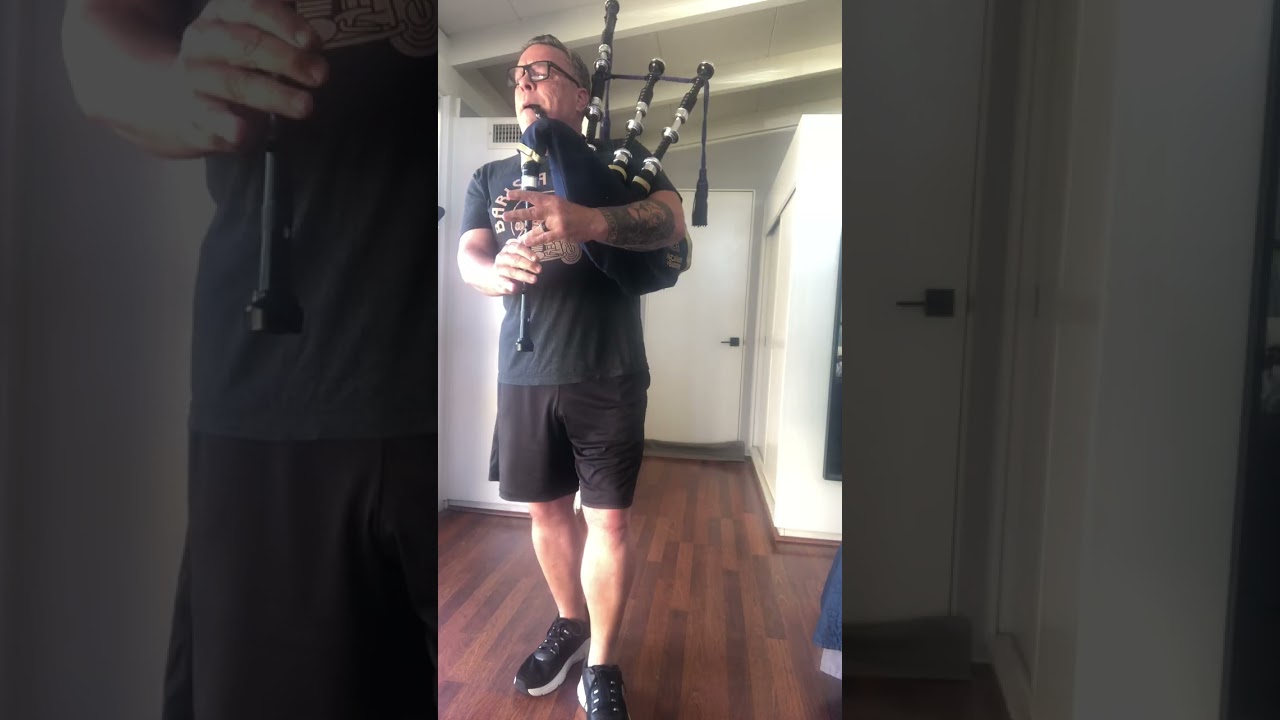
Rantin', Rovin', Robin, high pitch half speed
Автор: Teach Yourself Bagpipes with Lindsay Davidson
Загружено: 2026-02-04
Просмотров: 4
Описание:
https://www.teachyourselfbagpipes.co....
https://www.lindsaydavidson.co.uk
Learning comments
This is a fairly well known Burns song.
1 The birl is crisp and short, taking up the space of a mere 32nd note in total. This is not as difficult to play as it sounds, but it is good to listen carefully to the videos.
2 High G gracenotes between notes are mostly 64th notes, but where the preceding note is a 32nd note (B at the end of bar 1 for example), the triplet solution is used, similar to the interpretation in Highland Laddie.
3 In the doublings (except High A), the note being doubled is repeated one 32nd note after the beat. This is refreshing and crisp, and highly rhythmical.
4 The High A doubling, the A is repeated one 64th note after the beat. Don't measure your thumb action, just strike it off the chanter in the correct place/moment.
5 The two 32nd notes next to each other have an interpretation trick taught by Jimmy Inglis of Polmont - hold on the first of those two notes slightly longer and use that as a platform to give sharpness and cut to the second. Here it is measured as a triplet for the first half of the beat, and the second half is played as written.
6 There may be moments in this tune where you will want to 'corrupt' the given time by introducing tiny pauses, like taking a breath in speaking. One place for example would be bar 11 after the B doubling. Remember that the principle is that playing any instrument is about moving your fingers up and down in a certain order in a certain time; the order is technique and the time is music and when you corrupt the time you make that music personal. Th e purpose of all of this is to give you the technical flexibility to do whatever you want in corrupting time. (hint - it is just about adding tiny pauses here and there, or stretching and shrinking beats in a rubato effect).
These midi files will help you to play along at different speeds, with all the gracenotes in exactly the 'correct' (proportional) rhythm. You need to either count the rhythm in your head, or 'feel' it (or both). Playing along with each file seven times correctly without any mistakes, starting from the normal speed and then the half speed and finally the quarter speed and back again to the normal speed, 'feeling' the rhythm all the way, you will have this tune securely programmed into your fingers.
Using this method groups can also learn to play exactly together, without the need to meet, or vaguely copy a master. A great ensemble plays together by creating the same thing at the same time using the same tricks (feel the 'rhythm'). This is one way to create that result.
Повторяем попытку...

Доступные форматы для скачивания:
Скачать видео
-
Информация по загрузке: