Surface area and volume class 9 full chapter || one shot|| by Harsh mishra
Автор: udaan with Harsh
Загружено: 2025-12-15
Просмотров: 48
Описание:
📐 Surface Area and Volume Explained
Surface Area and Volume are two fundamental measurements used to describe three-dimensional (3D) objects (also called solids) in geometry.
1. Surface Area
The surface area of a 3D object is the total area of all its faces or surfaces. Think of it as the amount of material you would need to cover the entire object.
Concept: It's the sum of the areas of all the two-dimensional surfaces that make up the object's exterior.
Units: Surface area is measured in square units (e.g., cm^2, m^2, in^2).
Types:
Total Surface Area (TSA): The area of all surfaces, including bases.
Curved/Lateral Surface Area (CSA/LSA): The area of only the side faces, excluding the base(s). For example, the lateral surface area of a cube is the area of its four side walls.
Example Formulas:
Total Surface Area of a Cube (with side length a): TSA = 6a^2
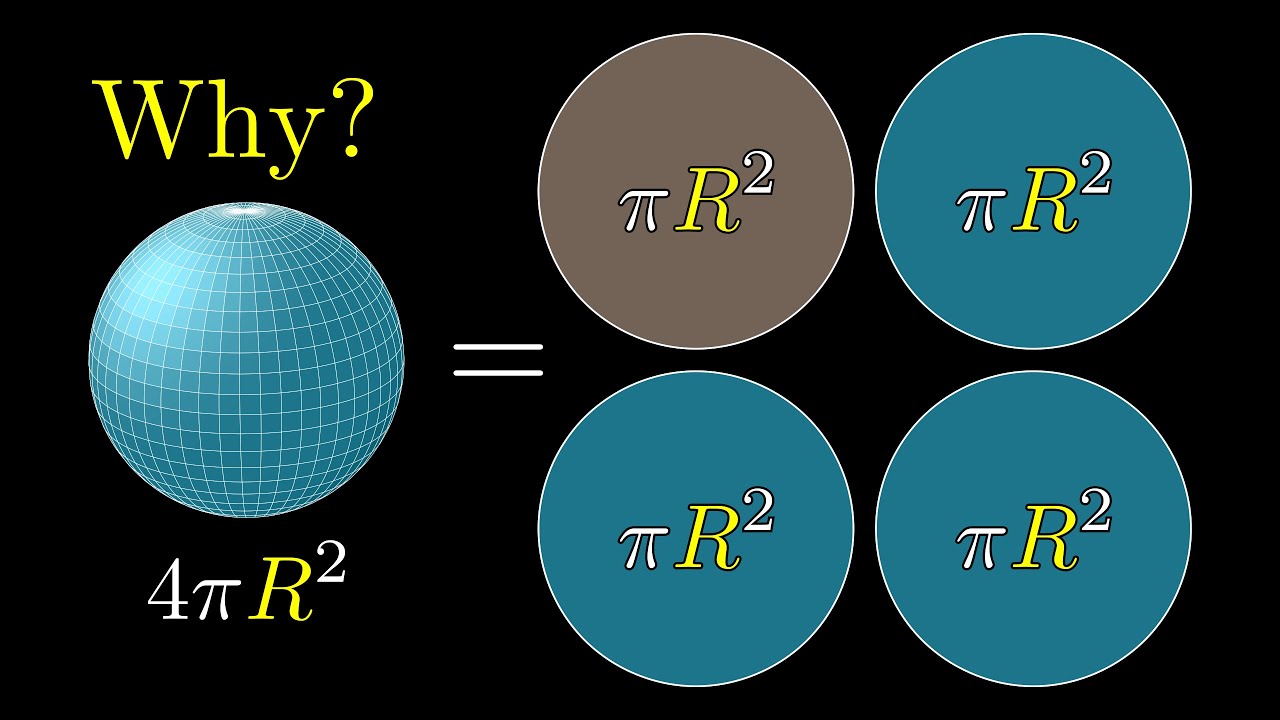
Surface Area of a Sphere (with radius r): SA = 4\pi r^2
2. Volume
The volume of a 3D object is the measure of the amount of space it occupies. Think of it as the object's capacity—how much liquid, air, or material it can hold.
Concept: It's the total space enclosed within the object's boundaries.
Units: Volume is measured in cubic units (e.g., cm^3, m^3, ft^3).
Relationship to 2D: Two-dimensional figures (like squares or circles) do not have volume, only area.
Example Formulas:
Volume of a Cube (with side length a): V = a^3
Volume of a Sphere (with radius r): V = \frac{4}{3}\pi r^3
One shot complete chapter full chapter✅👉💯🌎🌎😎 by Harsh mishra subscribe and like for more 👍😊
Повторяем попытку...

Доступные форматы для скачивания:
Скачать видео
-
Информация по загрузке:













![Самая простая нерешённая задача — гипотеза Коллатца [Veritasium]](https://imager.clipsaver.ru/QgzBDZwanWA/max.jpg)