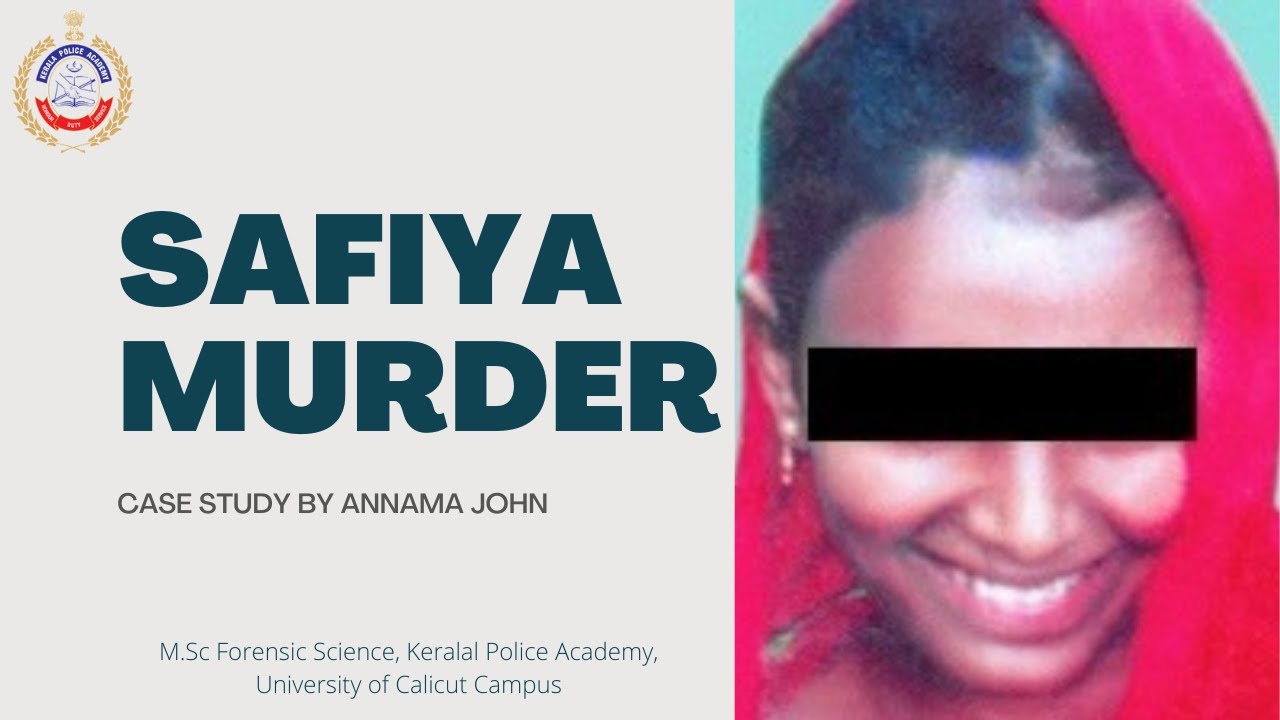
Safia Murder | Case Study | M.Sc Forensic Science | Kerala Police Academy | University of Calicut
Автор: Forensic Science
Загружено: 2022-04-14
Просмотров: 85307
Описание:
"Safia Murder, A murder without eye witnesses" case study by Mrs. Annamma John, Former Assistant Director FSL, a highly professional Forensic Scientist & Eminent Resource Person of Kerala Police Academy with hundreds of successful investigations to her credit.
A murder without eyewitnesses.
Safia was a native of Madikeri, Karnataka. Safia's relatives send her to work as a housemaid for K.C Hamsa, a native of Muliyar, to escape from poverty.
In December 2006, Hamza lodged a complaint with the police stating that Safia was missing from his home in Mastikund.her parents were also informed about this.
A year and a half after the police took up the case, the cause of Safia's disappearance could not be ascertained. The case was handed over to the Crime Branch and the Crime Branch found that Safia had been murdered.
It is through this investigation that the people learn that it was Hamsa who complained that she was missing, killed her and buried her in pieces. He was arrested on 1st july 2008.
Hamza confessed that Safia was killed on December 16, 2006 at her home in Goa. According to Hamsa, Safia's body suffered from boiling injuries when she cooked rice with boiling water and then she died without proper treatment.
Safia was taken to the bathroom and her body was cut up and wrapped in three parts and taken away in a car to be left in the woods. However, he met an acquaintance there and abandoned the project.
Hamsa later chose to bury the body in the reservoir area of the dam near the Mallora Mahadeva Temple. Hamza's confession took the investigation to another level. These were the challenges facing the Crime Branch team. The team had to go through the process of finding the remains of the dead body, proving that it belonged to Safia and finding the cause of death.
In July 2008, a police team traveled to Goa to gather evidence.
According to Hamsa, Safia's body was buried after being excavated to a depth of about 40 feet. Hamza asked his workers to dig a well. However, after burying the body, the pit near the temple was closed saying that there was no need for a well.
The police brought the excavation machine from Maharashtra. The operator remembers when he arrived at the site that the same machine had been working on the site two years earlier. But the operator was someone else then. The exact date and depth of the pit taken was traced using location data. This data from the machine was presented in court as evidence.
The area was muddy due to its proximity to the reservoir of the dam. As we went down, the mud and water kept coming up. It was very difficult to gather evidence in this situation. Hamza's wife Maimuna had given Safia an old sari sewn into a skirt while she was sewing,and it was used to wrap Safiya's body for dumping . Blue fibers similar to the fibers in this sari were found in the car used to transport Safia's body.
The sari was not rotten as it was polyester. But all the other parts of the body were destroyed except the bones and teeth. The examination was mainly done to get the bones. The mud-covered logs were mistaken for bones and were taken away by police, but were removed by placing them in a bucket of water. Because bones never float in water.
Careful examination of the vertebrae in the neck revealed that the head had been amputated before dying. There will be special marks left for cutting while standing, cutting while lying down, cutting alive, and cutting after death.The forensic team could find out that all the cuts on Safia's body occurred before she died (Antemortem). The discovery proved that the Hamsa's statement that the body was mutilated after death was false. Adipocere was found to be caused by the accumulation of fat and calcium in carcasses that have been in the water for a long time. This was evidence that the body had been left in the water.
Techniques such as DNA profiling, photographic superimposition, and forensic odontology helped to prove that bones found belonged to Safiya. Evidence obtained by the forensic team from Hamza's house also favored the prosecution.
The body was mutilated in the bathroom of the house. The bathroom was later washed and cleaned, but the forensic team was able to find traces of blood from the broom used for washing,and also from the crack of the bathroom tiles. DNA tests also revealed that the bloodstains found on the floor mat of the car in which the body was dumped belonged to Safia.
The first accused, Hamsa, was sentenced to death and fined Rs 10 lakh. The High Court later commuted the death sentence to life imprisonment. Co-defendants' wife Maimoona and brother-in-law Abdullah were also sentenced to three years in prison each.
The murder of Safia, a 13 - year - old girl who had no eyewitnesses and could have been confined to a case of missing a man, has been proven entirely scientifically and with the help of circumstantial evidence.
Повторяем попытку...
Доступные форматы для скачивания:
Скачать видео
-
Информация по загрузке: