Is your mirror your master or slave? Lacan's mirror stage vs. Hegel's master-slave dialectic
Автор: Bella's Dilemmas
Загружено: 2026-01-07
Просмотров: 468
Описание:
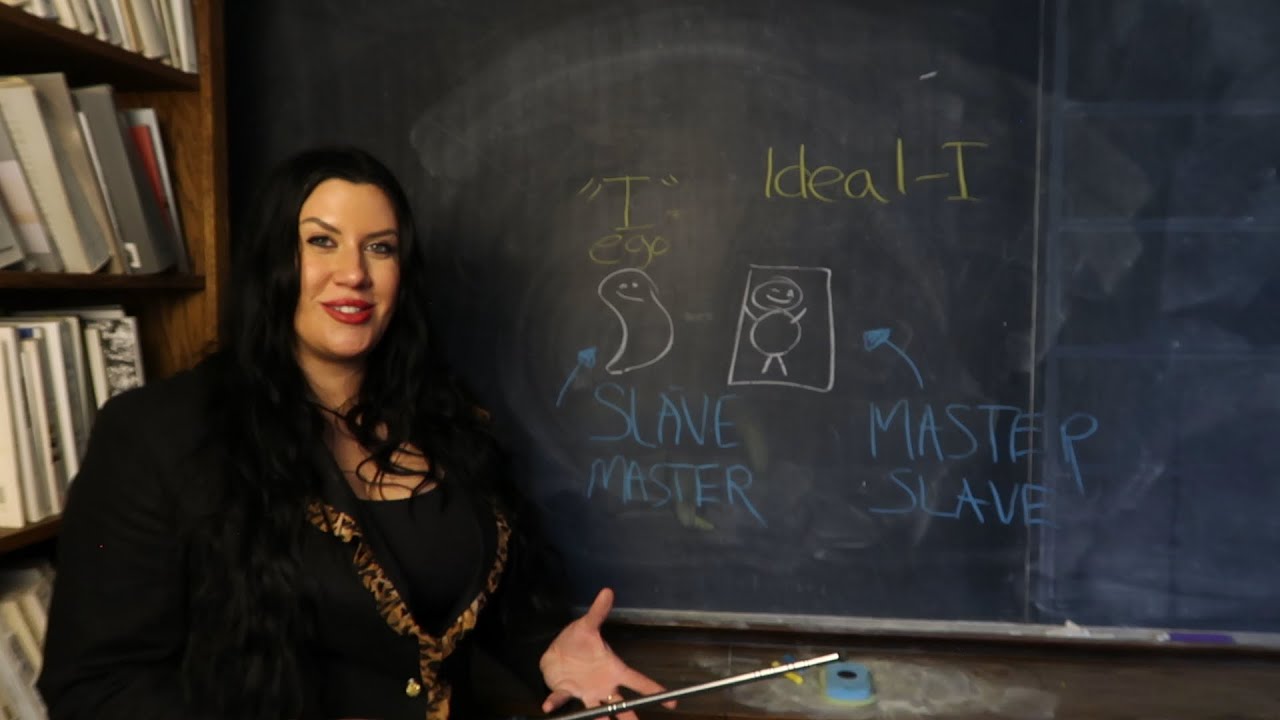
@BellasDilemmas offers a reading combining Hegel's master-slave dialectic (Phenomenology of Spirit)and Jacques Lacan's "I" vs. "Ideal-I" split (Mirror-stage). I have another video just on Lacan. Please forward to about 5:30 if you have already seen that video/are familiar with Lacan's "mirror-stage".
Here is a short summary (written by me):
Lacan’s moves toward analyzing selfhood are in direct contrast with Renee Descartes’ project in the Meditations. Descartes’ moves were active acts of thinking which led to the famous “I think, I am” moment. For Descartes, the “I” was simply founded by virtue of thinking. The Cartesian “I” is not expanded on or concerned with its initial emergence. Lacan seems to realize that thinking alone is not enough to understand our ontological status. Let alone, how and when the “I” was born. In a sense, Lacan’s thoughts on the ego are more comparable to the concept of the master -slave dialect in Hegel’s Phenomenology of Spirt. In the mirror stage, the split and misrecognition between the real “I” versus the misrepresented “I” in the mirror are in a battle where the baby is both the “self” and paradoxically the “other”. The “other” is the master image in the mirror, yet, the baby is a slave to that image and relies on it for its ego to have formed and for it to strived toward. Yet, that image was completely arbitrary and was a false reflection of the real “I”. It is a fiction, it is alien, it is somehow both “you” and nothing like you.
One of Lacan’s concluding moments is powerful:
“But the important point is that this form situates the agency known as the ego, prior to its social determination, in a fictional direction that will forever remain irreducible for any single individual or, rather, that will only asymptotically approach the subject’s becoming, no matter how successful the dialectical syntheses by which he must resolve, as I, his discordance with his own reality.” (pg. 76, Lacan)
The form in reference is that imago, or the fictional representation of the infant in its reflection. The ego is born once the infant realizes that it is not a mere blob, it is a jubilant, glorious image to be proud of. However, the baby can never genuinely be proud of the image because it doesn’t feel authentically it. Instead, it may feel jealous of its own image and strive to genuinely become as robust as the image is. This is the fictional direction that the ego is in pursuit of for a lifetime. An unattainable, Ideal-I.
Please note: other examples of ontological parasites are holes and shadows. This means they require a "real object" to exist in for "it" to exist.
#psychoanalysis #psychology #philosophy #hegel #lacan #ego #phenomenology
Повторяем попытку...
Доступные форматы для скачивания:
Скачать видео
-
Информация по загрузке: