IIFT 2019 DATA INTERPRETATION AND LOGICAL REASONING QUESTIONS WITH ANSWERS IN DETAILS IN ENGLISH.
Автор: SOURAV SIR'S CLASSES
Загружено: 2020-01-30
Просмотров: 81
Описание:
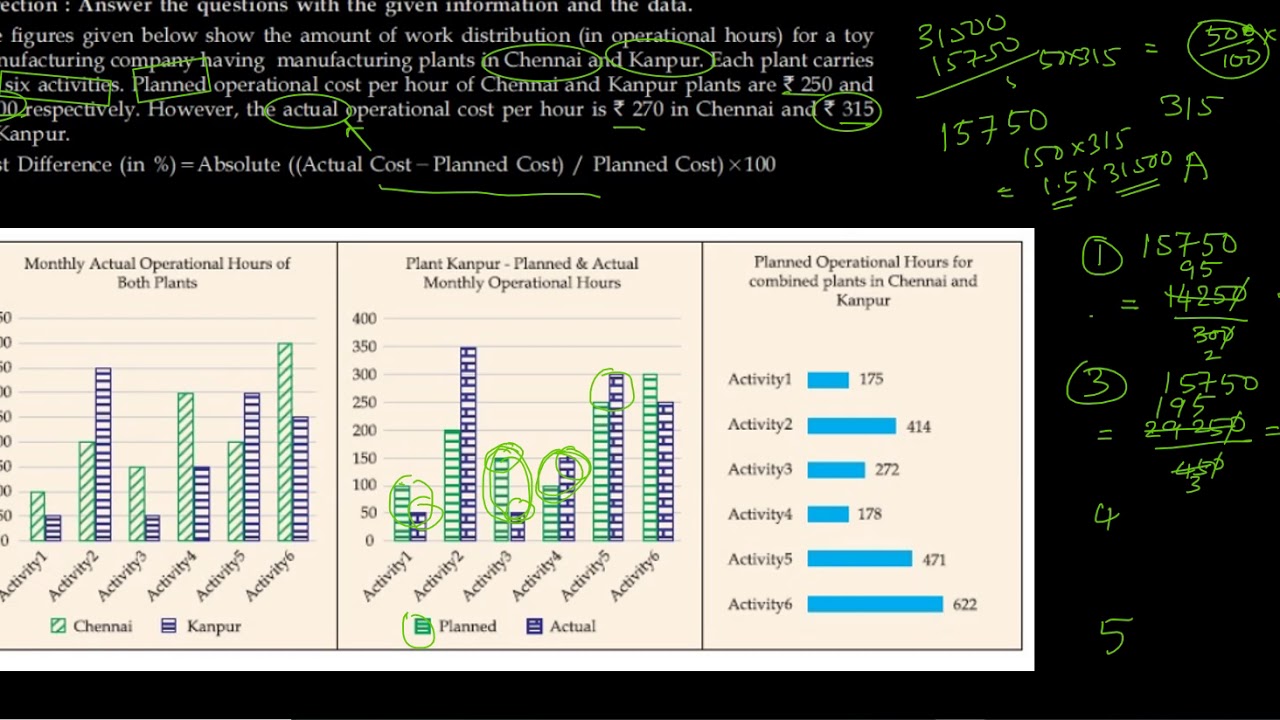
IIFT 2019 # DILR # Question No. 9 to 12 # New Pattern # MCQ # Management Exams # MBA # Business Trade # Graphs.
GIVE US A CALL / WHATSAPP AT +919836793076 / +917439184809/+919874822756
VISIT OUR WEBSITE https://www.souravsirclasses.com/
FOR COMPLETE LECTURES / STUDY MATERIALS /NOTES /GUIDANCE / PAST YEAR SOLVED +SAMPLE PAPERS /TRICKS /MCQ / SHORT CUT/ VIDEO LECTURES /LIVE + ONLINE CLASSES
Also find us at….
FACEBOOK / souravsirsclasses
INSTAGRAM / souravsirsc .
SLIDE-SHARE ON COURSES https://www.slideshare.net/Souravdas31
LINKEDIN / sourav-das-71691b43
TWITTER / souravdas3366
The Indian Institute of Foreign Trade (IIFT) is an autonomous public business school established in 1963 by the Government of India (Ministry of Commerce and Industry) to help professionalize the country's foreign trade management and increase exports by developing human resources; generating, analysing and disseminating data; and conducting research. Its flagship program is the Master of Business Administration in International Business (MBA-IB).
IIFT was conferred the status of Deemed University in 2002. It conducts an autonomous entrance examination across various centers in India.
Data analysis is a process of inspecting, cleansing, transforming and modeling data with the goal of discovering useful information, informing conclusion and supporting decision-making. Data analysis has multiple facets and approaches, encompassing diverse techniques under a variety of names, and is used in different business, science, and social science domains. In today's business world, data analysis plays a role in making decisions more scientific and helping businesses operate more effectively.
Data mining is a particular data analysis technique that focuses on statistical modeling and knowledge discovery for predictive rather than purely descriptive purposes, while business intelligence covers data analysis that relies heavily on aggregation, focusing mainly on business information.[2] In statistical applications, data analysis can be divided into descriptive statistics, exploratory data analysis (EDA), and confirmatory data analysis (CDA). EDA focuses on discovering new features in the data while CDA focuses on confirming or falsifying existing hypotheses. Predictive analytics focuses on application of statistical models for predictive forecasting or classification, while text analytics applies statistical, linguistic, and structural techniques to extract and classify information from textual sources, a species of unstructured data. All of the above are varieties of data analysis.
Two kinds of logical reasoning can be distinguished in addition to formal deduction: induction and abduction. Given a precondition or premise, a conclusion or logical consequence and a rule or material conditional that implies the conclusion given the precondition, one can explain the following.
Повторяем попытку...
Доступные форматы для скачивания:
Скачать видео
-
Информация по загрузке: