Daniel Colon-Ramos (Yale/HHMI) 3: Actuating memory: how C. elegans remembers
Автор: Science Communication Lab
Загружено: 2017-12-12
Просмотров: 4284
Описание:
https://www.ibiology.org/neuroscience...
How is the neuronal synapse assembled to produce specific behaviors and store memories? Dr. Colon-Ramos studies C. elegans to address this fundamental question.
Talk Overview:
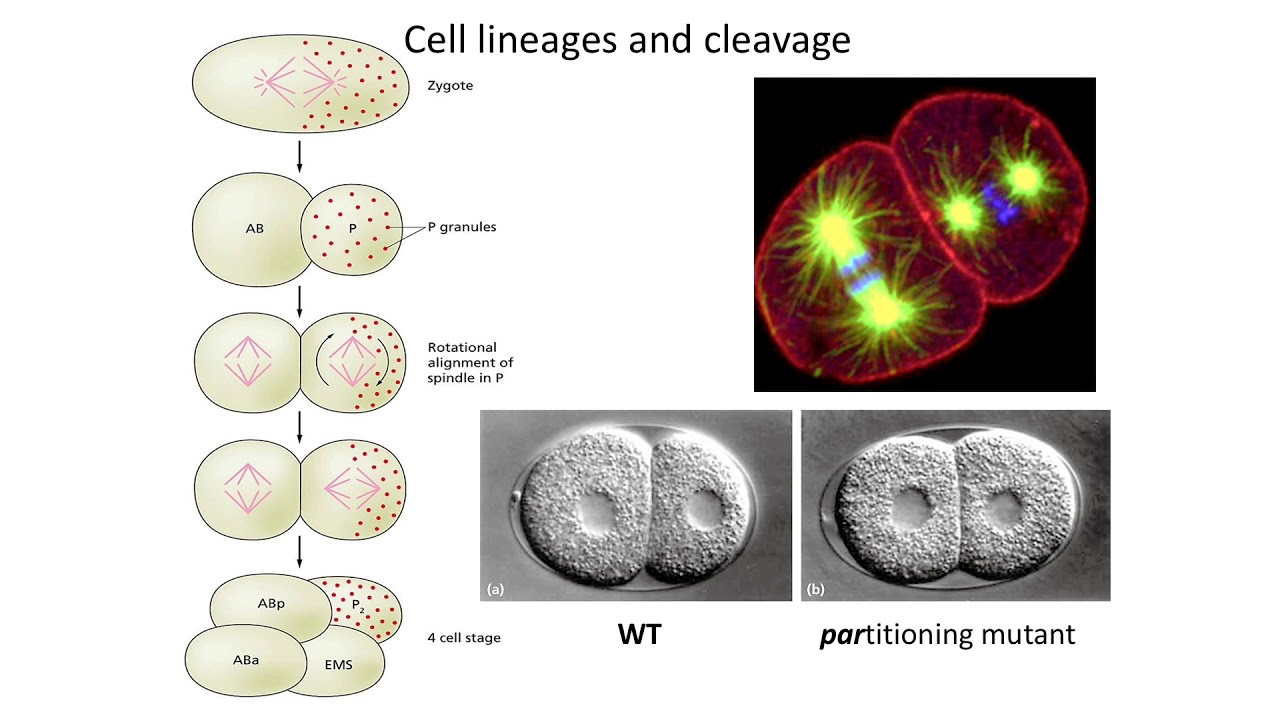
A fundamental question in neuroscience is how synapses are assembled in living animals to produce behaviors and store memories. Dr. Daniel Colón-Ramos and his lab address these questions by studying the cell biology of the neuronal synapse. In the first part of his seminar series, he introduces approaches his group has pioneered and implemented to image and manipulate synapses in vivo and with single-cell resolution in the nematode C.elegans. He also discusses fundamental aspects of genetics, cell biology and neuroscience which are necessary for understanding his research program and, more generally, for understanding how scientists make use of model organisms to generate new knowledge.
In his second lecture, Dr. Colón-Ramos describes his group’s finding of a previously-unknown metabolic subcompartment that powers synaptic function. His group observed that under conditions of energy stress, glycolytic proteins, which are normally diffusely distributed in cells, co-localize to a punctate structure adjacent to synapses. The local formation of these complexes is required for the synaptic vesicle cycle and synaptic function. The discoveries contribute to an unsolved question in neuroscience: how local, rapid and transient changes in energy demands are met at synapses to sustain their function. He frames his lab’s cell biological findings in the context of the long history of research of energy metabolism, drawing new lessons and discussing how the discoveries now provide new opportunities to examine the cell biology of metabolism at the neuronal synapse.
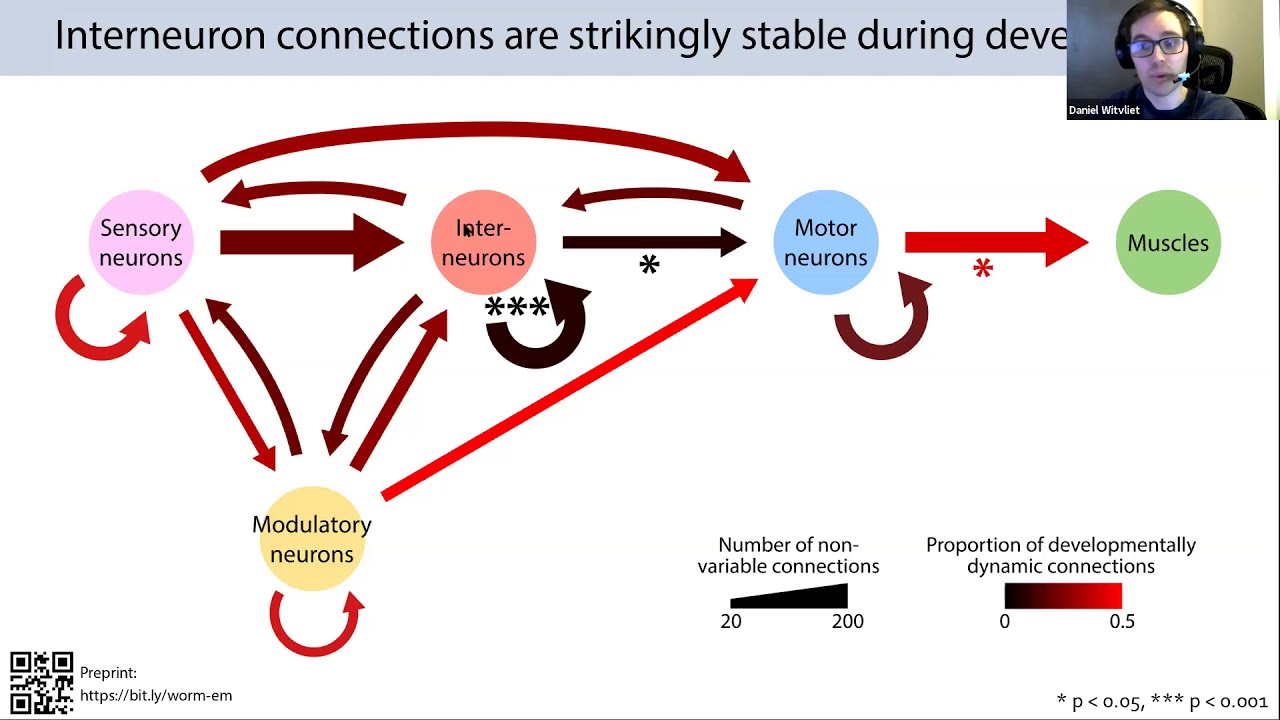
In his third and final lecture, Colón-Ramos discusses how his group uses the approaches they have developed to reduce system’s level questions, like behavior, to cell biological questions at the synapse. He describes his lab’s discovery that two plasticity mechanisms—sensory adaptation and presynaptic plasticity—act within a single cell in C. elegans to encode thermosensory information and actuate a temperature-preference memory. The integration of these plasticity mechanisms result in a single-cell logic system that can both represent sensory stimuli and guide memory-based behavioral preference. These findings allow the Colón-Ramos group to directly link cell biological changes at the neuronal synapse with memory and behavior.
Speaker Biography:
Dr. Daniel Colón-Ramos is an associate professor in the Department of Cell Biology and Neuroscience at Yale University, adjunct professor at the Instituto de Neurobiología at the Universidad de Puerto Rico, and a Marine Biological Laboratories (MBL) fellow. His lab is interested in understanding the cell biology of the synapse--how it is established, maintained and modified to influence behavior. His group has pioneered approaches to address these questions in single cells of living animals (specifically, in nematodes called C. elegans).
Born and raised in Puerto Rico, Colón-Ramos’ passion for science began at a young age. His scientific curiosity was, in part, fueled by participation in the NSF-funded Young Scholars minority research program he attended in high school. As an undergraduate at Harvard University, he pursued his love for science and social issues by conducting ethnopharmacological research in Central America with the Smithsonian Tropical Research Institute. After college, he worked as a postbac with fellow Puerto Rican scientist Dr. Mariano Garcia-Blanco at Duke University to understand the cell biology of transcription in the nuclei of Chlamydomonas reinhardtii, and to explore his interests in a career in scientific research. He pursued a PhD at Duke University with Dr. Sally Kornbluth studying the molecular mechanisms of programmed cell death, and his PhD work was recognized with a Gates Millennium Scholarship. He then joined the lab of Dr. Kang Shen at Stanford University as a Damon Runyon fellow and later, as a recipient of the “Pathways to Independence” (NIH K99/R00) award. Always striving to combine his social and science interests, in 2006, he founded the nonprofit, Ciencia Puerto Rico (CienciaPR). CienciaPR’s work was recognized in 2015 by the White House as a Bright Spot in Science Education of Hispanics.
He started as an independent investigator at Yale University in 2008. His lab’s scientific work has been recognized by the Klingenstein Fellowship Award in Neurosciences in 2009, a Sloan Research Fellowship in 2010, an AAAS Early Career Award for Public Engagement with Science in 2012 and an HHMI Faculty Scholar award in 2016. His lab’s work was also recognized with the 2016 American Society for Cell Biology “E.E. Just Lecture Award”.
Learn more about Colón-Ramos’ research here: http://medicine.yale.edu/lab/colon_ra...
Повторяем попытку...

Доступные форматы для скачивания:
Скачать видео
-
Информация по загрузке:








![Цепи Маркова — математика предсказаний [Veritasium]](https://imager.clipsaver.ru/QI7oUwNrQ34/max.jpg)