ycliper

Популярное

Музыка Кино и Анимация Автомобили Животные Спорт Путешествия Игры Юмор

Интересные видео

2025 Сериалы Трейлеры Новости Как сделать Видеоуроки Diy своими руками

Топ запросов

смотреть а4 schoolboy runaway турецкий сериал смотреть мультфильмы эдисон
Скачать

Physiology of Cortisol : Endocrine Physiology USMLE Step 1

Автор: Dr.G.Bhanu Prakash

Загружено: 2023-03-16

Просмотров: 38812

Описание: 📌 𝐅𝐨𝐥𝐥𝐨𝐰 𝐨𝐧 𝐈𝐧𝐬𝐭𝐚𝐠𝐫𝐚𝐦:-   / drgbhanuprakash  
Join Our Telegram Channel HERE:- https://t.me/bhanuprakashdr
Subscribe To My Mailing List:- https://linktr.ee/DrGBhanuprakash

Physiology of Cortisol : Endocrine Physiology USMLE Step 1

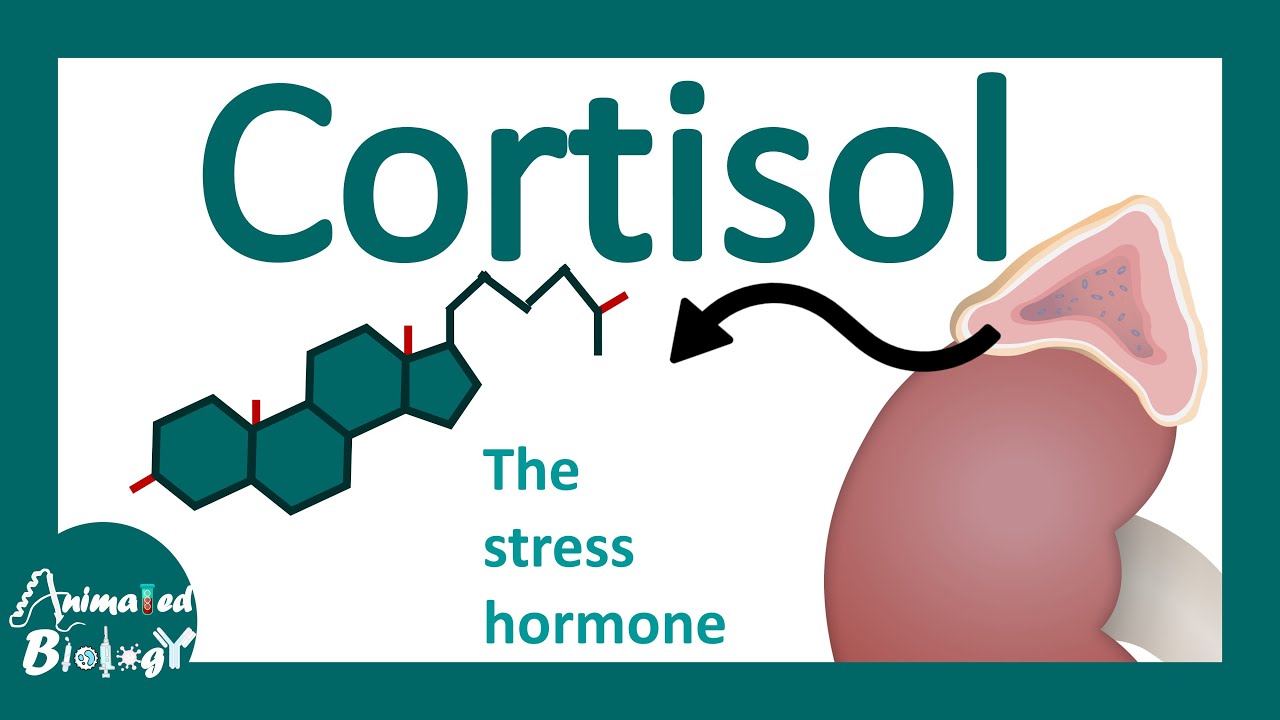
Cortisol is a steroid hormone produced by the adrenal cortex in response to the release of adrenocorticotropic hormone (ACTH) from the anterior pituitary gland. Cortisol plays a critical role in regulating metabolism and immune response, and its release is tightly regulated by a complex feedback system.

The physiological effects of cortisol are primarily mediated through its binding to specific intracellular receptors, which are expressed in nearly every tissue in the body. Once bound to its receptor, cortisol modulates gene expression and cellular signaling pathways, leading to a wide range of effects on the body.

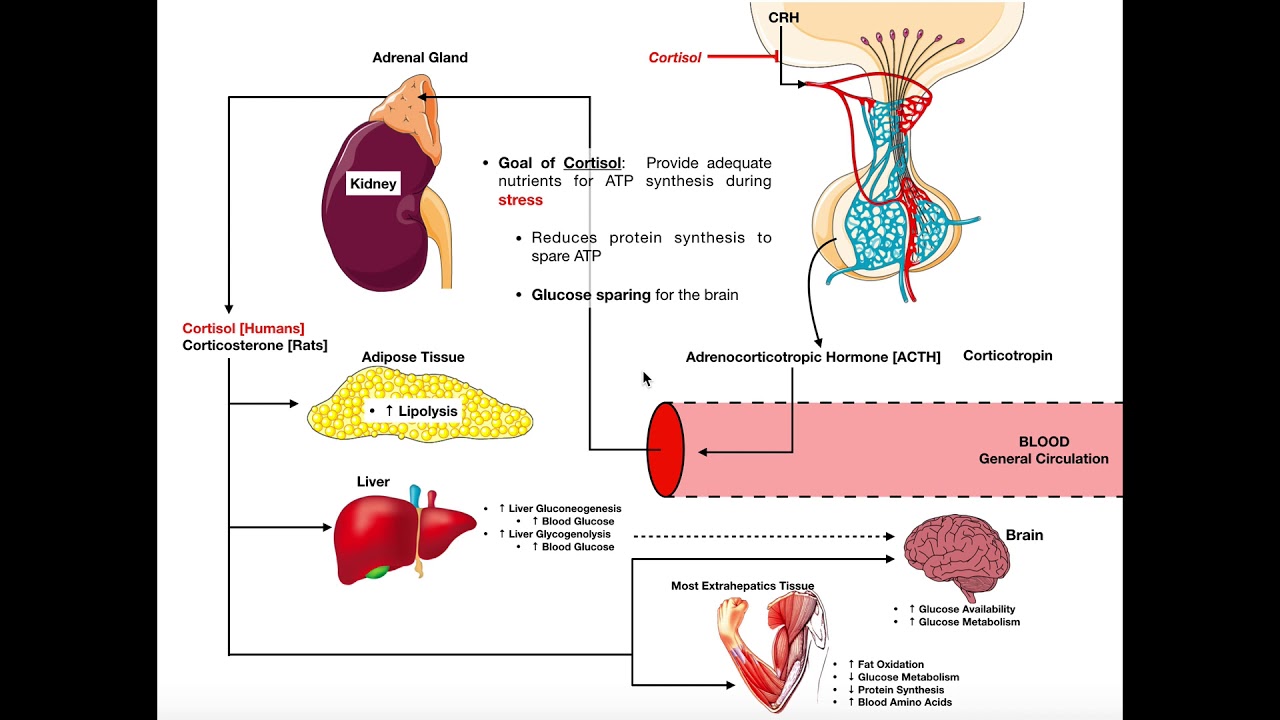
One of the primary functions of cortisol is to increase glucose availability in the body by promoting gluconeogenesis (the conversion of non-carbohydrate sources into glucose) and glycogenolysis (the breakdown of glycogen into glucose). Cortisol also stimulates lipolysis (the breakdown of fats) and inhibits glucose uptake by peripheral tissues, further increasing the availability of glucose in the bloodstream.

In addition to its metabolic effects, cortisol is also a potent immunosuppressive agent, inhibiting the proliferation and function of immune cells such as T cells and B cells. This anti-inflammatory effect of cortisol is important in the body's response to stress and infection.

Cortisol levels in the body are regulated by a negative feedback system involving the hypothalamus, pituitary gland, and adrenal cortex. When cortisol levels rise, the hypothalamus releases corticotropin-releasing hormone (CRH), which stimulates the pituitary gland to release ACTH. ACTH then stimulates the adrenal cortex to produce and release cortisol. When cortisol levels are high enough, they inhibit the release of CRH and ACTH, effectively shutting down the HPA (hypothalamic-pituitary-adrenal) axis.

Abnormal cortisol levels can have a significant impact on the body, leading to conditions such as Cushing's syndrome (excess cortisol production) or Addison's disease (insufficient cortisol production). These conditions can result in a wide range of symptoms, including metabolic disturbances, immune dysfunction, and psychiatric disorders.

#cortisol #cortisolphysiology #endocrineglands #endocrinephysiology #endocrinesystem #fmge #fmgevideos #rapidrevisionfmge #fmgejan2023 #mbbslectures #nationalexitexam #nationalexittest #neetpg #usmlepreparation #usmlestep1 #fmge #usmle #drgbhanuprakash #medicalstudents #medicalstudent #medicalcollege #neetpg2023 #usmleprep

Не удается загрузить Youtube-плеер. Проверьте блокировку Youtube в вашей сети.
Повторяем попытку...
Physiology of Cortisol : Endocrine Physiology USMLE Step 1

Поделиться в:

Доступные форматы для скачивания:

Скачать видео

  • Информация по загрузке:

Скачать аудио

Похожие видео

Physiology of Endocrine Pancreas : USMLE Step 1

Physiology of Endocrine Pancreas : USMLE Step 1

Понимание синдрома Кушинга

Понимание синдрома Кушинга

Кортизол | Влияние кортизола на организм | Кортизол: гормон стресса | Кортизол как иммунодепрессант

Кортизол | Влияние кортизола на организм | Кортизол: гормон стресса | Кортизол как иммунодепрессант

Глюкокортикоиды | Как работают глюкокортикоиды? | Кортизол и его биологическая функция | Физиология

Глюкокортикоиды | Как работают глюкокортикоиды? | Кортизол и его биологическая функция | Физиология

Hormones of Adrenal Cortex and Adrenal medulla : Endocrine physiology USMLE Step 1

Hormones of Adrenal Cortex and Adrenal medulla : Endocrine physiology USMLE Step 1

USMLE STEP 1: Adrenal Cortex deficiencies with question

USMLE STEP 1: Adrenal Cortex deficiencies with question

Смерть приходит не от сердца, а от НОГ! Как включить мышечную помпу?

Смерть приходит не от сердца, а от НОГ! Как включить мышечную помпу?

Stress Physiology | Cortisol

Stress Physiology | Cortisol

Анатомия печени (Функция, Топография, Внешние структуры, Связки)

Анатомия печени (Функция, Топография, Внешние структуры, Связки)

Specific Hormones | Functions of Cortisol

Specific Hormones | Functions of Cortisol

Gastrointestinal Motility : USMLE Step 1 Physiology

Gastrointestinal Motility : USMLE Step 1 Physiology

Одно ДЕШЁВОЕ чудодейственное средство ИСЦЕЛИТ от 1000 болезней!

Одно ДЕШЁВОЕ чудодейственное средство ИСЦЕЛИТ от 1000 болезней!

Endocrinology | Adrenal Gland: Cortisol

Endocrinology | Adrenal Gland: Cortisol

Cortisol

Cortisol

The Oxygen-Hemoglobin Association and Dissociation Curve : USMLE Step 1 Physiology

The Oxygen-Hemoglobin Association and Dissociation Curve : USMLE Step 1 Physiology

Endocrinology - Adrenal Glands

Endocrinology - Adrenal Glands

Понимание кортизола и надпочечниковой оси

Понимание кортизола и надпочечниковой оси

Hormones of Anterior pituitary and Hypothalamus : Endocrine physiology USMLE Step 1

Hormones of Anterior pituitary and Hypothalamus : Endocrine physiology USMLE Step 1

The Adrenal Cortex - Endocrine Glands - Biology & Physiology Lectures

The Adrenal Cortex - Endocrine Glands - Biology & Physiology Lectures

Pheochromocytoma, Conns syndrome, Neuroblastoma, Adrenal insufficiency and MEN syndromes

Pheochromocytoma, Conns syndrome, Neuroblastoma, Adrenal insufficiency and MEN syndromes

© 2025 ycliper. Все права защищены.


  • Контакты
  • О нас
  • Политика конфиденциальности


Контакты для правообладателей: [email protected]