The INCREDIBLE Story Of Ancient Rome's Eastern Frontier
Автор: Ancient Rome
Загружено: 2023-08-09
Просмотров: 198
Описание:
Asia Minor: Rome's Eastern Frontier In Modern-Day Turkey
Subscribe to / @ancientrome5326
#history #ancientrome #turkey #türkiye
Welcome back, history lovers, to our channel! We set out on an exciting journey today to see the fascinating region of Asia Minor, which served as the eastern frontier of ancient Rome. Asia Minor, which is now part of Turkey, was essential to the growth of the Roman Empire and the blending of Greek and Roman culture. We're ready to enter the fascinating land of ancient Asia Minor, so buckle up guys!
Asia Minor, commonly referred to as Anatolia or contemporary Turkey, has played a significant role in world history. This area functioned as a crucial strategic stronghold for the powerful Roman Empire, protecting the eastern boundaries from prospective attackers and maintaining control over important trade routes. With the Black Sea to the north and the Mediterranean Sea to the south, it was strategically situated at the meeting point of Europe and Asia.
Asia Minor was essential for preserving Roman power in the East due to its proximity to the Parthian Empire and later the Sassanian Empire. Ephesus and Antioch, two of the area's natural harbours, made for effective marine connections and enabled trade, further strengthening the region's significance. Beyond its strategic importance, Asia Minor was also a crucible for clashing Greek and Roman cultures.
We start our tour in Ephesus, one of the most breathtaking ancient cities, in the middle of Asia Minor. In the Roman era, Ephesus, which was situated close to the Aegean Sea, was a centre of culture and commerce and was home to amazing architectural marvels.
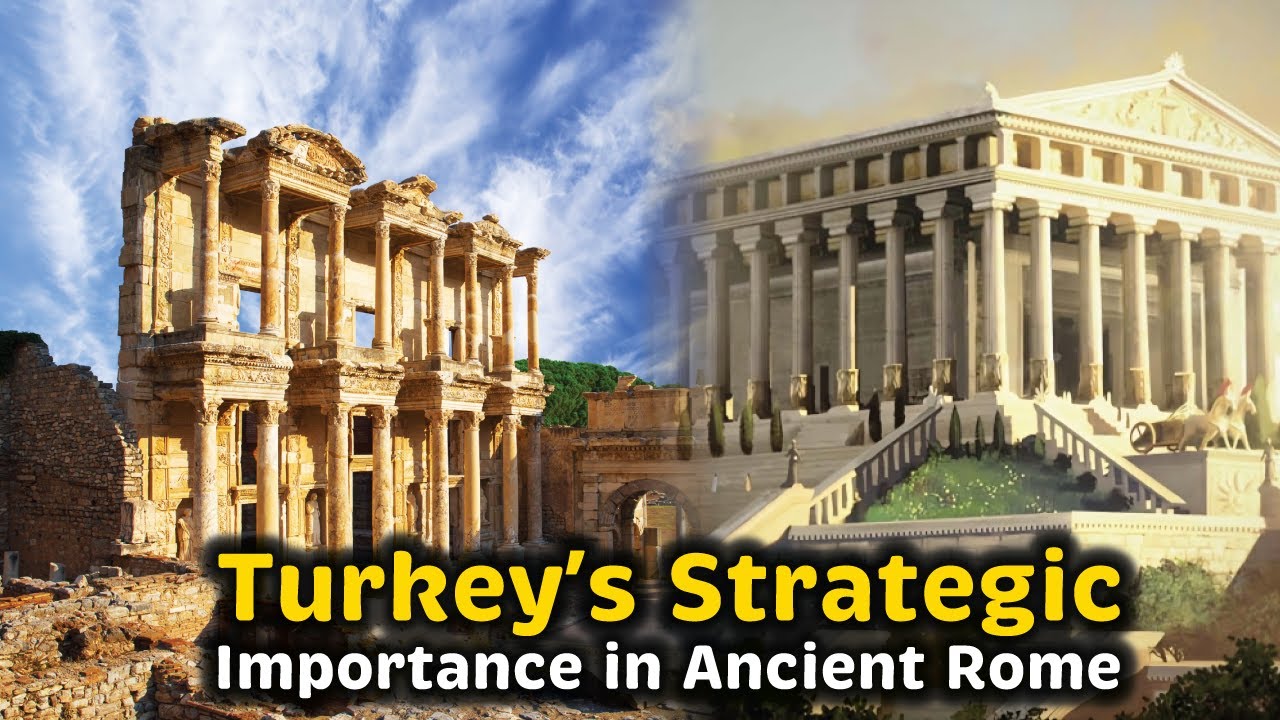
The Temple of Artemis, one of the Seven Wonders of the Ancient World, was located in the city. Under Roman authority, Ephesus prospered and saw the development of great buildings including the Terrace Houses, the Great Theatre, and the Celsus Library. These buildings served as examples of Roman wealth and architectural skill.
Due to the presence of the famed House of the Virgin Mary and one of the early Christian communities, Ephesus was also a significant religious hub. The city is a remarkable example of Asia Minor's cultural variety due to its rich history and the blending of Greek, Roman, and Christian influences.
With origins in the Bronze Age, Ephesus has an important role in history. Ephesus, however, prospered and rose to prominence in Asia Minor during the Hellenistic and Roman eras. Its prosperity was aided by its advantageous location close to the Aegean Sea and accessibility to important trade routes.
As a major port city that facilitated trade between the East and the West, Ephesus played an important role. The city was a hive of commerce, renowned for its lively markets and talented craftsmen. Due to the influx of people from many racial groups and cultural backgrounds, Ephesus became a thriving international city.
Ephesus was well known for its magnificent architectural accomplishments. Buildings like the Library of Celsus, a magnificent two-story library that held thousands of scrolls, served as examples of the city's majesty. This stunning piece of architecture displayed Ephesus's wealth and intellectual sophistication.
Повторяем попытку...
Доступные форматы для скачивания:
Скачать видео
-
Информация по загрузке: