THE KELPIE: Scotland's Enigmatic Water Horse of Seductive Doom
Автор: FACTSInMinutes
Загружено: 2025-03-21
Просмотров: 157
Описание:
🌊 The Kelpie stands as one of Scotland's most beguiling and treacherous supernatural predators—a shapeshifting entity whose very existence embodies the dual nature of water itself: beautiful yet deadly, sustaining yet consuming! This aquatic phantom has haunted Scotland's lochs, rivers, and coastal waters since time immemorial, perfecting its hunting methodology through centuries of evolutionary adaptation to exploit humanity's fundamental need for both water and companionship.
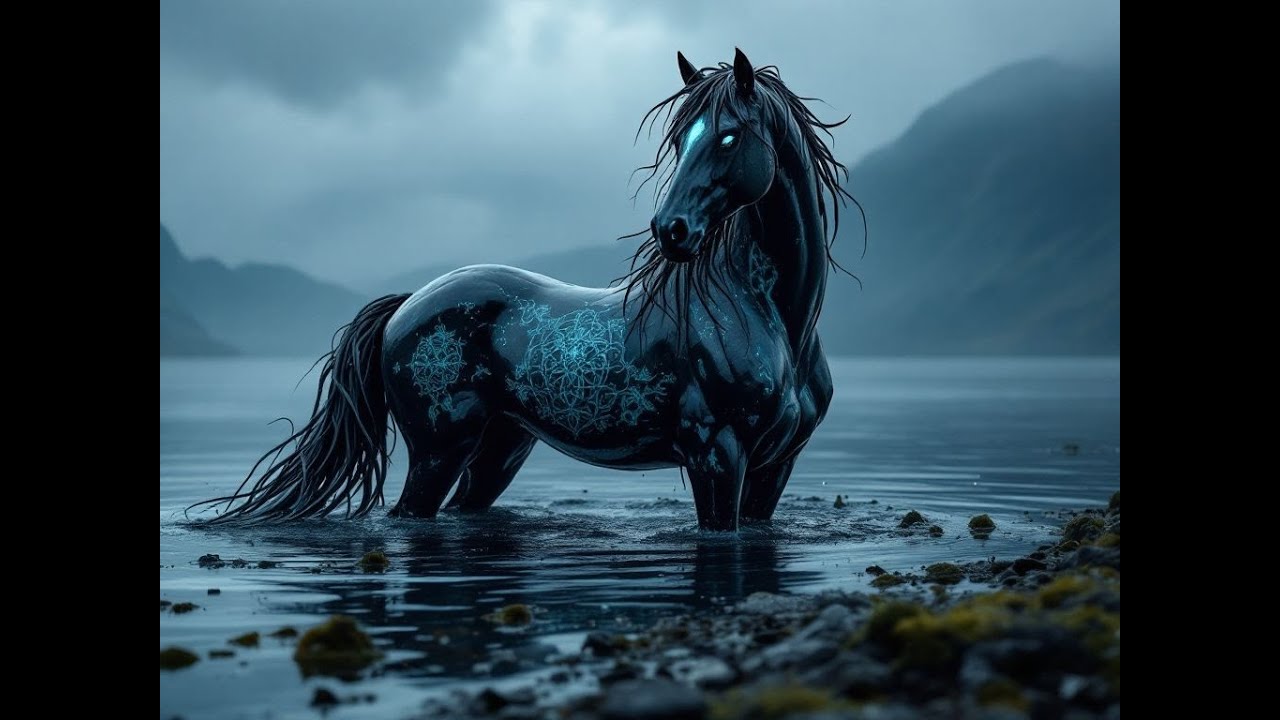
🐎 Unlike conventional predators with fixed physical forms, the Kelpie's primary manifestation represents a masterpiece of evolutionary mimicry—a magnificent horse of unusually large proportions, typically black or dark green in coloration, with a coat that appears perpetually wet regardless of how long it stands on land. This equine disguise conceals subtle markers of its supernatural nature that observant individuals might detect—a mane that moves like underwater vegetation even in still air, hooves that are subtly inverted, and eyes with rectangular pupils that reflect light with an eerie blue-green luminescence in darkness.
💧 The Kelpie's hunting methodology reveals sophisticated psychological understanding rather than simple predatory instinct. It begins by identifying isolated travelers near water crossings or shorelines, particularly during liminal times—dusk, dawn, or during significant weather transitions when human perception naturally becomes less reliable. The entity positions itself strategically, appearing initially as a magnificent riderless horse that seems both convenient and fortuitous to weary travelers seeking to cross water barriers or navigate difficult terrain.
🧠 What truly distinguishes the Kelpie from conventional shapeshifters is its sophisticated manipulation of human psychology through supernatural means. As potential victims approach, the creature exudes a subtle psychic field that intensifies specific emotional states—exhausted travelers feel their fatigue more acutely, making the opportunity to ride more appealing; those in hurries experience heightened time pressure; children feel an overwhelming desire to pet and ride the beautiful animal. This emotional manipulation creates a compulsion that overrides natural caution, drawing victims to make physical contact with the seemingly mundane horse.
🏞️ The moment of physical contact reveals the Kelpie's true nature through an irreversible transformation—its skin becomes adhesive upon human touch, binding victims to its back through supernatural means that no physical strength can break. This adhesive quality represents not a physical substance but a metaphysical bond between predator and prey, one that can only be severed through specific countermeasures from Scottish folklore—possession of silver objects, the utterance of specific Christian prayers, or most reliably, addressing the creature by its true name before contact is made.
🌫️ Once a victim is secured, the Kelpie's behavior shifts from seduction to consumption as it returns to its aquatic domain with supernatural speed. Witnesses describe how the once-solid horse form becomes increasingly fluid during this transition—its legs elongating to impossible proportions, its movements taking on the undulating quality of water itself, and its formerly solid body partially dissolving into the water as it submerges. Victims are dragged beneath the surface into the Kelpie's underwater realm, where Scottish folklore suggests they are consumed entirely except for their liver, which supposedly rises to the surface days later as the only evidence of their fate.
🔮 Most fascinating are the regional variations in Kelpie manifestations across different Scottish waterways. Highland Kelpies are reported to occasionally manifest with transparent skin that reveals water flowing through their internal anatomy instead of blood. Coastal Kelpies incorporate elements of marine life into their equine forms—manes resembling seaweed or barnacle-like growths along their fetlocks. Most distinctive are the rare "singing Kelpies" of the Hebrides, which add vocal mimicry to their hunting techniques, calling out in human voices that sound like distant cries for help, drawing would-be rescuers to treacherous shorelines during storms.
💭 Which aquatic predator from global mythology should emerge from folklore's dark waters in our next exploration—the ship-sinking Kraken or the child-stealing Jenny Greenteeth? 💭
Повторяем попытку...
Доступные форматы для скачивания:
Скачать видео
-
Информация по загрузке: