appaloosa color pattern
Автор: wildwhispers
Загружено: 2022-10-21
Просмотров: 114
Описание:
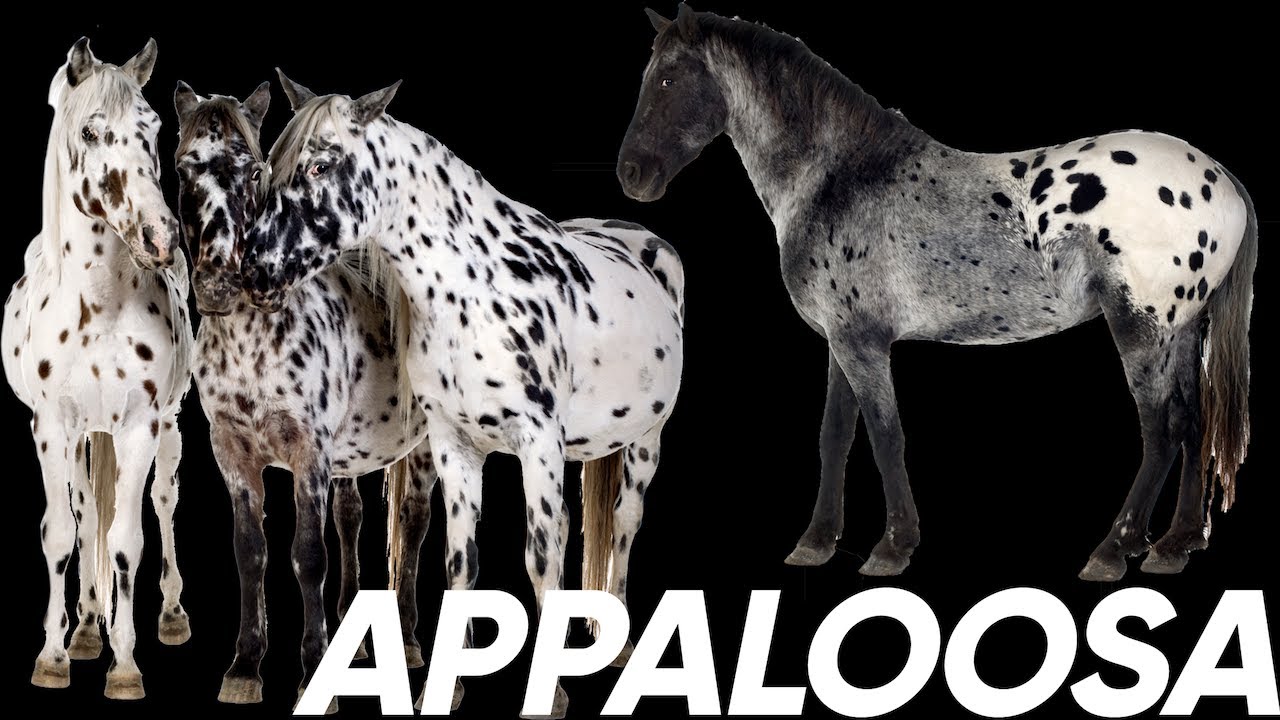
The appaloosa color pattern is a combination of
spotting and/or diffuse roaning, which usually is fairly
symmetrical on the horse’s body. Appaloosa color
patterns are found worldwide in various breeds of
horses and ponies. Until recently, the inheritance of
the pattern was unknown, but gene mapping of the
horse genome has greatly increased the understanding
of this color pattern. The gene responsible for the
appaloosa pattern is termed the leopard complex (LP).
The “complex” portion of the term is to include all
types of appaloosa patterns that are not leopard. It is
believed that LP functions as a dominant gene to cause
the appaloosa coat pattern, along with other appaloosa
characteristics such as mottled skin, white sclera, and
vertically striped hooves. To have the color pattern,
the horse must have an LP gene. However, modifying
genes may influence the expression of the LP gene;
therefore, a horse that has minimal white modifying
genes may not exhibit the LP gene. To further confuse
the issue, many researchers have hypothesized that
the LP gene may act as an incomplete dominant gene.
That is, a horse that inherits an LP from both parents
(LPLP) will exhibit more white than the heterozygous
horse (LPlp), which only receives the dominant
form of the gene from one parent. Horses that are
homozygous dominant are few-spot leopards, while
heterozygous horses are leopard, blanket, varnish
roan, snowflake, and frosted patterns.
References for this publication and further
reading materials are as follows:
Bowling, A.T. 1996. Horse Genetics. CAB International,
New York.
Harrington, R.B. 1995. Animal Breeding - An Introduc-
tion. Interstate Publ. Danville, IL
Sponenberg, D.P. 2003. Equine Color Genetics. Iowa
State Press. IO.
Veterinary Genetics Laboratory. University of Cali-
fornia, Davis. /www.vgl.ucdavis.eduservices
coatcolorhorse.php. Accessed June 30, 2011.
Cook, D., Brooks S., Bellone, R., Bailey, E. 2008.
“Missense Mutation in Exon 2 of SLC36A1 Responsible
for Champagne Dilution in Horses.” PLoS Genetics
Повторяем попытку...

Доступные форматы для скачивания:
Скачать видео
-
Информация по загрузке: