CA Gov. Newsom Announces MyShake Earthquake Early Warning App
Автор: UC Berkeley
Загружено: 2019-10-17
Просмотров: 3456
Описание:
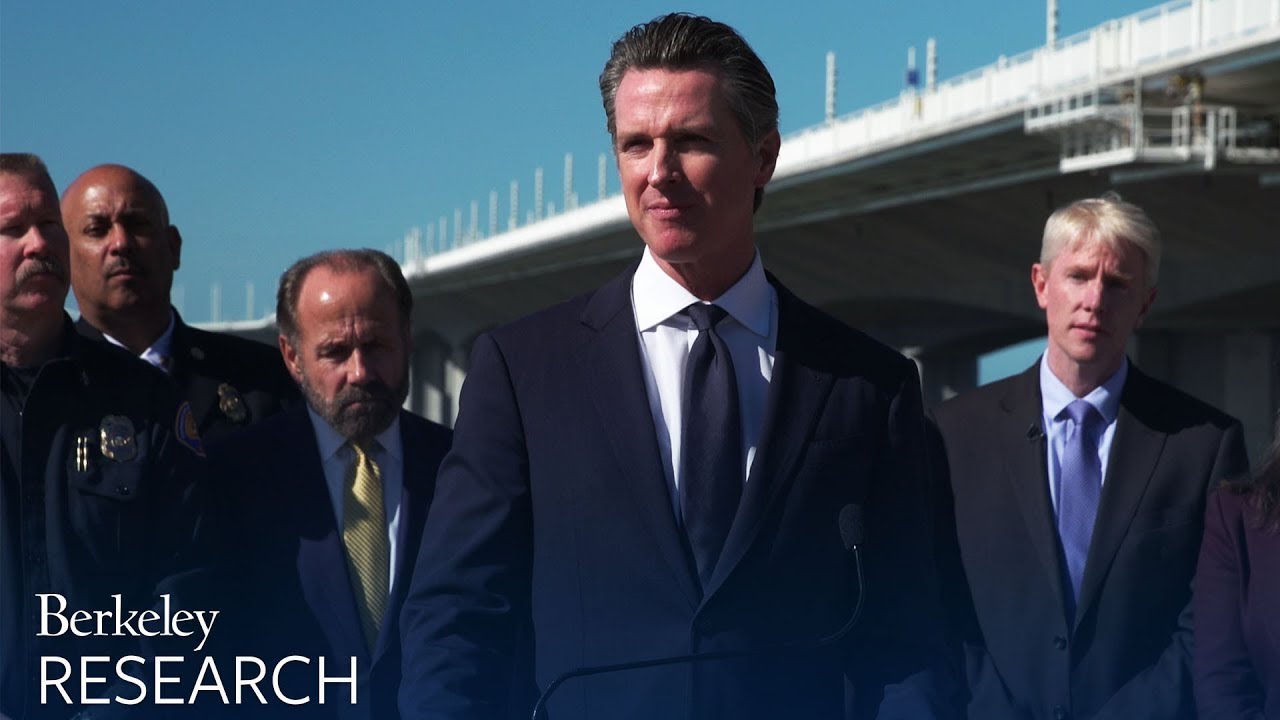
California Gov. Gavin Newsom today (Thursday, Oct. 17) announced the debut of the nation’s first statewide earthquake early warning system that will deliver alerts to people’s cellphones through an app developed at the University of California, Berkeley.
The mobile phone app, MyShake, can provide seconds of warning before the ground starts to shake from a nearby quake — enough time to drop, cover and hold on to prevent injury.
“Nothing can replace families having a plan for earthquakes and other emergencies,” said Newsom. “And we know the ‘Big One’ might be around the corner. I encourage every Californian to download this app and ensure your family is earthquake ready.”
Google Play download: https://play.google.com/store/apps/de...
Apple Store download: https://apps.apple.com/us/app/myshake...
To read the full story, visit: https://news.berkeley.edu/2019/10/17/...
Newsom announced the roll-out along with the Governor’s Office of Emergency Services (Cal OES), UC Berkeley, United States Geological Survey (USGS) and several state and local political leaders.
Designed by UC Berkeley seismologists and engineers, MyShake is now available for download to cellphones or tablets through iTunes for iPhones and through Google Play stores for Android phones.
The announcement was made on the 30th anniversary of the 1989 Loma Prieta earthquake, a magnitude 6.9 quake that damaged or collapsed buildings, overpasses and bridges from Santa Cruz to the Bay Area and led to 63 deaths and 3,757 injuries.
“Everyone asks me, ‘Are we safer now than in 1989?’ Well, now we have warnings a few seconds to tens of seconds before the shaking,” said Richard Allen, director of the Berkeley Seismological Laboratory and the Class of 1954 Professor in the Department of Earth and Planetary Science.
Designed by UC Berkeley seismologists and engineers, MyShake is now available for download to cellphones or tablets through iTunes for iPhones and through Google Play stores for Android phones.
The announcement was made on the 30th anniversary of the 1989 Loma Prieta earthquake, a magnitude 6.9 quake that damaged or collapsed buildings, overpasses and bridges from Santa Cruz to the Bay Area and led to 63 deaths and 3,757 injuries.
“Everyone asks me, ‘Are we safer now than in 1989?’ Well, now we have warnings a few seconds to tens of seconds before the shaking,” said Richard Allen, director of the Berkeley Seismological Laboratory and the Class of 1954 Professor in the Department of Earth and Planetary Science.
BART, for example, now slows trains when it receives a ShakeAlert. Firehouses use precious seconds of early warning to raise their garage doors so that trucks are not trapped inside; local refineries have time to close valves to prevent spillage of dangerous chemicals and at hospitals, surgeons have time to pull their scalpels from inside patients.
Early warning, not prediction
The ShakeAlert system does not predict an earthquake, but rather provides an alert that an earthquake has been detected nearby and warns recipients that they are likely to feel shaking. It does this by detecting the first seismic waves, called P waves, from a quake, which travel faster than the much more damaging S waves. The farther you are from the epicenter, the greater the delay between P and S waves and the more advance warning you get.
ShakeAlert logo
While those near the quake’s epicenter are likely to experience shaking before the alert arrives, such alerts can be critical for those farther away, giving people a few seconds of warning that can save lives and property. After Southern California’s 7.1 magnitude Ridgecrest quake in July, ShakeAlert issued an alert in 7.4 seconds, which would have provided advance warning to residents more than 15 miles from the epicenter.
The ShakeAlertLA app that many Angelenos downloaded in expectation of early warning was not set to alert them to shaking from such a distant quake, and many were surprised when buildings started to sway. The threshold for local shaking has since been lowered.
As the official state EEW app, MyShake will provide the same information in Southern California as ShakeAlertLA does now in Los Angeles County. MyShake will, in addition, send back information to UC Berkeley about local shaking intensity, gathered by the cellphone’s built-in accelerometers, sensors that detect movement or vibrations. It also will give advice on how to prepare for a quake, and offer an easy way for people to provide feedback about their experiences during the quake.
Video by Roxanne Makasdjian and Stephen McNally
http://news.berkeley.edu/
/ ucberkeley
/ ucberkeley
/ ucberkeleyofficial
Повторяем попытку...
Доступные форматы для скачивания:
Скачать видео
-
Информация по загрузке: