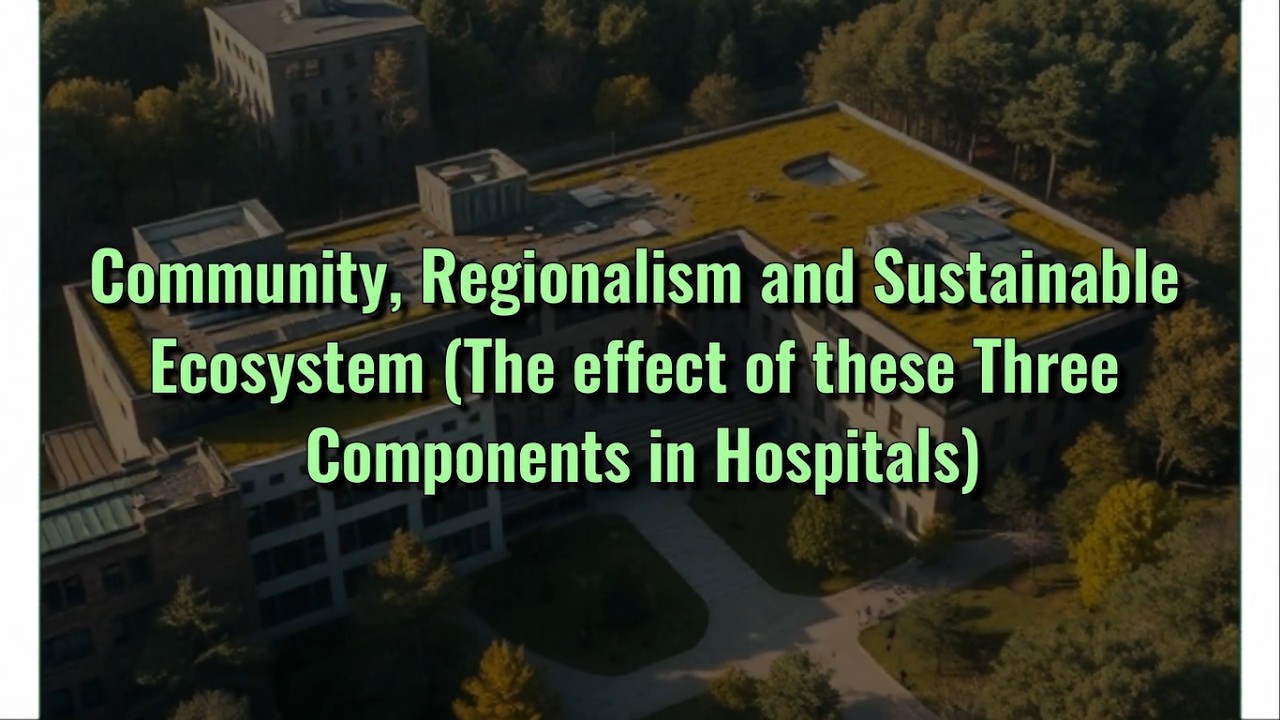
Community, Regionalism and Sustainable Ecosystem (The effect of these Three Components in Hospitals)
Автор: BP International
Загружено: 2025-06-04
Просмотров: 115
Описание:
Community, Regionalism and Sustainable Ecosystem (The effect of these Three Components in Hospitals)
Abstract
Today, hospital buildings have gotten a lot of attention. Given the complicated architecture of treatment facilities, the problem of sustainability in this building is being studied more in order to maximize efficiency and minimize energy loss. Many variables lead to the occurrence of such a problem. When it comes to regionalism, of the factors whose presences are very important are the environment and ecosystem, and in the meantime, it can be referred to the regionalism and ecosystem that are intertwined and complement each other. The balance of the man-made artificial environment with the natural environment is one of the important goals of the green viewpoint and sustainability issue in relation to the construction debate. Creating a path for man-made structures to align with nature and the surroundings, which can lead to improved stability in both the artificial and natural environments. The stronger the stability, the more this balance moves toward interaction. By researching regionalism, ecosystem, and their aspects, the current paper intends to investigate the impact rate of these components on hospitals, highlighting the necessity to link these two concerns by analyzing expert opinion. This is a qualitative, analytical-interpretive paper, and the findings suggest that discussions of regionalism and ecosystems in hospitals, as well as adaptation of these buildings to the climate can have a key role in aligning it with the region and the cultural environment.
\\\\\\\\\\\\\\\\\\\\\\\\\\\\\\\\\\\\\
Layman Abstract :
This study looks at how to design hospitals that are more energy-efficient and environmentally friendly by using local climate, nature, and culture in the design process. Hospitals are big and complex, so building them to match their surroundings helps save energy and work better with the environment.
By listening to expert opinions, the study found that when hospitals are designed to fit the local area, they not only perform better but also feel more connected to the community. In short, building hospitals with nature and local culture in mind leads to healthier, greener, and more sustainable buildings.
#greenarchitecture #SustainableHospitals #regionalism #EcosystemDesign #energyefficiency #climateadaptation #hospitaldesign #EcoFriendlyBuildings #sustainablehealthcare #ArchitectureInnovation #greenbuildings #urbanplanning #environmentaldesign
🔎 Your Queries
Sustainable hospital design
Green architecture in healthcare
Eco-friendly hospitals
Sustainable healthcare buildings
Energy-efficient hospital design
Green building in medical facilities
Climate-responsive architecture
Biophilic design in hospitals
Regionalism in architecture
Ecosystem-based design
Sustainable infrastructure for hospitals
Hospital energy efficiency
Passive design in healthcare
Net-zero hospitals
LEED-certified hospitals
Sustainable urban healthcare
How to design eco-friendly hospitals
Role of regionalism in sustainable architecture
Best green practices for hospital buildings
Climate-adaptive healthcare design
Why hospitals need sustainable design
Case studies of green hospitals
Future of sustainable healthcare infrastructure
Balancing nature and hospital architecture
Expert opinions on green medical facilities
Green hospitals 2025
Biophilic design trends in healthcare
How to reduce energy loss in hospitals
Disclaimer: This scientific-creative video was produced using AI voice-over and royalty-free stock images and clips. All content is sourced exclusively from peer-reviewed journal articles and book chapters, with full citations provided below. The peer-review process for these sources is also detailed here.
Source / Reference: https://doi.org/10.9734/bpi/rdst/v3/2...
Повторяем попытку...
Доступные форматы для скачивания:
Скачать видео
-
Информация по загрузке: