ycliper

Популярное

Музыка Кино и Анимация Автомобили Животные Спорт Путешествия Игры Юмор

Интересные видео

2025 Сериалы Трейлеры Новости Как сделать Видеоуроки Diy своими руками

Топ запросов

смотреть а4 schoolboy runaway турецкий сериал смотреть мультфильмы эдисон
Скачать

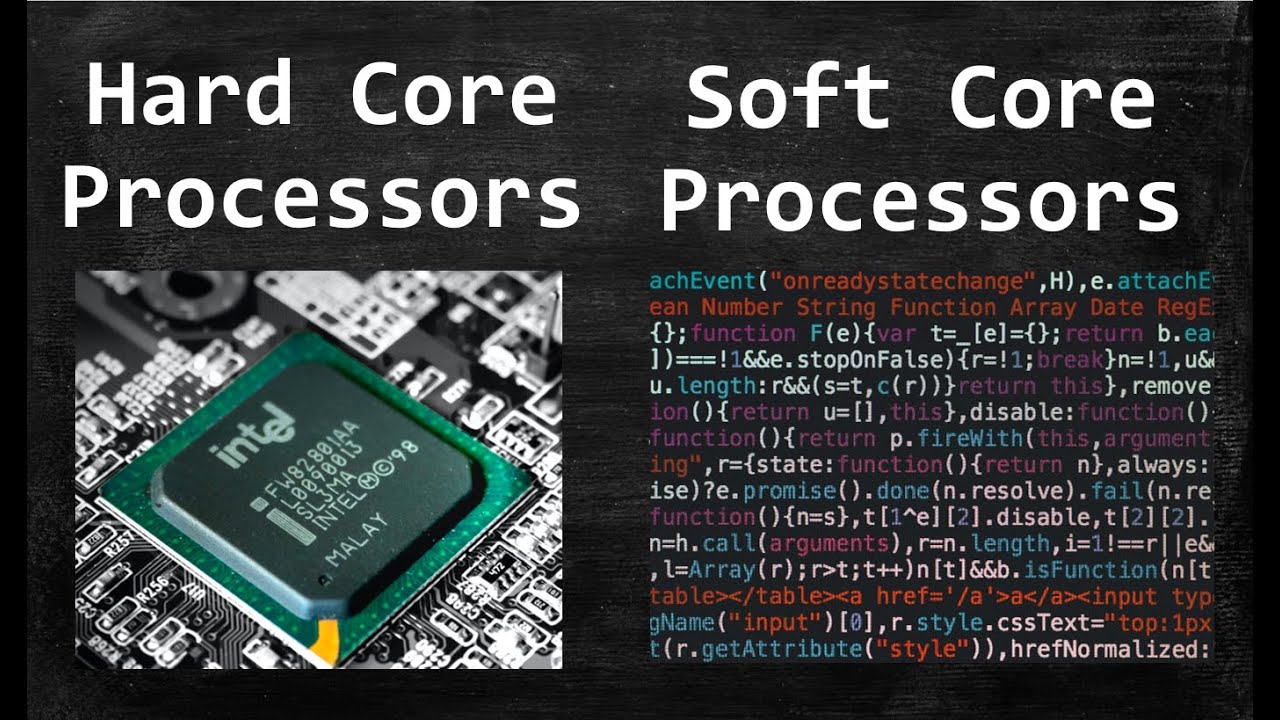
Hard Core and Soft Core Processors Implementations: Clearly Explained

Автор: Rizwan Tariq

Загружено: 2021-08-31

Просмотров: 5166

Описание: We come across Hard Cores and Soft Cores very often in the FPGA design and Development.

Softcore does not imply that it can only be implemented on FPGA. It just means it is licensed as synthesizable HDL (Verilog/VHDL) code. The buyer can synthesize it into ASIC as well using ASIC libraries. And In the video, I have discussed the pros and cons when this soft-core is mapped (or implemented) on ASICs (as hardcore) vs. on FPGA.
------------------------------------------------------------------------------------------------------------------------------
A slight mistake I made during the video, which led to some confusion among some viewers. So this is some Further Explanation of Soft Core and Hard Core.

A soft-core processor is delivered in the form of synthesizable HDL (Verilog/VHDL) code. This HDL code of soft-core can be customized for a given application and can also be synthesized for both an ASIC or FPGA target.

1) In the ASIC design flow, this HDL code can be synthesized using ASIC libraries. And after fabrication, it eventually leads to an ASIC (physical chip or a hardcore).
Once it becomes a hardcore (ASIC), At this stage, any customization in the Processor architecture will not be possible.

2) On the other hand, if the same HDL Code(Softcore code ) is implemented using FPGA, it is (in most cases) possible to change/customize the processor architecture in code and re-implemented the design on FPGA ( as FPGAs are reprogrammable.)

3) Softcore does not imply that it can only be implemented on FPGA. It just means it is licensed as synthesizable HDL (Verilog/VHDL) code. The buyer can synthesize it into ASIC as well using ASIC libraries.

e.g., Cadence provides Tensilica Processor IP as a soft-core. These soft cores can be implemented on both ASICs and FPGAs as well.

4) In the video, I have discussed the pros and cons when this soft-core is mapped (or implemented) on ASICs (as hardcore) vs. on FPGA.

5) And if you plan to write your own processor core in synthesizable HDL (Verilog/VHDL) code. You have the choice to either follow the ASICs design flow and make a Physical Chip or Implement it on FPGA. Both things are possible.

Thanks a lot for understanding.

------------------------------------------------------------------------------------------------
Feel free to share your thoughts in the comments sections.

Like and Subscribe. It generally helps 'Accelerate' the channel growth ;)


Lets get connected on LinkedIn :)
  / syedrizwantariq  

Timestamps:
0:00 Intro
0:30 Hard Core Processor
2:57 Soft Core Processor
7:40 Open Source and Commercial Soft Cores

Не удается загрузить Youtube-плеер. Проверьте блокировку Youtube в вашей сети.
Повторяем попытку...
Hard Core and Soft Core Processors Implementations: Clearly Explained

Поделиться в:

Доступные форматы для скачивания:

Скачать видео

  • Информация по загрузке:

Скачать аудио

Похожие видео

Introduction to FPGA Part 1 - What is an FPGA? | Digi-Key Electronics

Introduction to FPGA Part 1 - What is an FPGA? | Digi-Key Electronics

How to Implement Softcore IP in Xilinx FPGA ? | New Video

How to Implement Softcore IP in Xilinx FPGA ? | New Video

JDBC Connection Pools in Microservices. Why They Break Down (and What to Do Instead)

JDBC Connection Pools in Microservices. Why They Break Down (and What to Do Instead)

Stanford Seminar - A Superscalar Out-of-Order x86 Soft Processor for FPGA

Stanford Seminar - A Superscalar Out-of-Order x86 Soft Processor for FPGA

Introduction to FPGA Part 12 - RISC-V Custom Peripheral | Digi-Key Electronics

Introduction to FPGA Part 12 - RISC-V Custom Peripheral | Digi-Key Electronics

Ключевые основы ПЛИС: постоянные блоки, предполагаемые защелки и зачем вообще ПЛИС нужны часы?!

Ключевые основы ПЛИС: постоянные блоки, предполагаемые защелки и зачем вообще ПЛИС нужны часы?!

Путин согласился не бить по энергетике. Незаконные захоронения рядом с ПНИ. Лекции Малофеева в МГУ

Путин согласился не бить по энергетике. Незаконные захоронения рядом с ПНИ. Лекции Малофеева в МГУ

ПЛИС и микроконтроллер: как выбрать правильный вариант для вашего проекта

ПЛИС и микроконтроллер: как выбрать правильный вариант для вашего проекта

The Harsh Truth about FPGAs (You Should Avoid Them?!)

The Harsh Truth about FPGAs (You Should Avoid Them?!)

LUTs and FPGA Architecture

LUTs and FPGA Architecture

Introduction to FPGA Part 11 - RISC-V Softcore Processor | Digi-Key Electronics

Introduction to FPGA Part 11 - RISC-V Softcore Processor | Digi-Key Electronics

Gigatron TTL- компьютер без процессора.

Gigatron TTL- компьютер без процессора.

Чип «Делать что угодно»: ПЛИС

Чип «Делать что угодно»: ПЛИС

FPGA pipelining

FPGA pipelining

Возможно ли создать компьютеры с техпроцессом меньше 1 нм

Возможно ли создать компьютеры с техпроцессом меньше 1 нм

LLM и GPT - как работают большие языковые модели? Визуальное введение в трансформеры

LLM и GPT - как работают большие языковые модели? Визуальное введение в трансформеры

Введение в ПЛИС: архитектура, программируемость и преимущества

Введение в ПЛИС: архитектура, программируемость и преимущества

Three Body Hardware Design and Why I Used an FPGA

Three Body Hardware Design and Why I Used an FPGA

Introduction to FPGA Part 8 - Memory and Block RAM | Digi-Key Electronics

Introduction to FPGA Part 8 - Memory and Block RAM | Digi-Key Electronics

КАК УСТРОЕН TCP/IP?

КАК УСТРОЕН TCP/IP?

© 2025 ycliper. Все права защищены.


  • Контакты
  • О нас
  • Политика конфиденциальности


Контакты для правообладателей: [email protected]