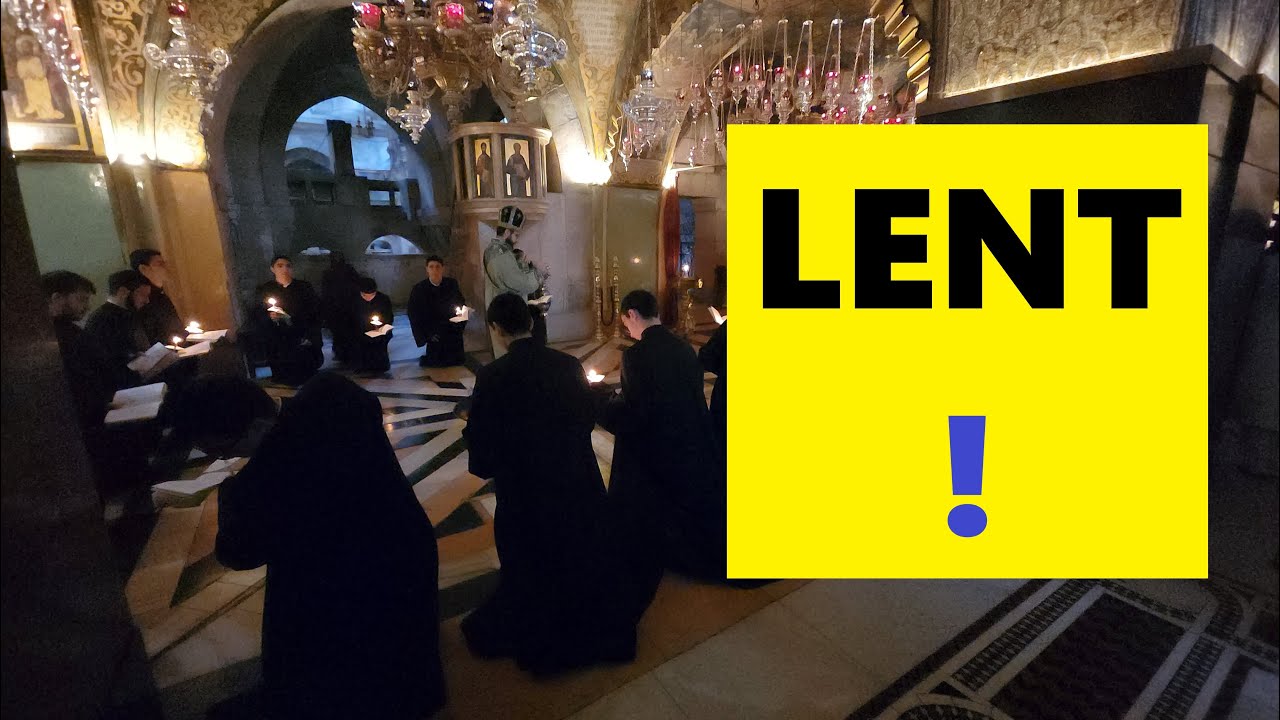
The Holy Mass of the finding of the True Cross (Inventio Crucis) at the Holy Sepulchre in Jerusalem
Автор: The Holy Land, by Zahi Shaked
Загружено: 2024-05-14
Просмотров: 2277
Описание:
Information about the finding of the True Cross (Inventio Crucis) at the Holy Sepulchre in Jerusalem itself will be provided after this announcement. Unfortunately, I have not been able to work as a tour guide because of the war.
Should you wish to support me and my videos please subscribe to my channel and let me guide you through the Holy Land via my videos. In this way, I will be able to continue to do my work of uploading to YouTube. Upon your request and in return I am very much happy to pray for you at the Western Wall and/or light a candle in your name at the Church of the Holy Sepulchre or anywhere else in the Holy Land of Israel.
Should you have a personal request I will be more than happy to respond and even film it in a personal video.
Support and purchase of goods from the Holy Land: https://www.buymeacoffee.com/zahishaked
Support using PayPal: https://www.paypal.com/paypalme/zahis...
Kindly share this site with your other friends/family that are interested in the rich and sacred history of Israel.
Thank you so much
Your tour guide
Zahi Shaked
/ zahishakedisraelitourguide
/ zahi_shaked_israeli_tour_guide
https://linktr.ee/zahishakedtourguide...
The celebrations of the finding of the Cross (Inventio Crucis) began today at the Holy Sepulchre.
Jerusalem is the only place where this feast is still celebrated after the 1969 liturgical reform.
The feast of the Invention of the Cross and the feast of Saint Helena are celebrated in May and commemorate the finding of the most precious relic of Christianity.
According to researchers, the very early Christians did not have any special interest in gathering what we today call relics. They were in touch with Jesus himself or his Apostles and were busy spreading the good news, as can be inferred from the Acts of the Apostles and St. Paul’s letters. In the 3rd and 4th centuries Christians began to long for a sense of physical closeness with Jesus and the first disciples, whom they had not met. It was then that the interest for the objects of the Passion and the mortal remains of the martyrs was extended.
The most well-known figure on this quest to look for relics is probably St.Helena, mother of Emperor Constantine and Empress of the Roman Empire, who herself travelled to the Holy Land around the year 326 with this purpose. According to tradition, she discovered the True Cross. That is why it is said that St. Helena is the first archaeologist. The Invention of the True Cross is commemorated every year on May 7 with a Solemn Mass in the Church of the Holy Sepulchre in Jerusalem.
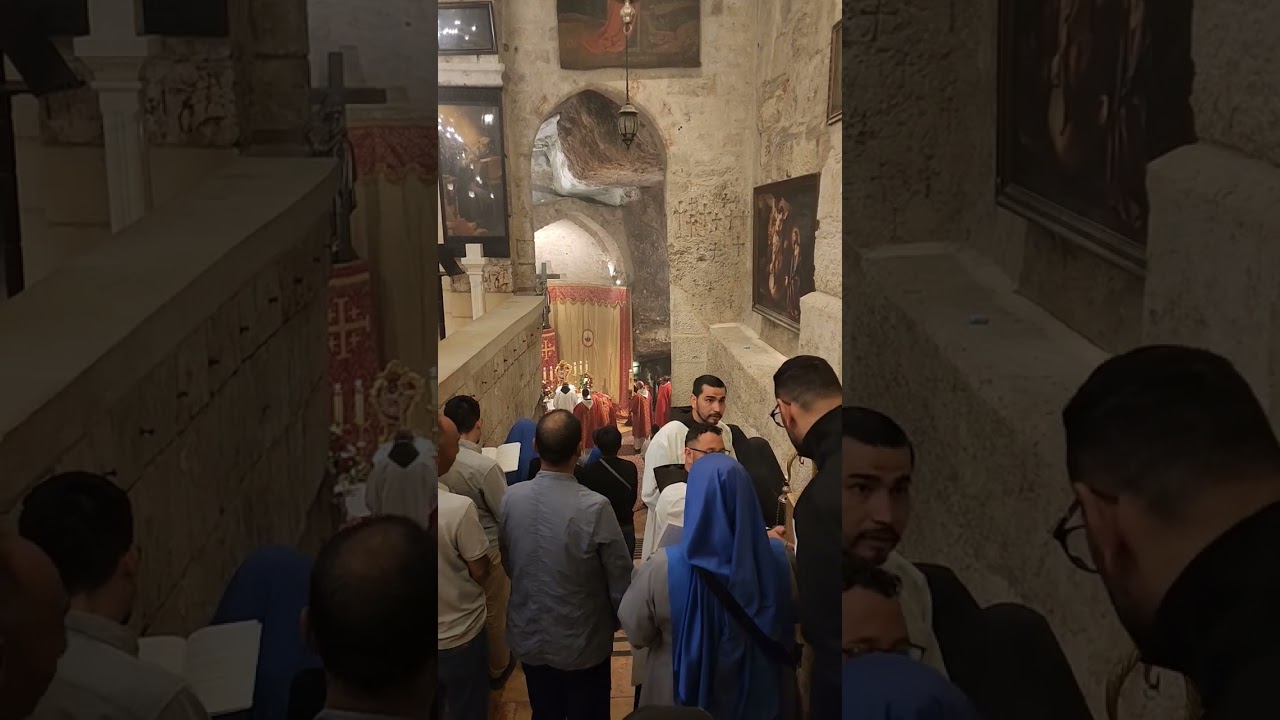
The celebration takes place in a chapel in the lowest part of the church, two flights of stairs down, at the very site where she is said to have found the precious relic. Just above this chapel is a balcony decorated with rich hanging lamps from which it is said that St. Helena saw the cross. The chapel has an altar and a big statue of a woman holding a large cross. To the right of the altar is the place that marks where the Holy Cross was found.
When we say the invention of the cross, we are not speaking of the creation of something that formerly did not exist. The origins of crucifixion by the cross dates back to the Assyrians and Babylonians. The Persians were known to use this method in the sixth century B.C. It was introduced to the Romans in the third century B.C., by the Phoenicians. Crucifixion was used as a tool for a painful and shameful execution for prisoners. For Christians, it is now a sign of glory and worship.
Invention in the sense used by the church comes from the Latin word inventio, meaning discovery or finding. In this feast, we celebrate the finding of the true cross by St. Helena in 326 A.D. More importantly, we commemorate Jesus’ life, his salvific death and Resurrection, a victory over sin and death.
For centuries, the feast was celebrated annually on 3 May. Additions to the Roman calendar moved the Feast to 7 May, a date significant in the Armenian calendar as the Apparition of the Holy Cross over Jerusalem in 451 A.D., as recorded by St. Cyril of Jerusalem. In 1960, the feast was removed from the Roman calendar and was incorporated into the Feast of the Exaltation of the Cross, celebrated 14 September. This three-fold Feast celebrates not only the finding of the true cross, but also the dedication of the Constantinian Basilica built over the sites of Calvary and the Tomb, and the return of the Cross to Jerusalem in 629 A.D., captured in the Persian conquest of Jerusalem.
After the celebration, the clergy and people process with the relic of the True Cross from the chapel to the Tomb of Christ. They process three times around the Tomb with the relic, which is then exposed for veneration throughout the day.
Повторяем попытку...
Доступные форматы для скачивания:
Скачать видео
-
Информация по загрузке: