[2026] TOEFL iBT Reading Read an Academic Passage | Step-by-Step Strategies
Автор: myTOEFL
Загружено: 2026-02-11
Просмотров: 168
Описание:
Practice Test Link: https://www.mytoefl.io/practice-test/...
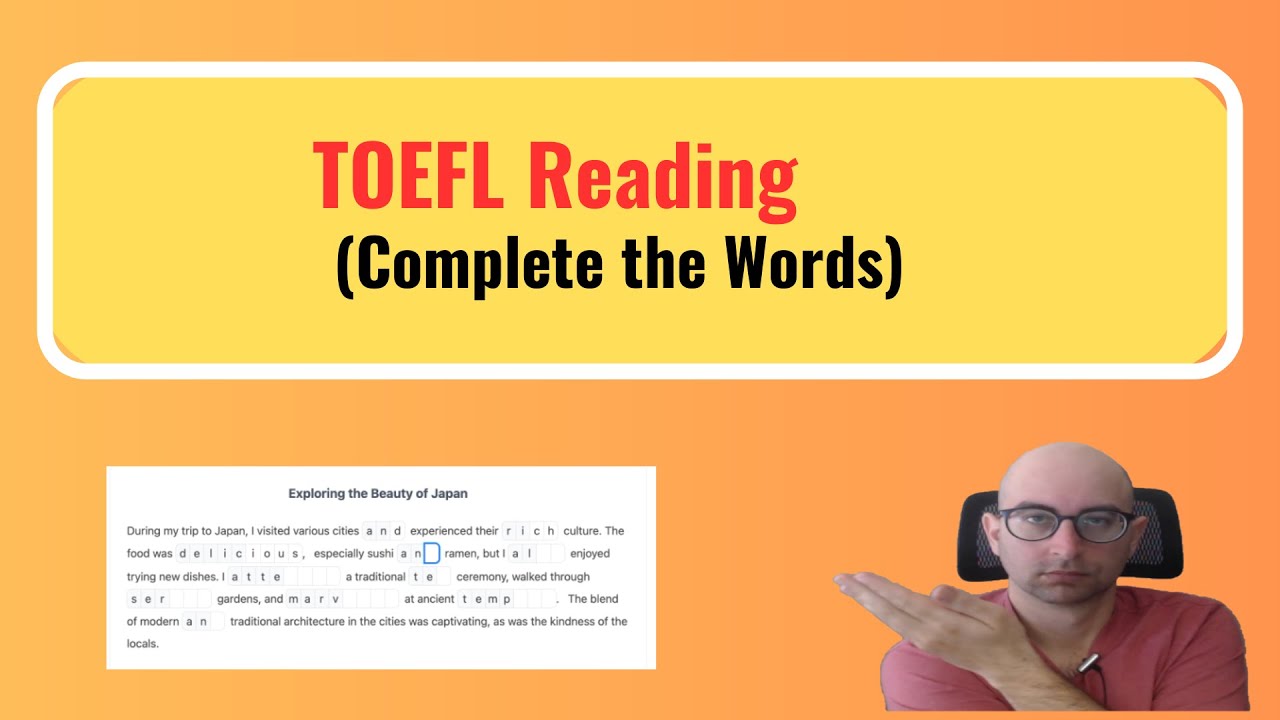
Welcome to this instructional session focused on the TOEFL iBT Reading section, specifically the Read an Academic Passage task. In the 2026 format, this task is designed to simulate the experience of reading university-level textbooks. Your goal is not just to translate words, but to understand the author's main argument, the supporting evidence provided, and the logical flow of information. Today, we will use a passage about Silk Road exchanges to demonstrate the reading skills necessary for success. This text is a classic example of an academic historical account, presenting causes, effects, and complex relationships between societies.
The Read an Academic Passage task measures several critical skills. First, it assesses your ability to identify the primary purpose of the text—what is the author trying to teach you? Second, it tests your ability to find specific factual information that supports that main idea. Third, it evaluates your ability to infer meaning from context, especially when dealing with advanced vocabulary or implied information. In our sample text, the author moves from a general definition of the Silk Road to specific examples of goods, then to the transmission of technology, and finally to the negative consequences like disease and conflict. Recognizing this structure is the first step toward comprehension.
Academic passages typically follow a predictable structure. They usually begin with a topic sentence that introduces the main theme. In our example, the first sentence clearly defines the Silk Road as a network of trade routes. Following the topic sentence, you will find supporting details, examples, and explanations. It is crucial to distinguish between the main point and the evidence. For instance, "silk, spices, and metals" are details that support the main point of "economic exchange." Paying attention to transition words is also vital. Words like "Beyond goods" or "However" signal a shift in focus—from physical items to technology, or from positive exchanges to negative impacts.
A deeply effective strategy for this task is to perform a quick structural scan before reading in depth. Look at the first sentence of each paragraph to build a mental map of the text. Paragraph one introduces the trade routes; paragraph two discusses the spread of technology; paragraph three introduces the downsides like disease and politics. Once you have this map, you can read the questions. When a question asks about "technology," you will know immediately to go to the second paragraph, saving you valuable time during the exam. Do not try to memorize every detail; instead, know where to find the information when you need it.
When answering Main Idea questions, look for the option that covers the entire passage, not just one paragraph. A common distractor is an answer choice that is factually true but too specific, focusing only on one detail like "military defense" or "luxury goods." For Detail questions, you must verify your answer by finding a synonym or paraphrase in the text. If the text says cities became "centers of learning," the correct answer might say they were "hubs for education." Always look for this direct evidence before selecting your answer.
Vocabulary questions in the TOEFL Reading section test your ability to use context clues. You may encounter a word like "catalyst." Instead of worrying if you don't know the definition, look at the surrounding sentence. The text says trade was a catalyst because it "encouraged adaptation and experimentation." This cause-and-effect relationship suggests that a catalyst is something that causes or speeds up a change. Similarly, for Negative Fact questions (often phrased as "All of the following are mentioned EXCEPT"), you must methodically eliminate the three options that are found in the text. This requires careful scanning and checking against the passage.
Finally, understanding logical relationships is key for Inference and organizational questions. You need to see how paragraphs connect. In the Silk Road text, the transition from the spread of knowledge to the spread of disease shows a balanced historical view. The author uses contrast to show that global connection had both benefits and costs. Recognizing this "compare and contrast" structure helps you answer questions about the author's purpose and the relationship between different parts of the text.
#toeflreading
#academicenglish
#readingcomprehension
#testprep
#englishlearning
#vocabulary
#mainidea
#inference
#history
#education
#studyhard
Повторяем попытку...
![[2026] TOEFL iBT Reading Read an Academic Passage | Step-by-Step Strategies](https://imager.clipsaver.ru/E_AApP11teQ/max.jpg)
Доступные форматы для скачивания:
Скачать видео
-
Информация по загрузке:
![[2026] TOEFL iBT Reading Read an Academic Passage | Step-by-Step Strategies #0014](https://imager.clipsaver.ru/Er3J6265t9g/max.jpg)








![[2026] TOEFL iBT Reading Read an Academic Passage | Step-by-Step Strategy #0001](https://imager.clipsaver.ru/QPdFGUqv7-c/max.jpg)