CMS Hospital Restraint and Seclusion: The Most Problematic CMS Standards and Proposed Changes 2021
Автор: Conference Panel
Загружено: 2021-08-02
Просмотров: 1729
Описание:
Register Here, https://bit.ly/3C6AhwZ
Do you know the recent change made in restraints by CMS, effective November 29, 2019? CMS changes the term from LIP (licensed independent practitioner to LP (licensed practitioner). This allows hospitals to allow PAs to write orders for restraints in states where they were considered to be dependent practitioners. The changes will be discussed in detail.
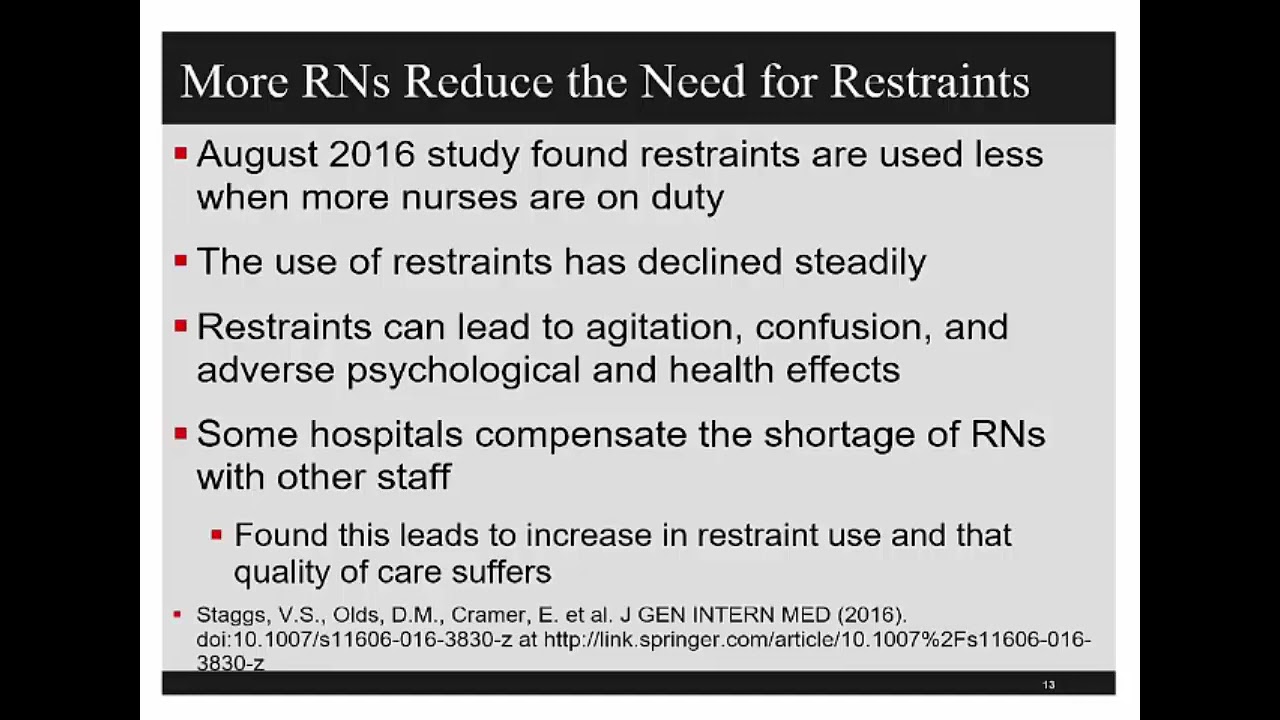
Did you know that the number one area of deficiencies in the CMS CoP is regarding restraints? This program will discuss the most problematic standards in the restraint section. Does your staff understand all 50 pages of the CMS interpretive guidelines?
It will also discuss the new electronic reporting requirements for patients who die in restraints and within 24 hours of being in a restraint.
As discussed, Restraint and Seclusion are a hot spot with both CMS and the Joint Commission and a common area where hospitals are cited for being out of compliance. The restraint policy is one of the hardest to write and understand in healthcare today.
This program will simplify and take the mystery out of that 50-page restraint and seclusion interpretive guidelines. It will provide a crosswalk to the Joint Commission standards.
Every hospital that accepts Medicare patients will have to comply with the interpretive guidelines even if the hospital is accredited by the Joint Commission, HFAP, CIHQ, or DNV Healthcare. Hospitals will need to make sure their policies and procedures comply with these. The guidelines explain the training requirements for the RN doing the one-hour face-to-face visits for patients who are violent and or self-destructive. There are basically 21 rules covered by the CMS interpretive guidelines.
Objectives:-
Define the CMS restraint requirement of what a hospital must document in the internal log if a patient dies within 24 hours with having two soft wrist restraints on.
Recall that CMS requires that all physicians and others who order restraints must be educated on the hospital policy.
Describe that CMS has restraint education requirements for staff.
Discuss that CMS has specific things that need to be documented in the medical record for the one-hour face-to-face evaluation on patients who are violent and or self-destructive.
Outline:-
Right to be free from restrain
Number of deficiencies
Providing a copy of rights to patients
Restraint protocols
Final changes in the hospital improvement rule
PA to order and change from LIP to LP
CMS deficiency reports
CMS changes effectively to internal log and soft wrist restraints
Most current manual
Medical restraints
Behavioral health restraints
Violent and self-destructive behavior
Definition of restraint and seclusion
Manual holds of patients
Leadership responsibilities
Two soft wrist restraints, internal log, and documentation
Culture of safety
Drugs used as a restraint
Standard treatment
Learning from each other
Restraints do not include
Side rails, forensic restraints, freedom splints, immobilizers
Assessment
Need order ASAP
Order from LIP and notification of attending physician ASAP
Documentation requirements
Least restrictive requirements
Alternatives
RNs and One-hour face to face assessment
Training for RN doing one-hour face to face assessment
New training requirements
New death reporting requirements
Ending at the earliest time
Revisions to the plan of care
PI requirements
Time-limited orders
Renewing orders
Staff education
First aid training required
Stricter state laws
Monitoring of patients in R/S
Joint Commission Hospital Restraint standards and differences from CMS
Who Should Attend?
All nurses with direct patient care, compliance officer, chief nursing officer, chief of medical staff, COO, Nurse Educator, ED nurses, ED physicians, Medical staff coordinator, risk manager, patient safety officer, senior leadership, hospital legal counsel, Risk Manager, Chief Risk Officer, PI director, Joint Commission coordinator, nurse managers, quality director, chief medical officer, security guards, compliance officer, chief risk officer, accreditation and regulation staff and others responsible for compliance with hospital regulations and anyone involved in the restraint or seclusion of patients. Persons responsible for rewriting the hospital policies and medical staff bylaws should attend. This also includes staff that removes and applies them as part of their care such as radiology techs, ultrasound technologists, transport staff, and others.
Speaker, Ms. Laura A. Dixon (BS, JD, RN, CPHRM)
Laura A. Dixon served as the Director, Facility Patient Safety and Risk Management, and Operations for COPIC from 2014 to 2020. In her role, Ms. Dixon provided patient safety and risk management consulting and training to facilities, practitioners, and staff in multiple states. Ms. Dixon has more than twenty years of clinical experience in acute care facilities, including critical care, coronary care, peri-operative services, and pain management.
Повторяем попытку...
Доступные форматы для скачивания:
Скачать видео
-
Информация по загрузке: