Driving on the Transfăgărășan Hairpin Road - Part 1 (Cârțișoara - Vidraru Dam) (Romania) 2025
Автор: Valentin Ionescu
Загружено: 2025-09-14
Просмотров: 83
Описание:
The Transfăgărășan (or DN7C - National Road 7C) is a paved road in Romania that connects two historical Romanian provinces, Muntenia and Transylvania, crossing the Făgărăș Mountains, the highest here, which are part of the Southern Carpathians (hence the name formed from the prefix "trans-" + the word "Făgărăș").
According to official data, the Transfăgărășan has a length of 151 km, between the localities of Bascov, Argeș County and Cârțișoara, Sibiu County. However, in the understanding of most people, the road begins somewhere near the locality of Căpățâneni (more precisely Căpățânenii Ungureni) (km 35 DN7C), the last locality in Argeș County located on DN7C and ends near the commune of Cârțișoara, Sibiu County.
The Transfăgărășan reaches an altitude of 2,042 m near the tunnel close to the Bâlea Lake, thus being the second in altitude in the ranking of alpine roads in Romania, after the Transalpina (DN67C), in the Parâng Mountains, which climbs to 2,145 m.
The Transfăgărășan has 833 bridges and 28 viaducts and 5 tunnels, the Capra-Bâlea tunnel being the longest tunnel in Romania and the tunnel located at the highest altitude here, having a length of 884 meters, a width of 6 meters, a height of 4.40 meters, with a sidewalk with a width of 1 m, being electrically lit and naturally ventilated.
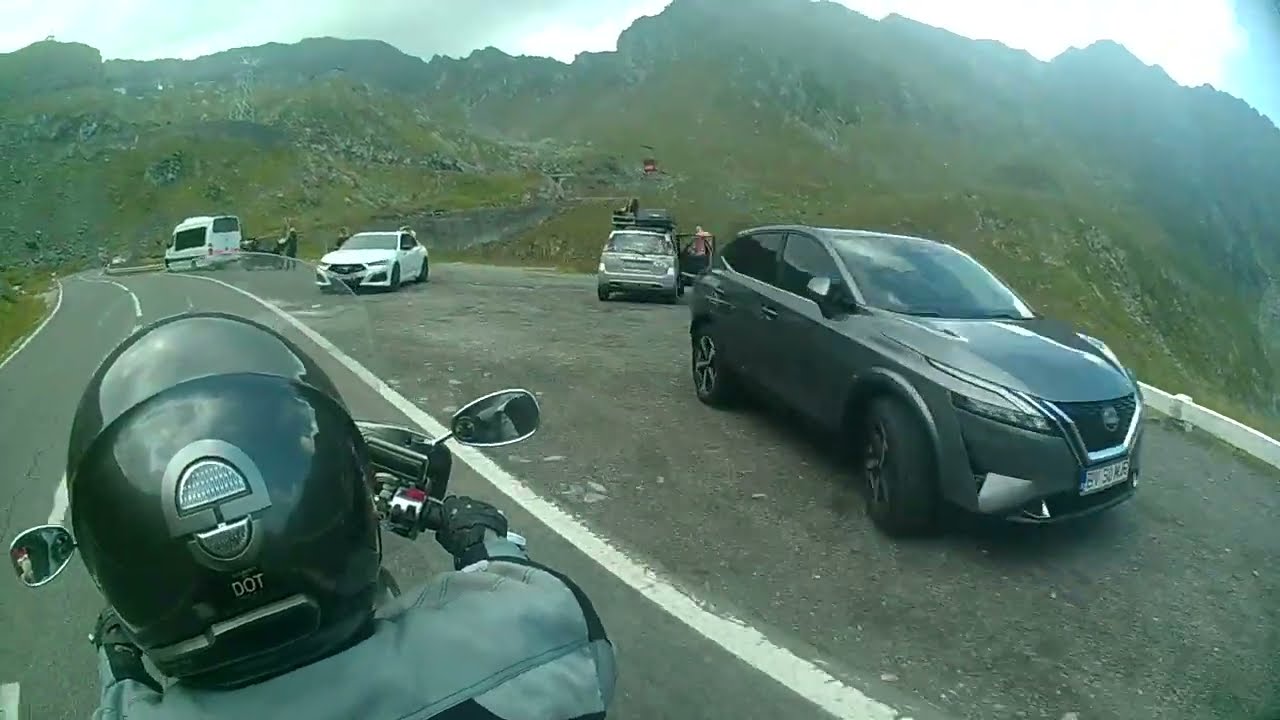
With its numerous serpentines and hairpin bends, the Transfăgărășan slips between the two highest peaks in Romania, Moldoveanu and Negoiu, revealing to the eyes superb landscapes, unique in the world, with rocky massifs, pastures, forests, but also water sources such as the glacial Bâlea Lake or the Capra and Bâlea waterfalls, the latter being a waterfall of approximately 68 m, the largest of its kind in Romania, located at an altitude of approximately 1,230 m. Along the Transfăgărășan route there are historical monuments, such as the Poienari Fortress, residence of ruler Vlad Țepeș (known as Vlad the Devil and used as a source of inspiration for the character Dracula), Poarta Geniștilor (the Sappers Gate) (elevation 1200) and Poarta Întâlnirii (the Meeting Gate) (elevation 1600), but also exceptional engineering achievements such as the artificial lake, the hydroelectric power plant and the Vidraru Dam.
The Vidraru Dam is part of the hydropower complex on the Argeș River, built between 1960 and 1966, a complex that also includes the main hydroelectric power plant (originally called “Gheorghe Gheorghiu-Dej”) and a set of 14 downstream micro-hydropower plants that develop an energy production of 350 million kWh.
The Vidraru Dam is a double-arch concrete dam and has a height of 166.6 meters, a crown length of 307 m and a thickness of 25 m at the base and 6 m at the crown. The dam arch comprises 22 vertical columns connected by expansion joints, and each column is sectioned into 2 m high plates. 480,000 cubic meters of unreinforced, impermeable concrete, type B600, were required for its construction. The dam body is located between the slopes of the Pleașa and Vidraru mountains, being crossed by 9 horizontal galleries from which its integrity is controlled and measured.
The Transfăgărășan was built during the communist period 1969 - 1974, at the initiative of Nicolae Ceaușescu. In 1974, its official inauguration took place, but the works were completed in its current form only in 1980, when its asphalting and other related activities were completed. Although it was initially designed as a single-lane road, plus a shoulder, in 1971 it was decided that it would have two lanes of traffic, cumulating 6 m width and a 1 m shoulder.
The construction of the Transfăgărășan required great material and human sacrifices. Approximately 3 million tons of rock were displaced, using only a little over 6,520 t of dynamite, of which 20 t only at the Capra-Bâlea tunnel. Also, 3,573 t of cement, 89 t of concrete steel, 24,000 anchors, 129 t of welded mesh, 14,200 square meters of framework, 1,750 linear meters of concrete tubes, 4,100 linear meters of pipe, 50 tons of steel structures, 6,900 cubic meters of sand, 6,000 cubic meters of gravel, 3,000 tons of crash stone, 740 lighting lamps were used. Both military personnel (sapper troops of the Romanian army) and civilians contributed to its construction. Many people died during the construction of it. In honor of those who perished, two monuments were erected, the Sappers Gate and the Meeting Gate.
The Transfăgărășan is open to road traffic each year only from June 30 to November 1, due to the accumulation of large amounts of snow during the winter, as well as the risk of avalanches and rockfalls.
The Transfăgărășan appeared in 2009 on the English TV show “Top Gear”, where it was proclaimed by its producer, Jeremy Clarkson, as "the best road in the world".
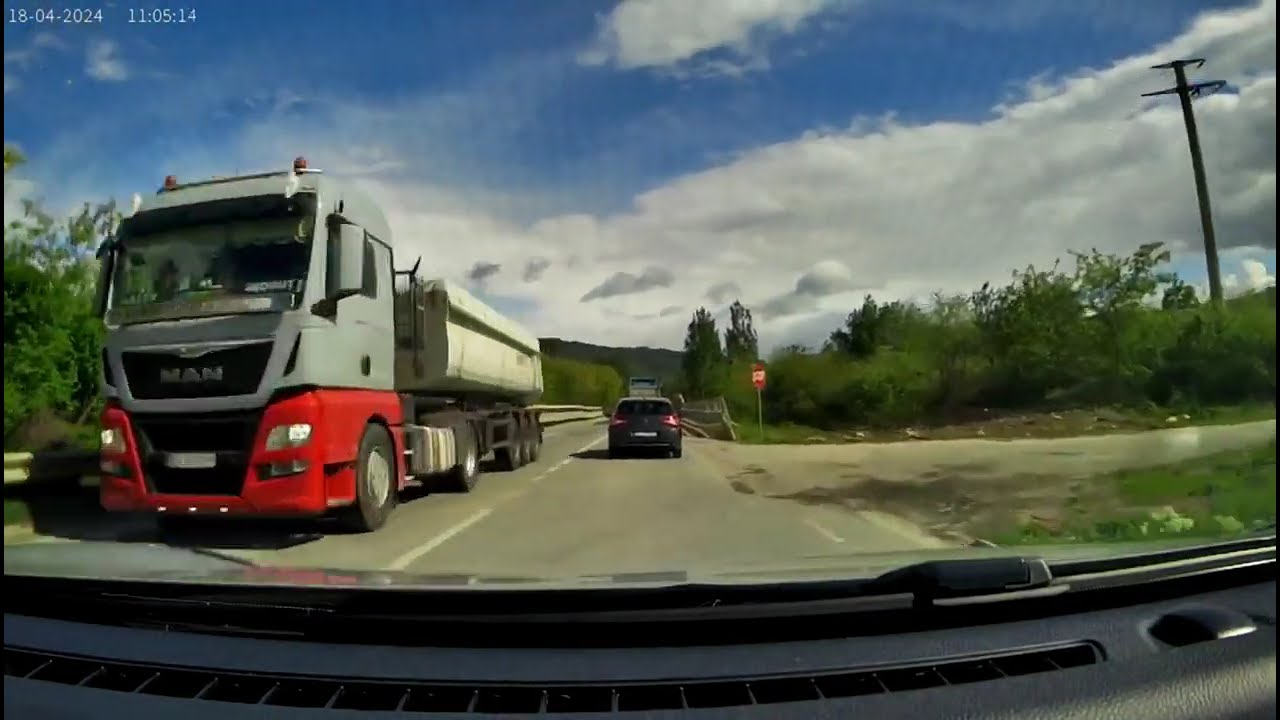
The footage posted here includes the Cârțișoara - Vidraru Dam segment of the Transfăgărășan.
On this route I had 7 encounters with bears, that can be observed in minutes 01:10:40, 01:16:50, 01:36:15, 01:37:15, 01:38:20, 01:42:05, 01:48:00.
Повторяем попытку...

Доступные форматы для скачивания:
Скачать видео
-
Информация по загрузке:

![✈️ 30 MINS of PLANE TAKEOFFS & LANDINGS 🇹🇭 Phuket Airport Plane Spotting Thailand [HKT/VTSP]](https://imager.clipsaver.ru/WD5vl2Jzd30/max.jpg)