What does a Flamingo bird sound like? - Animal Sounds
Автор: Animoo Sound
Загружено: 2023-01-10
Просмотров: 8050
Описание:
👉 Please subscribe to our channel
/ @animoosound
Did you know?
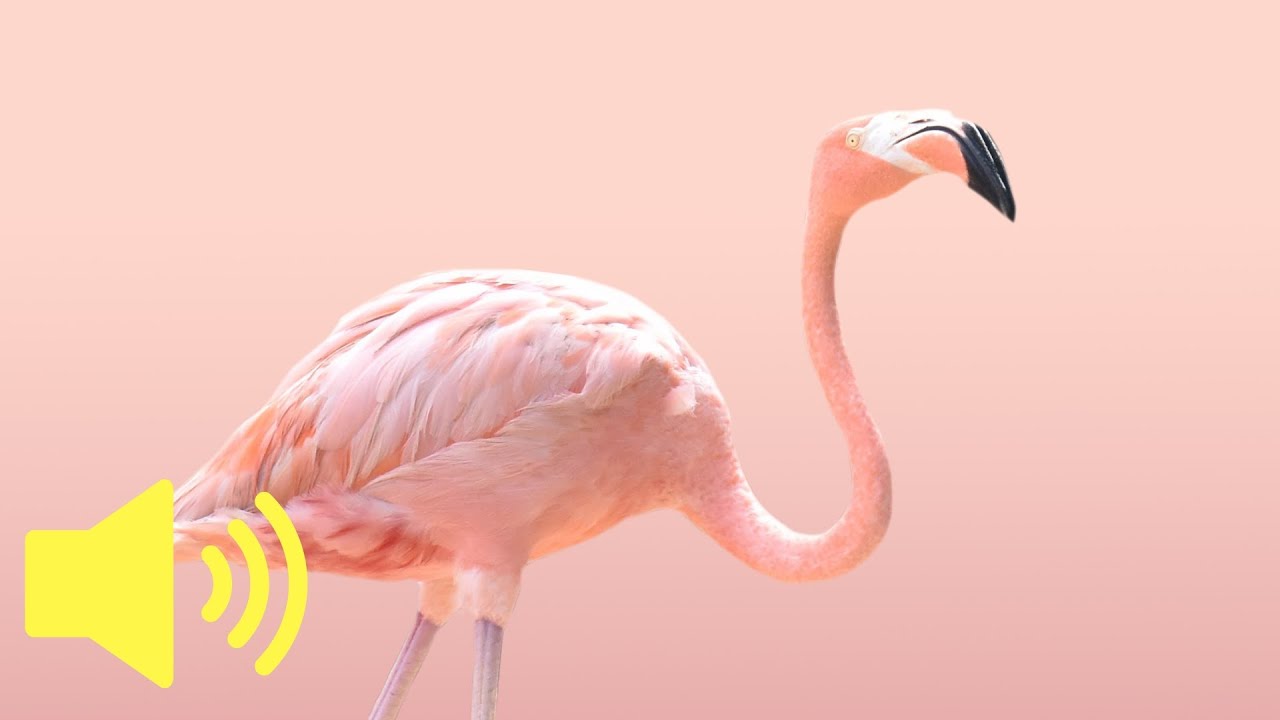
Flamingos are iconic pink birds with long legs and necks. They are commonly associated with tropical climates, and sipping exotic drinks while munching on coconut! In reality, different species of flamingos are native to Central and South America, Africa, parts of Europe, and Asia.
Flamingos are large, pink wading birds with long legs. Their legs appear to bend backwards (see Interesting Facts for more information on this!), and are used to wade through waters searching for food. Flamingo plumage, or feathers, coloration ranges from pale to dark pink. In the wild, the more colorful the flamingos, the healthier they are.
Interesting Facts About the Flamingo:
Lots of the points in “Description of the Flamingo” require additional facts, because flamingos are actually unbelievably interesting creatures! They are honestly really odd creatures, and have a number of traits unique among birds.
1. Long Legs – One of the more unique features of flamingos is their long legs. This is not just because they are so long and dainty, but also because their knees bend backwards! Or do they? Flamingos’ “knees” are actually their ankles! The joint you see midway up the leg is actually the ankle, and the knee is up underneath the feathers. That is a lot of time spent walking on your tippy toes!
2. Fabulous Feathers – The most obvious, and magnetic, trait of flamingos is their bright coloration. Flamingos’ bright pink feathers are actually a result of their diet. When flamingos feed on shrimp and other small crustaceans, they consume high amounts of carotenoids. Carotenoids are the pigment that colors carrots!
3. Other Birds Pale in Comparison – In the wild, the brightest flamingos are the ones that feed the most, and thus are the healthiest birds. When in zoos, coloration has nothing to do with health. Some species of shrimp and plankton contain higher levels of carotenoids. If a flamingo in a zoo is not as brightly colored as it’s wild counterparts, it may simply be eating a different species of shrimp. This is also true for different species of flamingos living in various regions, which may have access to less carotene-rich food.
4. Gray-t Parents – Flamingo chicks look nothing like their parents. When the chick hatches, it is white or grey in color instead of a vibrant pink. This is, of course, because they haven’t eaten any shrimp or plankton yet.! Luckily for our “ugly duckling” chick, both parents will be alternating nest duties. This dedication means double the food and protection for the chick.
There are six different species of flamingos spread across various parts of the globe. Regardless of the region, flamingos flock to shallow lakes and lagoons. They prefer shallow water, as they wade in search of food, and their prey thrives in shallow water conditions.
Many species actually choose to live in areas where the water is too salty, or acidic, for other animals to survive. Though they have no neighbors (including neighbors who may want to eat them), flamingos find these deserted waters teeming with algae and small crustaceans. Not only do they have an endless feast, but they have virtually no one to compete with.
Four species of flamingos are found in Central and South America, and two species are found in Africa, Europe, and Asia. Chilean flamingos, Andean flamingos, and puna flamingos are native to South America. American flamingos, also known as Caribbean flamingos, are found in Mexico, the Caribbean, and northern South America. Greater flamingos live in Africa, Europe, and Asia, while lesser flamingos live only in Africa.
Diet of the Flamingo:
Different species of flamingos have different feeding behaviors. Some species, like the puna, Andean, and lesser flamingos, use filter feeding to eat algae and plankton. Other species filter larger prey, like shrimp, mollusks, insects, and larvae.
While the mechanics differ slightly from species to species, all of these interesting birds feed with their heads upside down. The birds take in mouthfuls of water, filter food out through hair-like lamellae (very similar to baleen in whales) and eat the prey left behind.
Unlock the sounds of nature at @animoosound ! We provide you with an extensive library of animal sound effects, from birds chirping to elephants trumpeting. If you are someone who are curious and loves learning about wildlife, our library provides expansive wildlife sound effects from all around the world ready for you to explore!
If you are interested in exploring more about wildlife, nature and animal sound effects, please support us by clicking on the like, subscribe and notification buttons for our videos!
#flamingo #flamingos #pink #animals #animal #birds #sound #wildlife #nature #animalsounds
Повторяем попытку...
Доступные форматы для скачивания:
Скачать видео
-
Информация по загрузке: