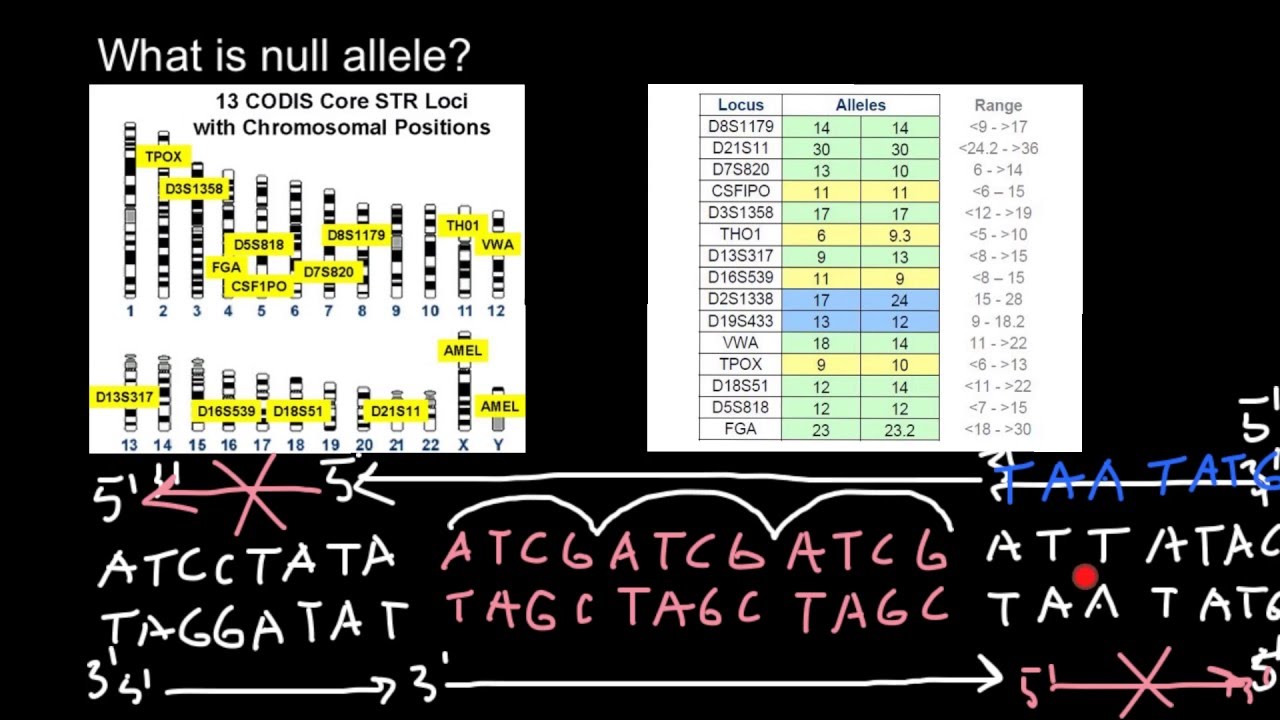
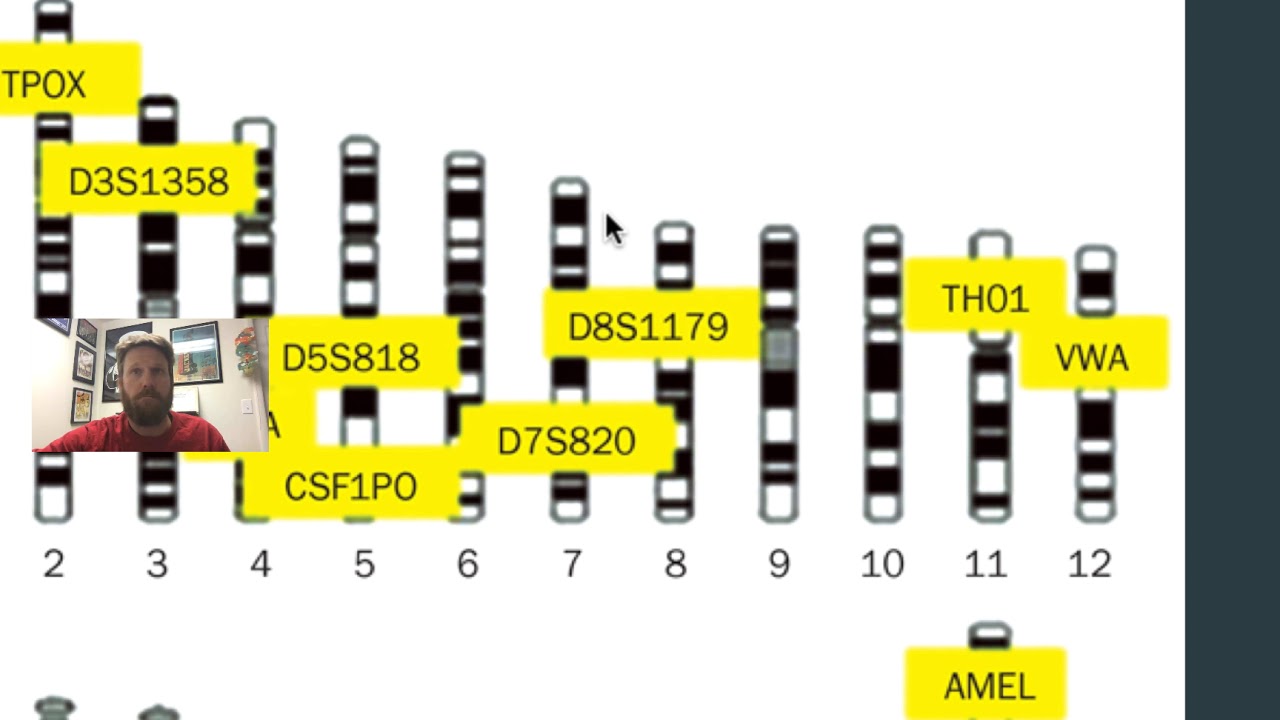
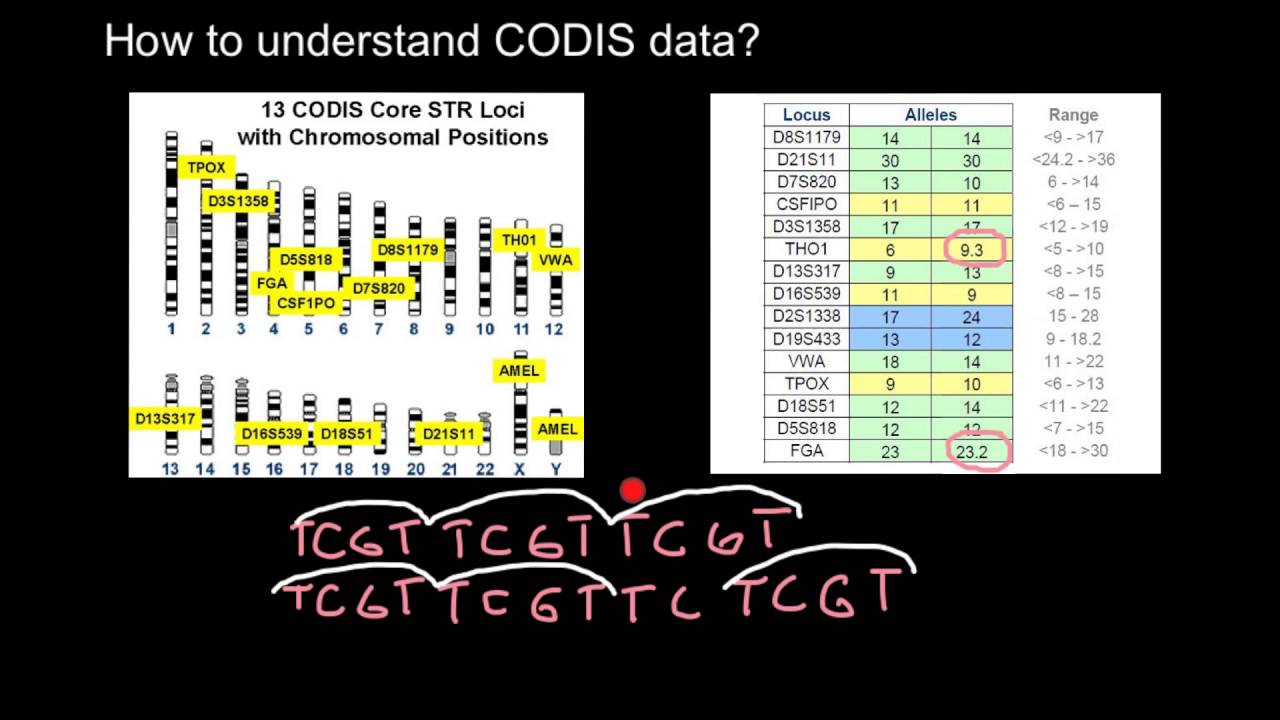
How to analyze and understand CODIS data?
Автор: Nikolay's Genetics Lessons
Загружено: 2016-05-19
Просмотров: 6694
Описание:
Q: What is CODIS?
A: CODIS is the acronym for the “Combined DNA Index System” and is the generic term used to describe the FBI’s program of support for criminal justice DNA databases as well as the software used to run these databases. The National DNA Index System or NDIS is considered one part of CODIS, the national level, containing the DNA profiles contributed by federal, state, and local participating forensic laboratories.
CODIS DNA Databases
Q: How do these DNA databases using CODIS work?
A: For example, in the case of a sexual assault where an evidence kit is collected from the victim, a DNA profile of the suspected perpetrator is developed from the swabs in the kit. The forensic unknown profile attributed to the suspected perpetrator is searched against their state database of convicted offender and arrestee profiles (contained within the Convicted Offender and Arrestee Indices, if that state is authorized to collect and database DNA samples from arrestees). If there is a candidate match in the Convicted Offender or Arrestee Index, the laboratory will go through procedures to confirm the match and, if confirmed, will obtain the identity of the suspected perpetrator. The DNA profile from the evidence is also searched against the state’s database of crime scene DNA profiles called the Forensic Index. If there is a candidate match in the Forensic Index, the laboratory goes through the confirmation procedures and, if confirmed, the match will have linked two or more crimes together. The law enforcement agencies involved in these cases are then able to share the information obtained on each of the cases and possibly develop additional leads.
Q: What happens after there is a hit in the DNA database?
A: CODIS was designed to compare a target DNA record against the DNA records contained in the database. Once a match is identified by the CODIS software, the laboratories involved in the match exchange information to verify the match and establish coordination between their two agencies. The match of the forensic DNA record against the DNA record in the database may be used to establish probable cause to obtain an evidentiary DNA sample from the suspect. The law enforcement agency can use this documentation to obtain a court order authorizing the collection of a known biological reference sample from the offender. The casework laboratory can then perform a DNA analysis on the known biological sample so that this analysis can be presented as evidence in court.
Q: How do laboratories count CODIS hits?
A: The procedure used for counting hits gives credit to those laboratories involved in analyzing and entering the relevant DNA records into CODIS. The system’s hits are tracked as either an offender hit (where the identity of a potential suspect is generated) or as a forensic hit (where the DNA profiles obtained from two or more crime scenes are linked but the source of these profiles remains unknown). These hits are counted at the state and national levels. CODIS was established by Congress to assist in providing investigative leads for law enforcement in cases where no suspect has yet been identified; therefore a CODIS hit provides new investigative information on these cases. The hits are reported as “Investigations Aided,” thus enabling the FBI to measure the effectiveness of both the CODIS software and National DNA Index System; see http://www.fbi.gov/about-us/lab/codis... for NDIS statistics by state.
Q: Do laboratories track conviction rates based on the CODIS hit?
A: Laboratories that participate in the National DNA Index System are not required to track local or state conviction rates based on CODIS hits. As discussed above, CODIS was designed to assist law enforcement by providing potential investigative information in those cases in which crime scene evidence has yielded a DNA profile but no suspect has been identified. Once the hit information is provided to law enforcement, neither the FBI nor the local laboratory is typically notified as to the resolution of the investigation-aided case.
Q: Why do laboratories only send out the hit notifications to the law enforcement contributor?
A: A law enforcement agency sends the crime scene evidence to the forensic DNA laboratory for analysis and production of a DNA record. At the time of the hit, there may not be an open or active investigation or other judicial proceeding and, therefore, the submitting law enforcement agency becomes the laboratory’s point of contact for hit notification.
Повторяем попытку...
Доступные форматы для скачивания:
Скачать видео
-
Информация по загрузке: