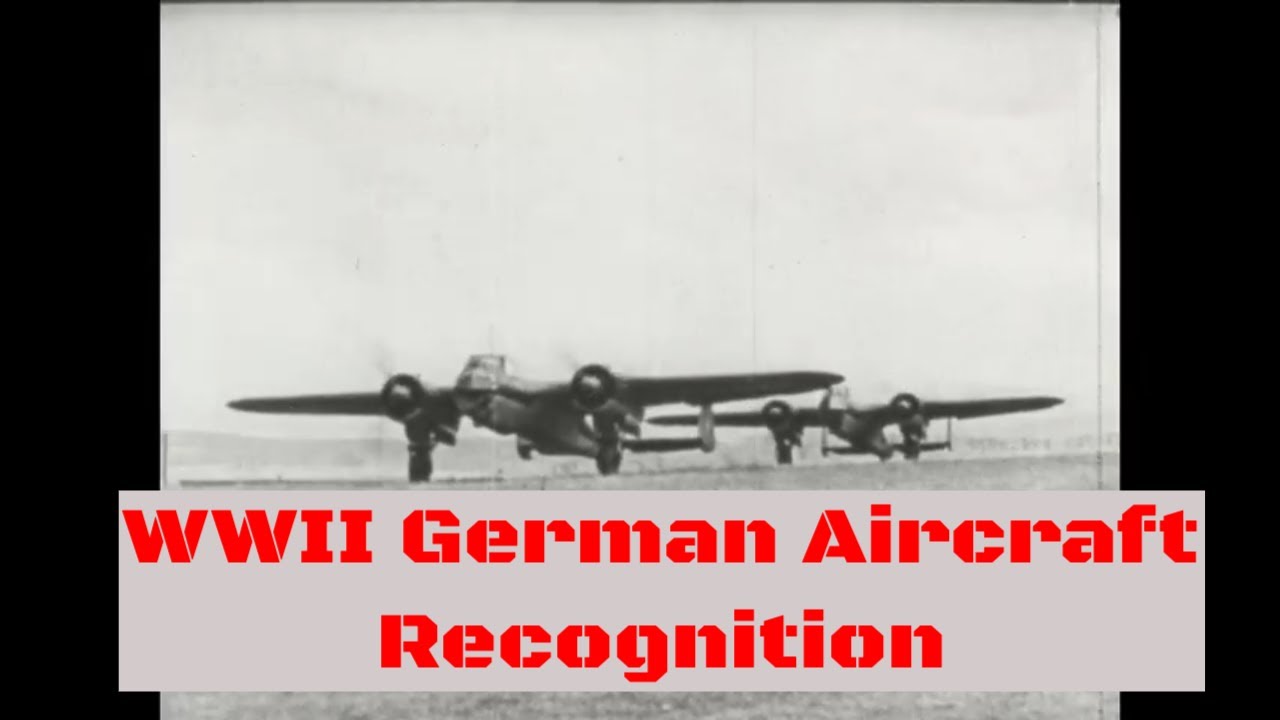
WWII GERMAN AIRCRAFT IDENTIFICATION FILM JUNKERS Ju-88, Ju-86, DORNIER Do-217 XD10424
Автор: PeriscopeFilm II
Загружено: 2019-11-20
Просмотров: 2404
Описание:
Disclaimer:
This historic German film was produced during WWII as propaganda in support of the National Socialist regime. It is presented in its original form as an historical document so that students, educators, researchers and the general public can see how the Nazi regime justified its criminal activities. The political symbols of the regime, including the flag, swastika and eagle, may appear on screen. Periscope Film absolutely condemns the Nazi regime and affirms that it committed grave atrocities, war crimes, and crimes against humanity before and during WWII. These include the tragic, mass extermination of millions of innocent civilians. We preserve these films in part so that these terrible events and victims are not forgotten.
"Those that fail to learn from history are doomed to repeat it." – Winston Churchill
Visit: • Disclaimer Regarding German WWII Content o...
This silent German bomber aircraft identification film shows the Junkers Ju-88, the Dornier Do-217 twin engine bomber at 5:56 and the Ju-86 at 10:09. The film was made for the benefit of anti-aircraft gun crews as well as flight crews, so as to avoid friendly fire incidents.
The Junkers Ju 88 was a German World War II Luftwaffe twin-engined multirole combat aircraft. Junkers Aircraft and Motor Works (JFM) designed the plane in the mid-1930s as a so-called fast bomber that would be too fast for fighters of its era to intercept. It suffered from technical problems during its development and early operational periods but became one of the most versatile combat aircraft of the war. Like a number of other Luftwaffe bombers, it served as a bomber, dive bomber, night fighter, torpedo bomber, reconnaissance aircraft, heavy fighter and at the end of the war, as a flying bomb.
Despite a protracted development, it became one of the Luftwaffe's most important aircraft. The assembly line ran constantly from 1936 to 1945 and more than 16,000 Ju 88s were built in dozens of variants, more than any other twin-engine German aircraft of the period. Throughout production the basic structure of the aircraft remained unchanged.
The Dornier Do 217 was a bomber used by the German Luftwaffe during World War II as a more powerful development of the Dornier Do 17, known as the Fliegender Bleistift (German: "flying pencil"). Designed in 1937 and 1938 as a heavy bomber but not meant to be capable of the longer-range missions envisioned for the larger Heinkel He 177, the Do 217's design was refined during 1939 and production began in late 1940. It entered service in early 1941 and by the beginning of 1942 was available in significant numbers.
The Dornier Do 217 had a much larger bomb load capacity and had much greater range than the Do 17. In later variants, dive bombing and maritime strike capabilities using glide bombs were experimented with, considerable success being achieved. Early Do 217 variants were more powerful than the contemporary Heinkel He 111 and Junkers Ju 88, having a greater speed, range and bomb load. Owing to this it was called a heavy bomber rather than a medium bomber. The Do 217 served on all fronts in all roles. On the Eastern Front and Western Front it operated as a strategic bomber, torpedo bomber and reconnaissance aircraft. It also performed tactical operations, either direct ground assault or anti-shipping strikes during the Battle of the Atlantic and Battle of Normandy. The Do 217 was also converted to become a night fighter and saw considerable action in the Defence of the Reich campaign until late in the war.
The Junkers Ju 86 was a German monoplane bomber and civilian airliner designed in the early 1930s, and employed by various air forces on both sides during World War II. The civilian model Ju 86B could carry ten passengers. Two were delivered to Swissair and five to Deutsche Luft Hansa. In addition a single civilian Ju 86Z was delivered to Sweden's AB Aerotransport.
Motion picture films don't last forever; many have already been lost or destroyed. We collect, scan and preserve 35mm, 16mm and 8mm movies -- including home movies, industrial films, and other non-fiction. If you have films you'd like to have scanned or donate to Periscope Film, we'd love to hear from you. Contact us via the link below.
This film is part of the Periscope Film LLC archive, one of the largest historic military, transportation, and aviation stock footage collections in the USA. Entirely film backed, this material is available for licensing in 24p HD and 2k. For more information visit http://www.PeriscopeFilm.com
Повторяем попытку...
Доступные форматы для скачивания:
Скачать видео
-
Информация по загрузке:


