Cell Culture's Unsung Hero
Автор: Lilac
Загружено: 2026-01-31
Просмотров: 0
Описание:
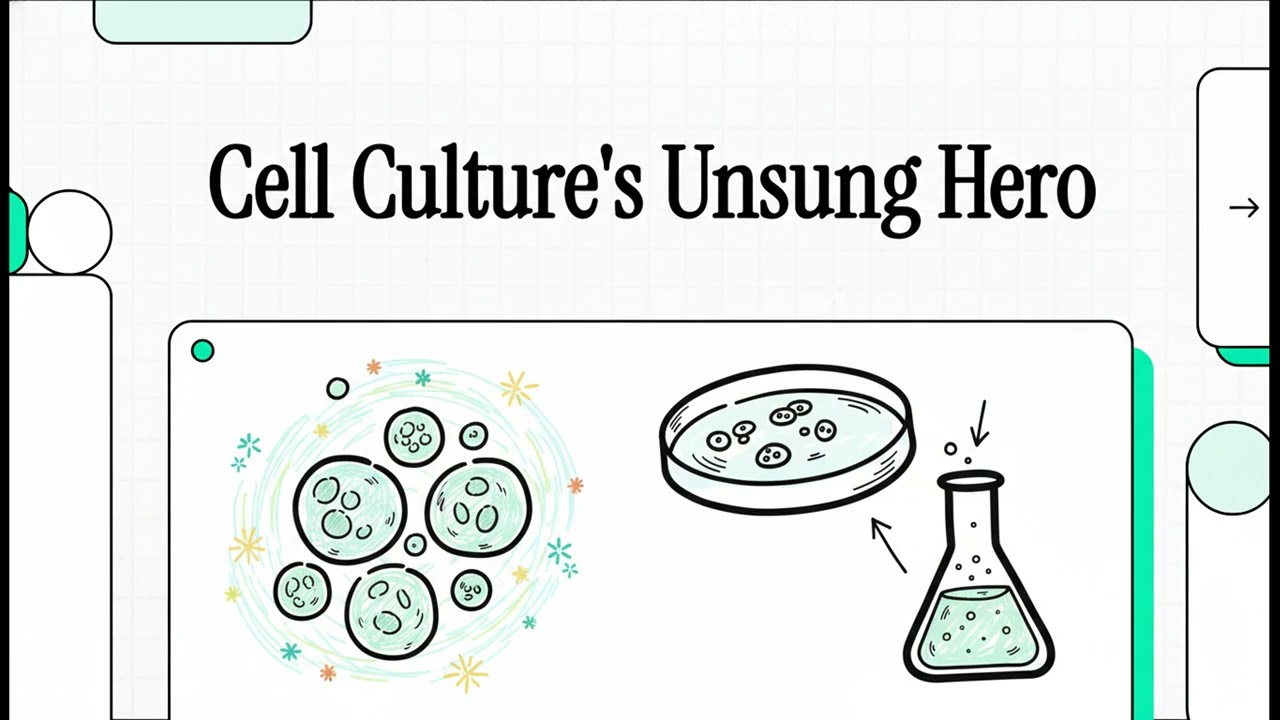
The success of cell culture largely depends on one critical but often overlooked component—the cell culture medium. It is the unsung hero that provides cells with the nutrients, energy, and environmental support needed for survival, growth, and function outside the body. Without an appropriate medium, even the most robust cells cannot survive in vitro.
What Is Cell Culture Medium?
Cell culture medium is a nutrient-rich solution designed to mimic the internal environment of the organism from which the cells are derived. It supplies essential substances that allow cells to grow, divide, and maintain their physiological functions under laboratory conditions.
Components of Cell Culture Medium:
1. Inorganic Salts:
These maintain osmotic balance and pH of the medium and provide essential ions such as sodium, potassium, calcium, magnesium, chloride, and phosphate.
2. Carbohydrates:
Glucose is the primary energy source, supplying cells with energy for metabolism and growth.
3. Amino Acids:
Both essential and non-essential amino acids are required for protein synthesis and cell maintenance.
4. Vitamins:
Vitamins act as coenzymes in metabolic reactions and support cell growth and survival.
5. Serum:
Serum, commonly fetal bovine serum (FBS), provides growth factors, hormones, attachment factors, and protective proteins. It also helps neutralize toxins.
6. Growth Factors and Hormones:
These regulate cell proliferation, differentiation, and specialized cellular functions.
7. Antibiotics (Optional):
Antibiotics such as penicillin and streptomycin are added to prevent bacterial contamination, though their routine use is discouraged.
Types of Cell Culture Media:
1. Natural Media:
Includes biological fluids like plasma, serum, and tissue extracts. These support cell growth but lack consistency.
2. Artificial (Synthetic) Media:
Prepared using known chemical components. Examples include MEM, DMEM, RPMI-1640, and Ham’s F-12.
3. Serum-Free Media:
Formulated without serum and supplemented with specific growth factors. These offer greater consistency and reduced contamination risk.
Functions of Cell Culture Medium:
The medium provides nutrients, removes waste products, maintains pH and osmotic balance, and supports cell attachment and proliferation. It also plays a role in cell signaling and differentiation.
Factors Affecting Medium Performance:
pH, temperature, gas concentration (CO₂), sterility, and frequency of medium change significantly influence cell growth and viability.
Conclusion:
Cell culture medium is truly the unsung hero of in vitro cell culture. By recreating the natural cellular environment, it enables cells to survive, grow, and function outside the body. A well-chosen and properly maintained medium is essential for successful cell culture and meaningful experimental outcomes.
Повторяем попытку...
Доступные форматы для скачивания:
Скачать видео
-
Информация по загрузке: