Should You Always Avoid Passive Voice When Writing?
Автор: AutoCrit
Загружено: 2019-08-30
Просмотров: 3690
Описание:
Active & Passive Voice, with Examples
https://www.autocrit.com/blog/active-...
In this video, Jaycie takes a walk through the world of every writer's favorite (yes, we're being facetious) curse: passive voice.
What are active voice and passive voice in English grammar? How can you tell when passive voice has crept in while writing a novel?
And how do you identify the circumstances in which passive voice is actually a good thing for your creative writing?
Find out all about active voice vs passive voice, with examples, right here.
Ah… passive voice. Just hearing that term conjures images of ninth-grade English class with all its confusing grammar rules!
Passive voice is something that’s often talked about with disdain by editors and writing coaches – but many writers find it hard to recognise when they’re using it.
That muscle can be a difficult one to flex – but never fear, AutoCrit is here to help you figure out what passive voice really means, why it’s (usually) bad, and how you can easily avoid it in your manuscript.
Active & Passive Voice: What’s the Difference?
In the English language, there are two ways to construct a sentence: active and passive. In active voice, the subject of the sentence does the action. For example:
John stole the priceless vase.
John is the subject, and it’s clear he’s the one stealing the vase.
Here’s another example:
The cat sat on the mat.
It’s clear who is doing the action (the cat). He is actively sitting on the mat. In the passive voice, the object of the action is made into the subject of the sentence, so it can become confusing as to who’s actually taking the action.
For example:
The priceless vase was stolen by John.
Or:
The mat was sat on by the cat.
Think of that little ditty from the 60s:
“I heard it through the grapevine.”
If it were passive, it would be:
“It was heard through the grapevine.”
Ack! Nobody can dance to that! There’s no energy. It isn’t active. See how that works?
Why Passivity is Bad for Your Story
Passive voice is a clunky structure by nature — especially since the part about who or what is doing the action often gets dropped entirely by this form. For example:
The priceless vase was stolen.
Or:
The mat was sat on.
See how it can get confusing for the reader? It isn’t direct, and you want to be as direct and clear as possible so your writing is easily understood.
The other negative point is in the name: it’s passive. You want your readers to be absorbed by your work – to feel participatory, witness to dynamic, unfolding events. To make that happen, you need to be using the active voice.
Passivity often creeps in when we’re being lazy about who or what is taking action – and readers know it’s lazy, as do publishers and agents.
The Easy Way to Turn Passive into Active
It pays to take the time to turn your passive sentences into active ones – but how do you do that?
Simple: just ask yourself who’s doing the action, and make sure that’s clear in the sentence.
Now, this isn’t to say that identifying passive writing can’t be tricky at times. It most certainly can (hence it being one of the greatest banes of nearly every first draft, ever).
Technically, passive voice is not grammatically incorrect, so your typical word-processing software won’t always flag it – and if it does, it’s likely to be only sporadically.
So try this when scanning through your first draft:
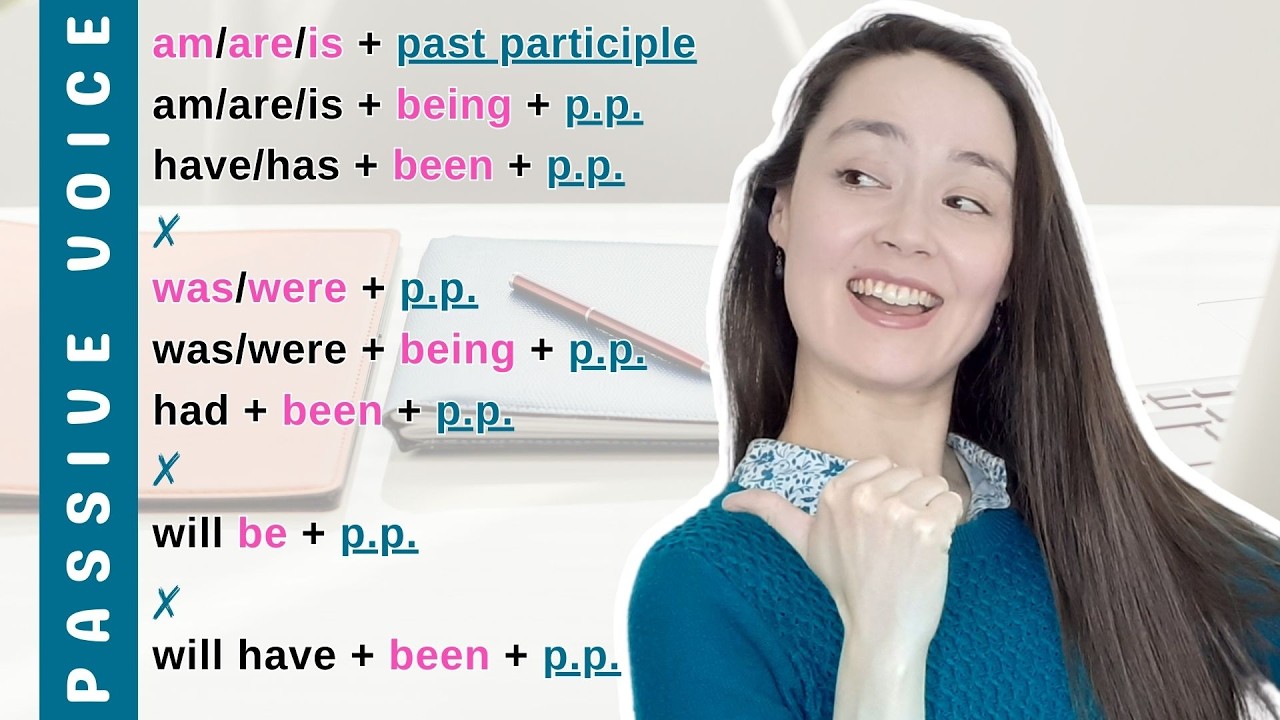
Look for some of the classic indicators, such as forms of the verb to be – like had/has and was/were.
For instance:
The vase was stolen.
Or:
The mat was sat on.
Not every use of the verb to be automatically means you’re being passive – but if you prime yourself to look out for it, you can quickly pass over your manuscript and stop at each sentence containing a variant and decide whether it should be changed.
When Passive is Preferable
Passive voice (rightly) gets a bad rap, but it can occasionally work in fiction — if you do it right.
Say, for instance, you want to emphasize the object of the sentence instead of the subject. Passive voice is the answer!
Let’s go back to the priceless vase we’ve been mentioning, and make the reader curious about who stole it...
Read more at:
https://www.autocrit.com/blog/active-...
Create your FREE FOREVER AutoCrit account at https://www.autocrit.com
Check out the written edition of this content on our blog at: https://www.autocrit.com/blog/active-...
JOIN US ON:
Facebook - / autocrit
Twitter - / editingwizard
Pinterest - / autocrit
YouTube - https://youtube.com/c/autocritediting...
Finally, be sure to LIKE this video and SUBSCRIBE to the channel for more AutoCrit insights and writing tips in the future!
Повторяем попытку...

Доступные форматы для скачивания:
Скачать видео
-
Информация по загрузке: