Sound More Natural in English - Explain the common regional differences between British and American
Автор: LanguageFlows
Загружено: 2026-03-02
Просмотров: 3
Описание:
Join Best FREE Language APP👉 https://linguageflow.com Sound More Natural in English - Explain the common regional differences between British and American English vocabulary.
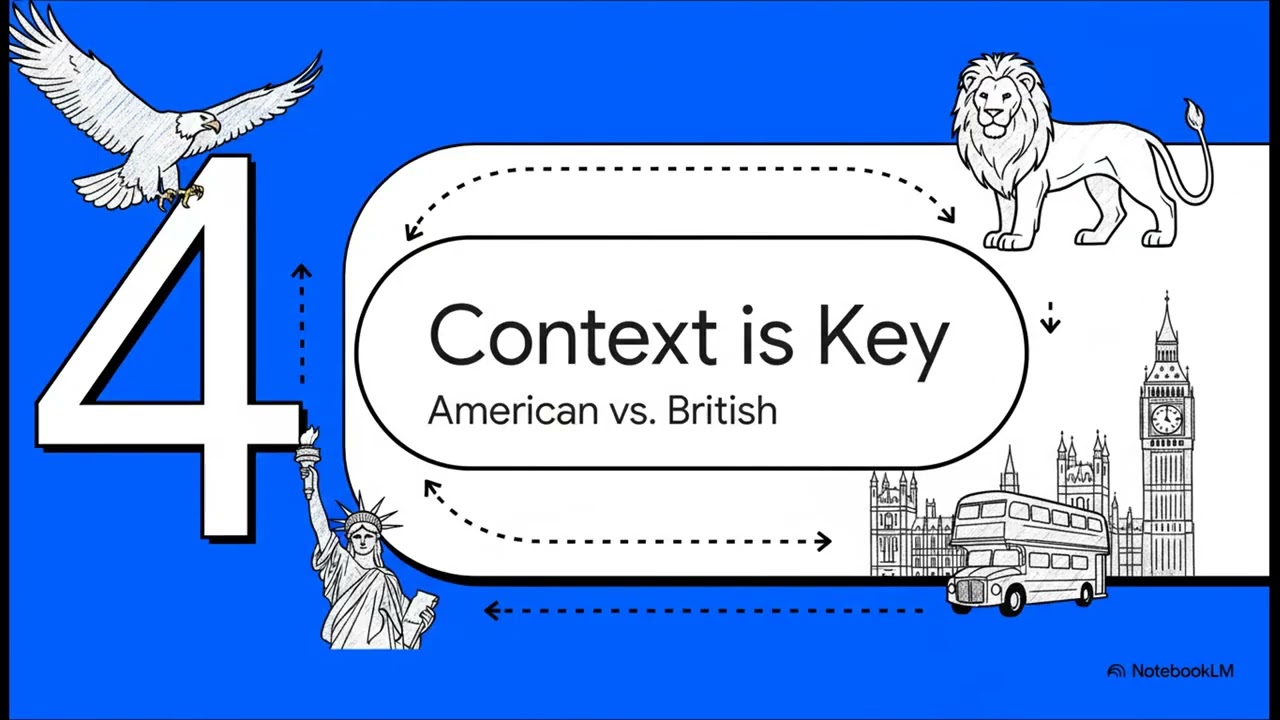
Common regional differences between British (UK) and American (US) English vocabulary exist because the language developed differently in each country over hundreds of years. Sometimes Americans retained old British words no longer used in the UK, and in other cases, each country created its own unique words for new inventions.
Common Vocabulary Differences
The following table highlights everyday items that have different names in the UK and the US:
| British English (UK) | American English (US) |
| :--- | :--- |
| *Flat* | Apartment |
| *Lorry* | Truck |
| *Biscuit* | Cookie |
| *Rubbish* or *Bin* | Trash / Garbage or Trash can |
| *Holiday* | Vacation |
| *Sweets* | Candy |
| *Crisps* | Potato chips |
| *Chips* | French fries |
| *Jumper* | Sweater |
| *Trainers* | Sneakers |
| *Trousers* | Pants |
| *Petrol* | Gas / Gasoline |
| *Car park* | Parking lot |
| *Tap* | Faucet |
| *Torch* | Flashlight |
| *Nappy* | Diaper |
Confusing Vocabulary and Double Meanings
Some words can cause confusion because they exist in both regions but refer to entirely different things:
*Pants:* In the UK, "pants" refers to **underwear**, whereas in the US, it refers to **trousers**.
*Rubber:* In British English, this is a common word for an **eraser**, but in American English, using this term can be awkward or misunderstood.
*Jumper:* A British person saying, "I left my jumper in the boot," means they left their **sweater in the car trunk**. To an American, "jumper" might sound like a different outfit, and "boot" typically refers only to footwear.
Variations in Specific Settings
Even in specific environments like restaurants or workplaces, vocabulary shifts:
*Dining:* When asking for the paper showing the price of a meal, it is commonly called *"the bill"* in the UK and *"the check"* in the US, though both are generally understood.
*Spelling:* There are also systematic spelling variations. For example, American English often uses *-er* (Centers), *-or* (Neighbor), and *-ice* for nouns (Practice), while British English prefers *-re* (Centres), *-our* (Neighbour), and *-ise* for verbs (Practise).
Understanding these differences is useful for traveling, watching films, and ensuring your English sounds natural in different global contexts.
Would you like me to create a quiz to test your knowledge of these British and American vocabulary differences?
#learnlanguagesonline
, #LanguageLearningBusiness, #LanguageCoursesForSale, #OnlineLanguageCourse, #LanguageTutoringOnline, #LearnLanguagesFast, #LanguageCoach, #LanguageSkillsForCareer, #LanguageLearningIncome, #MakeMoneyWithLanguages, #LanguageEducationBusiness, #LanguageTeachingOnline, #SellLanguageCourses, #LanguageSideHustle, #LanguageLearningForWork, #LanguageCertification, #PremiumLanguageCourse, #LanguageTrainingOnline, #LanguageLearningProgram, #DigitalLanguageCourse, #LanguageAcademyOnline, #LanguageMentorship, #LanguageLearningSuccess
Повторяем попытку...
Доступные форматы для скачивания:
Скачать видео
-
Информация по загрузке: