Spotted Scorpion Carrying Babies On Back: Singapore Nature
Автор: Christian Bassett
Загружено: 2021-01-12
Просмотров: 1154
Описание:
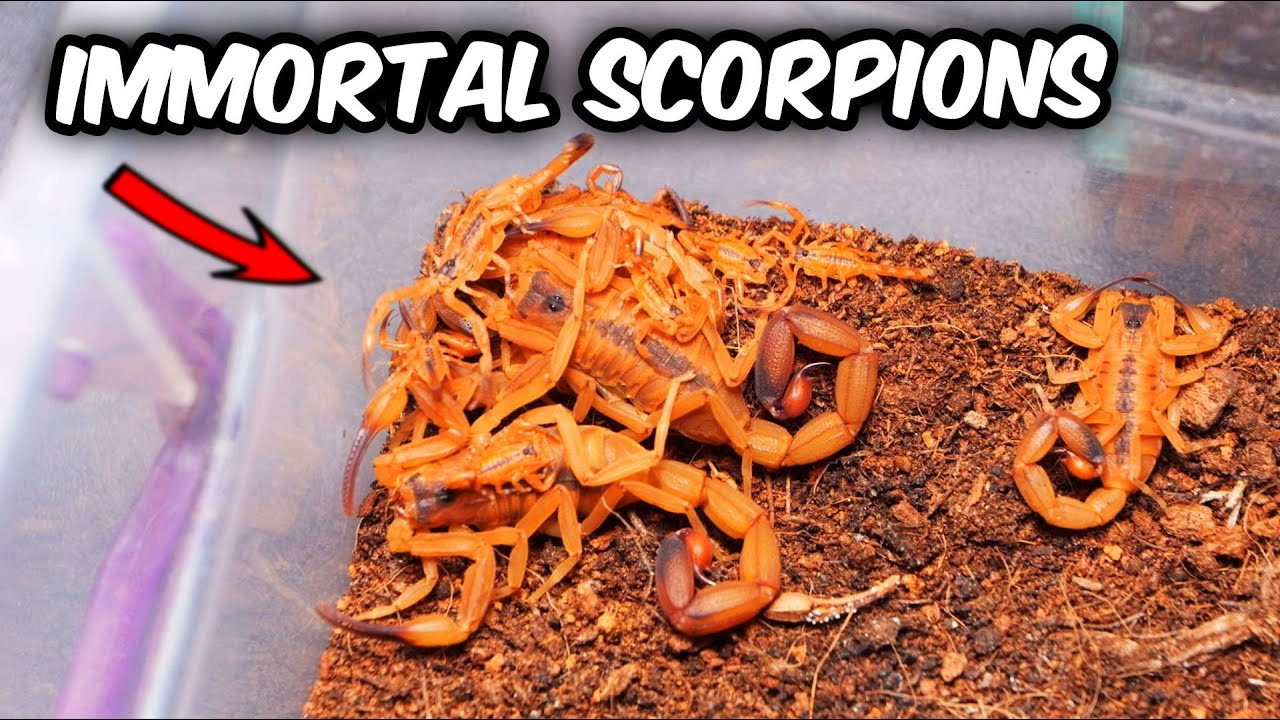
Filmed this spotted wood scorpion (Lychas scutilus) carrying its babies on its back, whilst herping with friends in secondary forest, Singapore, December 2020.
Lychas scutilus (C.L. Koch, 1845); The species Lychas scutilus lives in parts of the wet tropical zone of Southeast Asia. It occurs in Myanmar, Thailand, Malaysia, Singapore and Indonesia. It is still not totally clear on which of the Indonesian Islands this species appears.
Unlike insects, which generally deposit eggs outside their bodies, scorpions produce live babies, a practice known as viviparity. Some scorpions develop within a membrane, where they receive nourishment both from a yolk and from their mothers. Others develop without a membrane and receive nourishment directly from their mothers. The gestational stage can be as short as two months, or as long as 18 months, depending on the species. After birth, the newborn scorpions ride on their mother's back, where they remain protected until they molt for the first time. After this, they disperse.
Lychas scutilus is one of the medium sized species of scorpions. The females will reach between 4 to 6,5 cm in bodysize, whereas the males, due to their greatly elongated metasoma, will reach 6 to 8,5 cm. The species is colored in a gray orange. The last segements of the metasoma including the telson and the chelae are colored in a reddish brown. In addition, the pedipalps and the legs are slightly marbleized.
As mentioned above, the males have a greatly elongated metasomas, with the help of which one can identify adulthood quickly. The telson is elongated as well. The females will stay behind in body size but will get bulkier.
The juveniles can not be sexed by pectinal teeth properly. Females have 15 - 18 and males 16 - 19 pectinal teeth, which offers a too wide cross over for proper sexing (Kovarik 1995).
Lychas scutilus is a calm and much inaggressive species of scorpion. The specimen will flee when disturbed, but when kept one should have its high capability for speed in mind. I have never seen any attempts to sting. In addition they can be kept in groups, since the potential for aggression within a group is low, too. The animals will share hideouts and live together in large groups. Juveniles make an exception since they are prone to cannibalism, especially during molts.
As bark-dwellers they prefer to remain on or under bark. This species climbs very well and often - as all bark-scorpions do - and so several opportunities for climbing should be present in the container in which they are kept.
#spottedscorpion #singaporescorpion #singaporenature #singaporewildlife #woodscorpion #barkscorpion #forestscorpion
Videography:
Christian Bassett
Camera:
Sony 4K FDR-AX700 Camcorder
Editing:
Christian Bassett
Повторяем попытку...

Доступные форматы для скачивания:
Скачать видео
-
Информация по загрузке: