Thailand Bets on a New Rice Grain as Sushi Rice Gains Popularity
Автор: Bloomberg News
Загружено: 2020-11-13
Просмотров: 1060
Описание:
For more than 35 years, since the early 1980s, Thailand was the world's largest rice exporter, capturing the global market with firm varieties of jasmine and white rice. But the country that exports one-fifth of the world’s rice is in trouble: In 2015, India took the top spot. And in the first half of this year, Thailand slipped to No. 3, behind rival exporter Vietnam, whose softer, plumper varieties are increasingly preferred by some of Asia’s biggest rice consumers, from China to the Philippines. Long grains such as those in Thai or Indian rice are generally harder than the shorter grains used in East Asian rice bowls and risotto, or rounder grains used in paella or sushi.
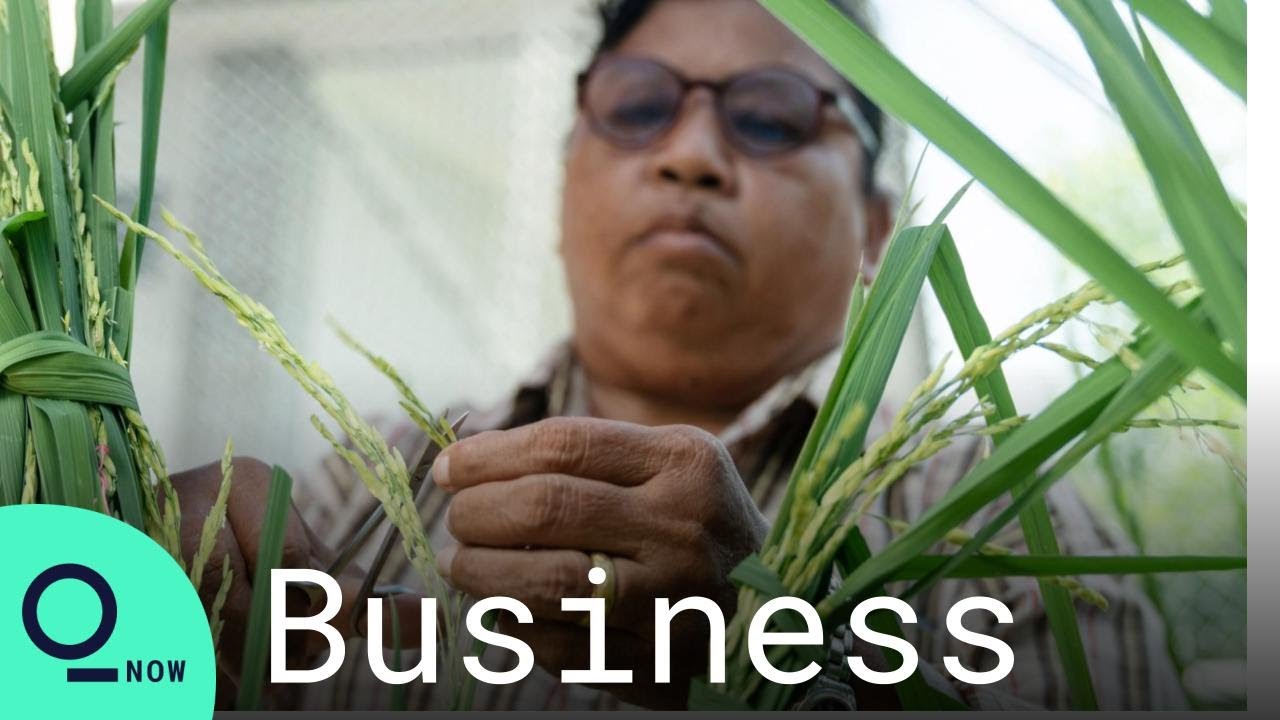
Chuanchom Deerusamee is a researcher and rice expert at Chai Nat Rice Research Center in central Thailand. She has worked with and grown tons of the world’s most popular starch in an effort to create the ultimate version. She never thought a softer variety would be the answer.
Chuanchom’s product represents the potential future of her country’s rice industry. More than half of the world’s population depend on rice as a daily diet essential. For Thailand, rice isn’t just central to its cuisine, it’s the country’s most important crop. It supports more than 4 million households, with a quarter of Thai households depending on it for income; about half of Thailand’s farmland is dedicated to its production, earning the country the nickname “the Rice Bowl of Asia.” Nearly half of the rice is exported in a $6 billion industry.
The lack of softer varieties is adding pressure to the export sector, which projects this year’s shipments to be the lowest in 20 years after drought and a strong currency made its grains pricier than competitors’. Thai rice exports in 2020 are expected to contract about 14% from the previous a year.
The new rice is called RD79. (RD stands for Rice Department, the state agency was which Chuanchom works.) Chuanchom began working on the strain a decade ago. Ten years is the approximate time it takes to develop a new rice strain, receive government approval, and have farmers start planting it. The industry is now pushing farmers to grow it.
Sanit Jitnupong is a Thai farmer growing RD79. For more than a decade, Sanit harvested harder varieties on his four-acre paddy. In June, he switched to Chuanchom’s strain.
“I heard there’s a need for us to grow more of this rice to be able to compete globally. It’s risky to start something new, but I have nothing to lose,” says Sanit, whose field is in Kamphaeng Phet Province, one of Thailand’s main rice-producing regions.
Apart from being a high-yield soft variety, RD79 has been designed to be resist disease and tolerate drought better than Thailand’s traditional grains. Many rice varieties need to be submerged underwater as they grow, a process that produces methane that contributes to global warming. This rice has been designed to grow without being submerged all the time, reducing the adverse environmental effects.
To create RD79, Chuanchom crossbred two parent strains with distinct characteristics she wanted for the new variety: soft when cooked and high-yield when grown. After producing the first generation of her new rice, she replanted the new strain eight times.
The long-grain RD79 is similar to jasmine rice, though it lacks the fragrant scent. When cooked, the rice keeps its distinct shape but with a more supple texture.
Different types of rice work better with various cuisines, notes Andy Ricker, owner of Pok Pok, a renowned Thai restaurant in Portland, Ore., where Ricker serves Thai jasmine rice. “I can’t imagine eating Thai food with any other kinds of rice. For me, it comes down to the smell of the rice, which is especially important to Thai cuisine. If you eat Thai food and you try it with a softer, short grain rice, it just doesn't make sense to me—the flavor’s wrong, the texture’s wrong,” he says.
For people who know Thai cuisine, like Ricker, the missing jasmine fragrance is a major flaw in the RD79 strain. Chuanchom plans to fix that. She’s now working on varieties that are fragrant, as well as soft.
Subscribe to our YouTube channel: https://bit.ly/2TwO8Gm
Bloomberg Quicktake brings you live global news and original shows spanning business, technology, politics and culture. Make sense of the stories changing your business and your world.
To watch complete coverage on Bloomberg Quicktake 24/7, visit http://www.bloomberg.com/qt/live, or watch on Apple TV, Roku, Samsung Smart TV, Fire TV and Android TV on the Bloomberg app.
Connect with us on…
YouTube: / bloomberg
Breaking News on YouTube: / bloombergquicktakenews
Twitter: / quicktake
Facebook: / quicktake
Instagram: / quicktake
Повторяем попытку...
Доступные форматы для скачивания:
Скачать видео
-
Информация по загрузке: