ESMARConf2023: metaBMA: Bayesian Model Averaging for Meta-Analysis in R
Автор: ESMARConf
Загружено: 2023-03-30
Просмотров: 947
Описание:
Presenter: Daniel Heck
Authors: Heck, Daniel W.
Session: Quantitative synthesis 2
Title: metaBMA: Bayesian Model Averaging for Meta-Analysis in R
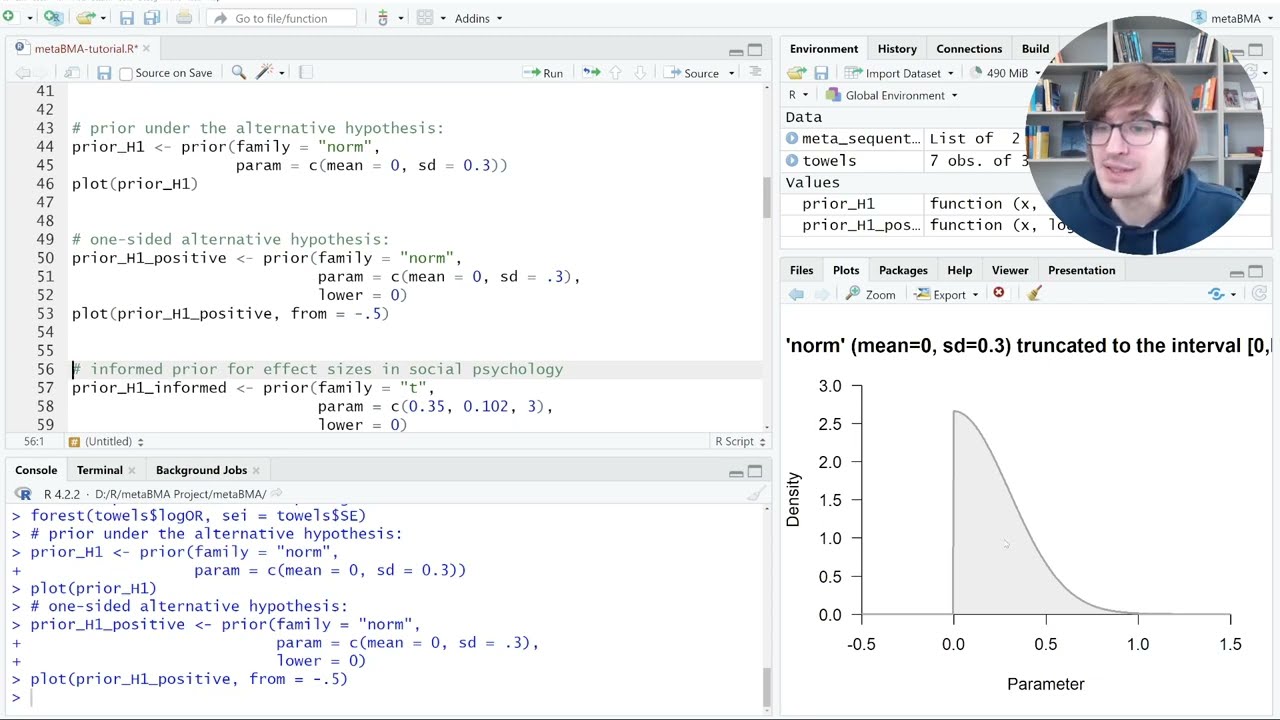
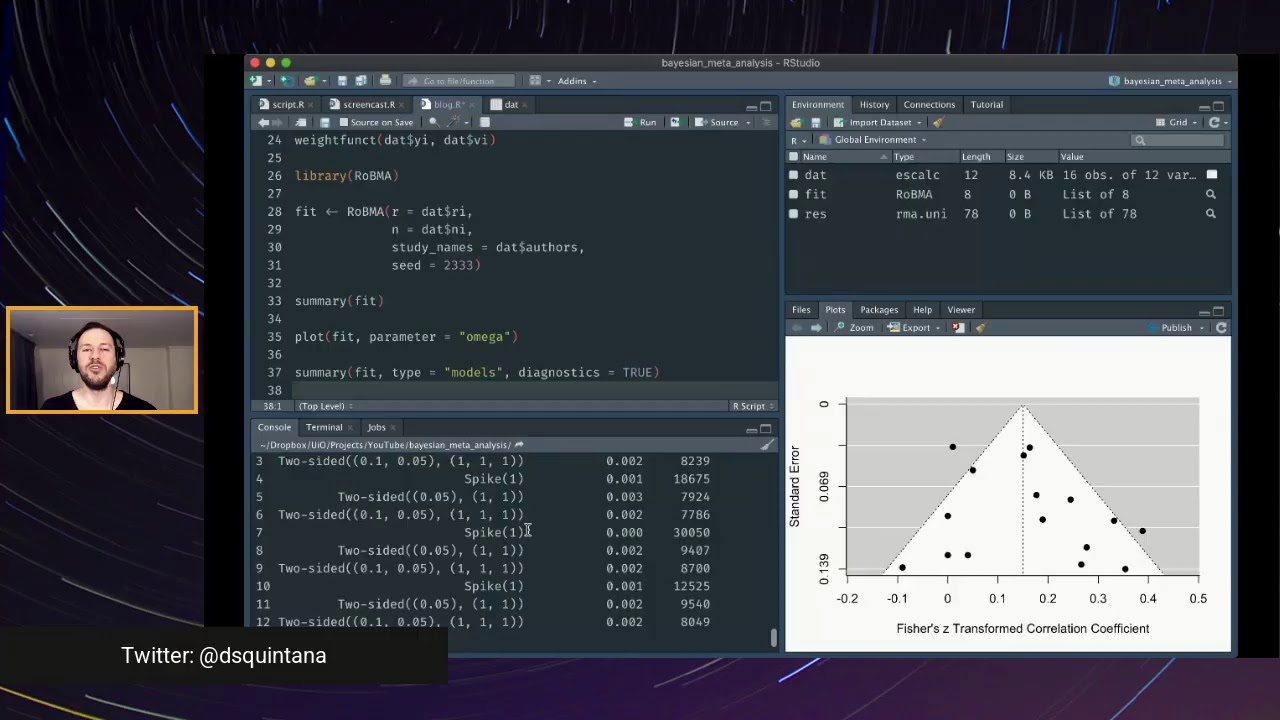
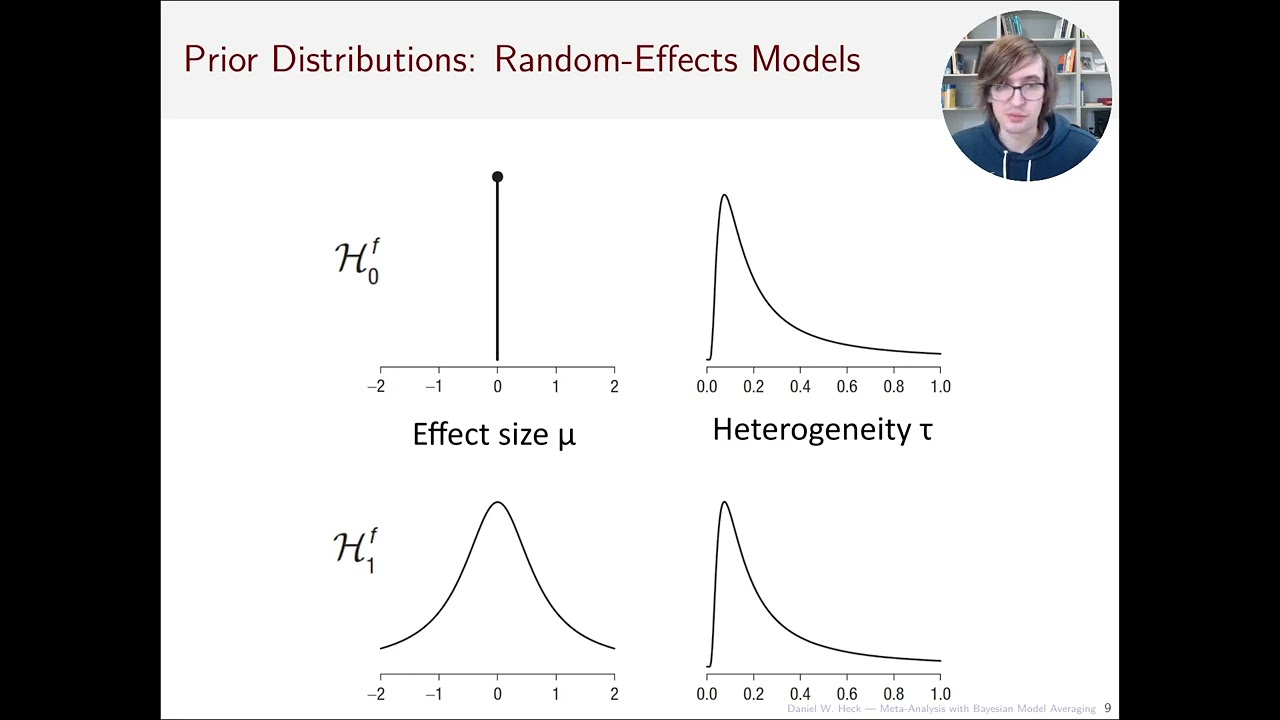
Abstract: Meta-analysis aims at the aggregation of observed effect sizes from a set of primary studies. Whereas fixed-effect meta-analysis assumes a single, underlying effect size for all studies, random-effects meta-analysis assumes that the true effect size varies across studies. Often, the data may not support one of these assumptions unambiguously, especially when the number of studies under consideration is small. In such a case, selecting one of the two models results in too narrow confidence intervals when assuming fixed-effects but in low statistical power when assuming random-effects. As a remedy, Bayesian model averaging can be used to combine the results of four Bayesian meta-analysis models: (1) fixed-effect null hypothesis, (2) fixed-effect alternative hypothesis, (3) random-effects null hypothesis, and (4) random-effects alternative hypothesis. Based on the posterior probabilities of these models, Bayes factors allow to quantify the evidence for or against the two key questions: "Is the overall effect non-zero?" and "Is there between-study variability in effect size?". Besides considering model uncertainty, Bayesian inference enables researchers to include studies sequentially in order to update a meta-analysis as new studies are added to the literature. The R package metaBMA facilitates the application of Bayesian model-averaging for meta-analysis by providing an accessible interface for computing posterior model probabilities, Bayes factors, and model-averaged effect-size estimates for meta-analysis.
GitHub repository: https://github.com/danheck/metaBMA
Повторяем попытку...
Доступные форматы для скачивания:
Скачать видео
-
Информация по загрузке: