How did Atropos cut the thread? Greek Mythology Story
Автор: VIS MYTH
Загружено: 2023-12-24
Просмотров: 152
Описание:
Atropos, the third sister in the trio of Fates in Greek mythology, was known for her role in cutting the thread of life. The three sisters, Clotho, Lachesis, and Atropos, were responsible for determining the fate of every mortal being, with each sister playing a specific role in the process.
Clotho, the youngest of the three sisters, was tasked with spinning the thread of life. This thread was said to contain both bright and dark lines, symbolizing the various experiences and events that would shape a person's life. As she spun the thread, Clotho carefully intertwined the different strands, creating a unique and intricate pattern for each individual.
Once the thread was spun, it was passed on to Lachesis, the second sister. Lachesis's role was to twist the thread, determining the length and strength of a person's life. Under her skilled fingers, the thread would alternate between being strong and weak, symbolizing the ups and downs that every mortal would face throughout their lifetime. Lachesis's careful twisting of the thread was said to reflect the complexities and uncertainties of human existence.
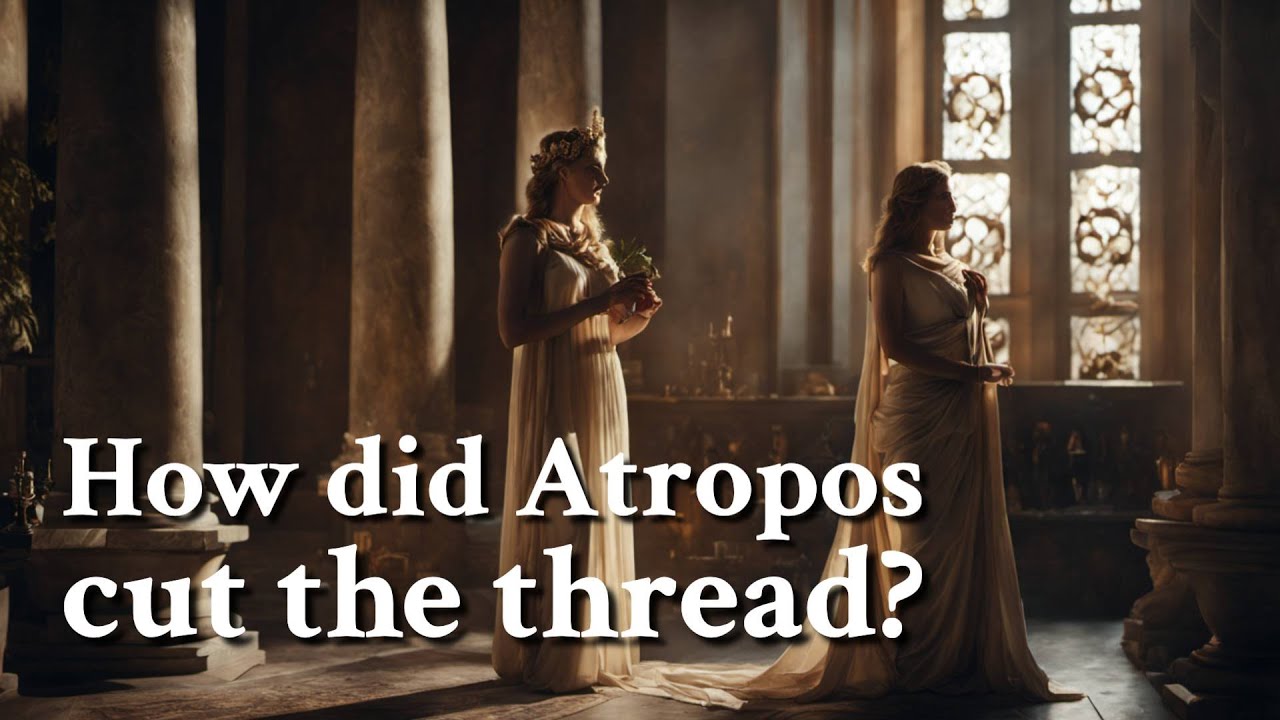
Finally, the thread would come to Atropos, the eldest of the three sisters. Armed with a huge pair of shears, Atropos's role was to cut the thread of life, determining the moment of a person's death. This final act sealed the fate of the individual, bringing an end to their earthly existence.
Atropos's method of cutting the thread of life has been a subject of much speculation and fascination. How exactly did she carry out this crucial task? According to Greek mythology, Atropos used her immense strength and precision to complete this final act. Her shears were said to be incredibly sharp, capable of cleanly severing the thread with a single, decisive cut.
Some versions of the myth describe Atropos as being relentless and unforgiving in her role. Once she had determined the moment of a person's death, there was no changing the outcome. Her actions were seen as final and irrevocable, reflecting the concept of fate as an unalterable force in the lives of mortals.
Other interpretations of Atropos's role emphasize her connection to the concept of inevitability. As the cutter of the thread of life, Atropos represented the inescapable nature of death. No matter how powerful or influential a person might be, they could not escape the moment when Atropos would ultimately sever their thread and bring their life to an end.
In some depictions, Atropos is portrayed as a solemn and stoic figure, carrying out her task with a sense of gravity and inevitability. Her demeanor reflected the weight of her responsibility, as she held the power to determine the fate of every mortal being. Her actions were guided by a sense of duty and necessity, rather than any personal desire or motivation.
Despite the somber nature of her role, Atropos was also seen as an essential figure in the cycle of life and death. Her actions, while final, were part of the natural order of the world, ensuring that the balance of life and death was maintained. In this sense, Atropos was not seen as a malevolent figure, but rather as a necessary aspect of the human experience.
The imagery of Atropos cutting the thread of life has been a recurring motif in art, literature, and mythology. Artists and writers have sought to capture the significance of this moment, often portraying Atropos with her shears, poised to carry out her fateful task. These depictions have served to emphasize the idea of fate as a powerful and inevitable force, shaping the lives of mortals in ways that are beyond their control.
In conclusion, Atropos's role in cutting the thread of life was a pivotal aspect of the Fates' influence over the lives of mortals in Greek mythology. Her actions were seen as final and irrevocable, reflecting the concept of fate as an unalterable force. While the specifics of how Atropos carried out her task may vary in different versions of the myth, the overarching significance of her role remains a central theme in the understanding of destiny and mortality in Greek mythology.
Thank you for watching!
Subscribe to the channel, comment, like!
#myth #vis 0890
Повторяем попытку...
Доступные форматы для скачивания:
Скачать видео
-
Информация по загрузке: