Understanding an AIP system of Submarines: Myths vs Facts | Is there an alternative to AIP system?
Автор: Indian Defense Analysis
Загружено: 2021-08-23
Просмотров: 9739
Описание:
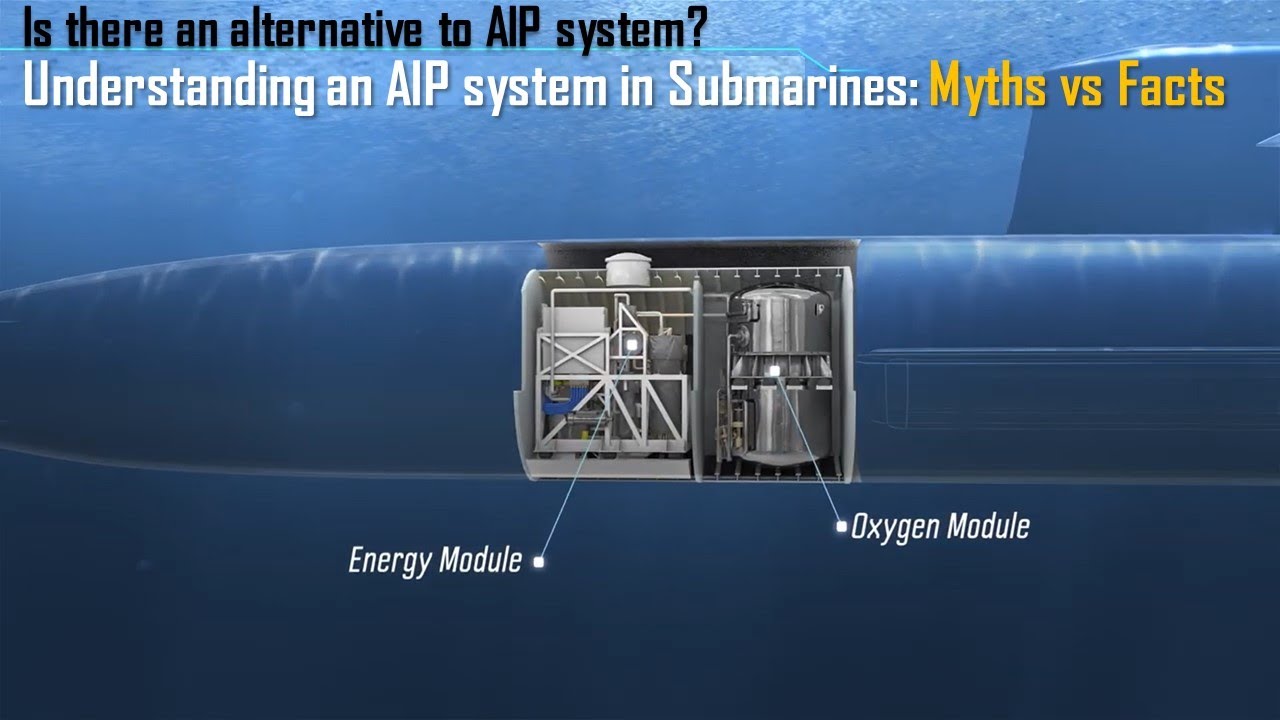
An AIP submarine is still a Diesel/Electric submarine which charges its battery off a diesel engine on the surface or snorkeling and still runs on battery when submerged. A Diesel/Electric Sub running on batteries can run for many hours at bare steerageway, or drain the battery flat in a few minutes at flank speed. After which it must come to snorkel depth or surface to run the diesel engines to recharge.
All AIP does is allow a small trickle charge to constantly topping the battery but not enough to fully charge it up like the diesel engines, however it’s enough to slow down the battery drain. With AIP fitted submarines, the charge in battery can last up to several days or a week when compared to non-AIP bases submarines where the charge lasts only for 15–20 hours. The battery is still going to drain, but the power provided by the AIP system will slow that drain to a crawl.
To better understand this, Let’s consider a situation say where a Submarine’s battery is fully charged and can quietly stay on the battery for 24 hours before draining it flat if the submarine is moving at a speed around 3–5 knots. In this scenario the discharge rate of the battery would be 100% divided by 24 which is 4.2% per hour. If the submarine were to go to flank speed, the discharge rate would jump from 4.2% to 200% and the fully charged battery would be dead in about 30 minutes. Now, lets add AIP system to the submarines. It provides Air independent electrical generation capable of charging the battery at a rate of about 3% per hour. On patrol at slow speed the battery is still going to drain away, but only at a rate of about 1.2% rather than 4.2% per hour. The AIP is adding 3% for every 4.2% used. Now rather than running on the battery for 24 hours, the sub can remain on the battery for a little over 81 hours, or more than 3 days rather than 1 day.
But again, if the sub were to go to flank speed, the battery drain would jump to 197% (200% - 3%) and still be drained flat in about 30 minutes. Therefore, AIP system is of little or no use while running at flank speed, that’s why Nuclear-powered submarines are preferred over diesel attack submarines. In summary, All AIP is going to do is extend the time the Submarine can remain on battery when barely moving, like when it is quietly sitting on station. Moving quickly will drain the battery just the same as though it had no AIP system.
The next important aspect to understand is the battery used in the Diesel attack submarines. For over 100 years, conventional submarines have used lead-acid batteries for underwater propulsion. Another type of battery is 'high-capacity' lithium-ion battery system. The Lithium-ion batteries in my opinion is more important than AIP system and Navy should focus on this technology. Relying on lithium-ion batteries as a replacement for the lead-acid batteries would negate the need for AIP. At the same time, it will improve the underwater endurance of a submarine. Lithium-ion batteries have inherent advantages over lead-acid batteries such as higher power density, lighter weight and lower maintenance costs because you don’t need gas charging or water filling.
The Lithium-ion batteries output remains constant, even when their charge runs low. They are much lighter than lead-acid batteries & can be charged exceptionally faster. They can store much more energy compared to the AIP system. It also simplifies the overall submarine’s propulsion system design which will be less complex and bulky. The lithium-ion batteries can also provide large output on demand, allowing the boat to flak faster when needed. In short, a submarine with lithium-ion batteries has greater underwater endurance and can run faster than a submarine with lead-acid batteries.
==========WHOMSOEVER IT MAY CONCERN=============
Most of the pictures clip or BGM included in the Video
Belongs to their Respected Owners and we do not claim rights.
We are using them under following act:
=================DISCLAIMER=======================
UNDER SECTION 107 OF THE COPYRIGHT ACT 1976, ALLOWANCE IS MADE FOR "FAIR USE" FOR PURPOSES SUCH AS CRITICISM,
COMMENT, NEWS REPORTING, TEACHING, SCHOLARSHIP, AND RESEARCH. FAIR USE IS A USE PERMITTED BY COPYRIGHT STATUTE THAT MIGHT
OTHERWISE BE INFRINGING. NON-PROFIT, EDUCATIONAL OR PERSONAL USE TIPS THE BALANCE IN FAVOR OF FAIR USE.
Follow us on social media:
/ analysisdefense
/ indian-defense-analysis-115230683684126
==============THANKS FOR WATCHING!================
PLEASE LIKE SHARE & SUBSCRIBE: "INDIAN DEFENSE ANALYSIS"
Повторяем попытку...
Доступные форматы для скачивания:
Скачать видео
-
Информация по загрузке: