Green Ceramic Recycling | Rishabh Kundu & Margarida Barroso
Автор: Margarida Barroso
Загружено: 2023-08-31
Просмотров: 1334
Описание:
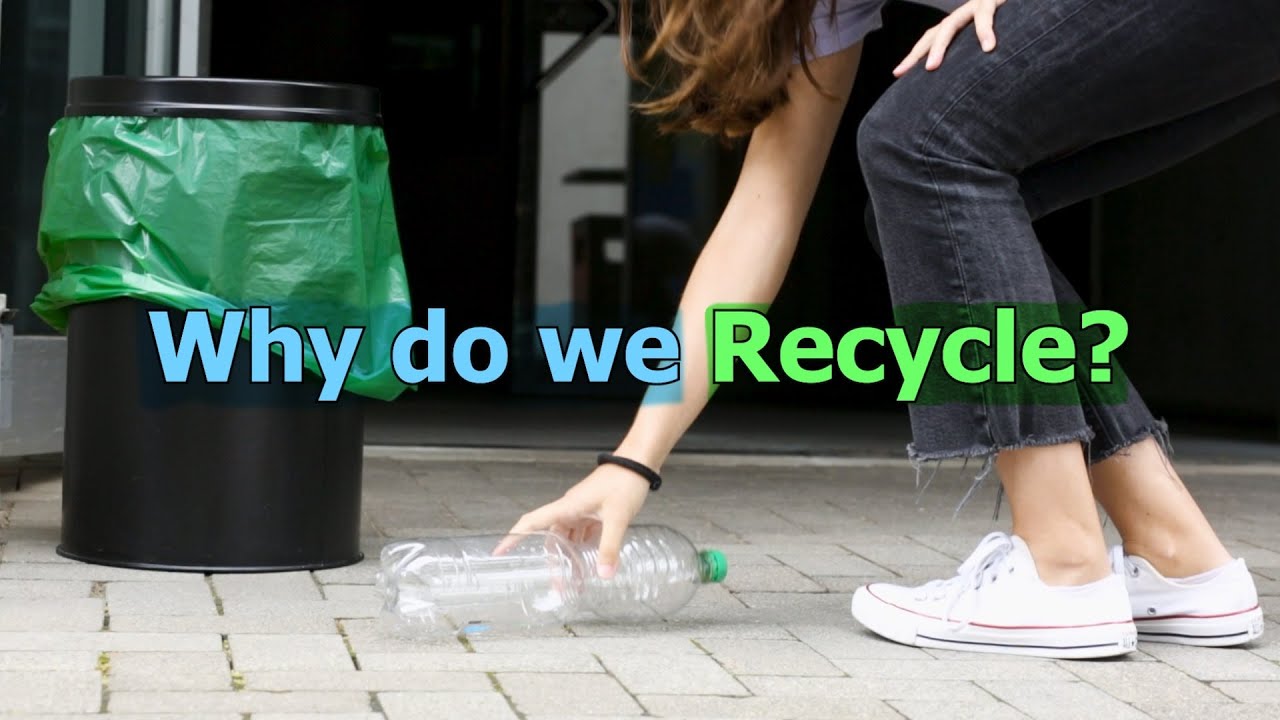
Green Ceramic Recycling by Rishabh Kundu and Margarida Barroso.
This video is an entry for the Crystal Clear Science Video Competition organized by the Ceramic and Glass Industry Foundation of the American Ceramic Society.
Video description: Recycling is carried out on a diverse range of materials like metals, plastics, and glasses broadly by sorting the same kind together, churning them down, and remelting them for utilization as a secondary input in the production lines. The aforementioned recycling strategy is unsuitable for ceramics because of their high hardness and melting points – primary ceramic production is not done through melt casting or similar routes anyway. Therefore, chemical recycling routes are popular for ceramics. However, the ‘technological maturity’ or Technology Readiness Level (TRL) of many ceramic chemical recycling routes is not very high – they are mostly at an early developmental stage. We first highlight this not-so-conventional ceramic recycling process with the help of Oxygen Transport Membrane (OTM) material – an OTM is used to filter oxygen from a mixture of gases through oxygen vacancy-mediated hopping. End-of-life (fragile) OTMs are first crushed into powder and added to water along with nitric and citric acids; they then undergo a microwave autoclave treatment which dissolves the powder and forms an acidic solution. Ethylenediaminetetraacetic acid in an ammoniacal solution is added to increase the pH so that primary production-like modified Pechini process is suitable. The basic solution obtained is heated on a hot plate and forms a complex gel owing to the chelating agents. Once the gel is formed, it is pre-calcined to eliminate the nitrates in the gel. The pre-calcined powder is finally calcined to obtain the OTM material’s phase and remove carbon. X-ray diffraction helps confirming if the obtained powder consists of the required phase. Once confirmed, the powder is shaped into a membrane and sintered to be used again. While this enables successful recycling of OTMs, the aforementioned steps demand resources and energy – recycling is not free! Thus, it is imperative to couple environmental assessment with process development – both primary and recycling, especially at an early developmental stage. Doing so bears three significant advantages among others. Firstly, the major contributors to the primary production's Environmental Impacts (EIs) or hotspots can be identified. Secondly, a direct comparison of the EIs concomitant with the production and recycling routes provides scientific insights on whether recycling is reducing the EIs (in simpler words: if recycling is truly sustainable). Thirdly, modifications in the primary and recycling route (if needed) can be implemented at an early stage – thus, avoiding complex process modifications at higher TRLs. In our video, we also demonstrate the aforementioned advantages by showing that the developed recycling route for OTM material has more EIs when compared with the primary production (non-green recycling). Modification of the recycling route by changing the heating source to microwave-based allowed a reduction of electricity consumption without compromising material functionality. The modified recycling route has lower EIs than the primary production (green recycling). Thus, recycling is crucial, but accurate green recycling should always be supported by concrete scientific data, else sustainability claims may not be very different than ‘green washing’. In conclusion, our video’s take-home message is to follow evidence-based recycling to enable true sustainable development.
Acknowledgements: We would like to thank Dan Samuel; Moritz Thiem; the Institute of Materials Science at the Technical University of Darmstadt (MaWi, TUDa), Germany; the Materials and Resources research group at MaWi, TUDa; the Federal Ministry of Education and Research (BMBF), Germany; and the Collaborative Research Center (CRC) Fermi Level Engineering Applied to Oxide Electroceramics (FLAIR).
Disclaimer: This video is for simplified illustration purpose only. The actual scientific data may render different conclusions.
Background Audio: Energetic Upbeat Lo-Fi Hip Hop background | Hot Pepper by Alex-Productions | Music promoted by http://onsound.eu/
This video uses copyrighted material based on §51a URHG (Urheberrechtsgesetz).
Повторяем попытку...
Доступные форматы для скачивания:
Скачать видео
-
Информация по загрузке:




![Эффект Джанибекова [Veritasium]](https://imager.clipsaver.ru/N9HlQ-XVnFk/max.jpg)