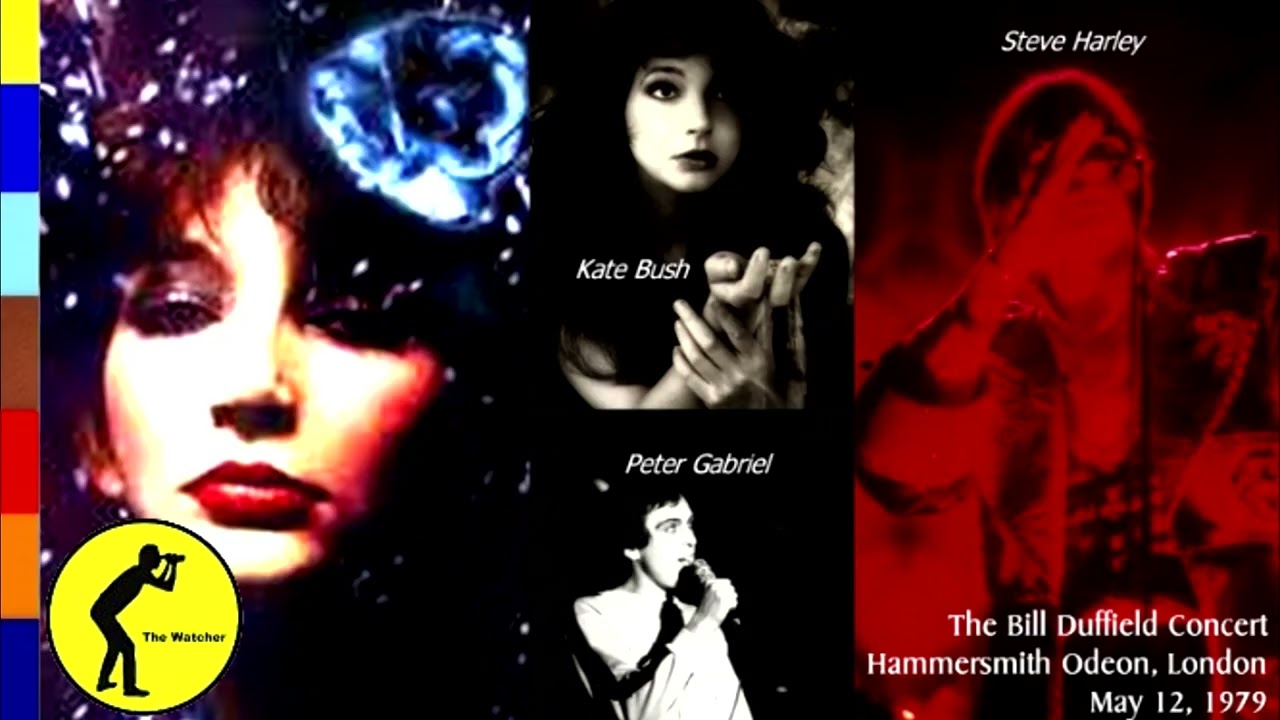
KATE BUSH * 1979 05 12 * LONDON * HAMMERSMITH ODEON - THE TOUR OF LIFE * ENGLAND (Audio)
Автор: G(R)AB
Загружено: 2025-12-20
Просмотров: 27
Описание:
KATE BUSH * 1979 05 12 * LONDON * HAMMERSMITH ODEON - THE TOUR OF LIFE * ENGLAND (Audio)
TRACKLIST
**************
01. Moving
02. Symphony In Blue
03. Violin
04. The Kick Inside
05. Strange Phenomena
06. Hammer Horror
07. Kashka From Baghdad
08. Don’t Push Your Foot On The Heartbrake
09. Them Heavy People (with Peter Gabriel & Steve Harley)
10. The Woman With The Child In Her Eyes (with Peter Gabriel & Steve Harley)
11. The Man With The Child In His Eyes
12. Here Comes The Flood (Peter Gabriel)
13. I Don’t Remember (Kate Bush & Peter Gabriel)
14. D.I.Y. (Peter Gabriel)
15. Best Years Of Our Lives (Steve Harley)
16. Come Up And See Me (Make Me Smile) (Steve Harley)
17. Wow
18. Kite
19. James And The Cold Gun
20. Wuthering Heights
21. Let It Be (Peter Gabriel & Steve Harley)
BAND LINE-UP
*******************
BEN BARSON – synthesizer, acoustic guitar
BRIAN BATH – electric guitar, acoustic mandolin, background vocals
KATE BUSH – vocals, piano, keyboards
PADDY BUSH – mandolin, background vocals, various instruments
SIMON DRAKE – magician
GLENYS BROVES – background vocals
PRESTON HEYMAN – Drums/Percussion
KEVIN McALESA– piano, keyboards, saxophone, 12-string guitar
ALAN MURPHY – electric guitar, whistles
DEL PALMER – bass guitar
LIZ PEARSON – background vocals
GUESTS:
PETER GABRIEL
STEVE HARLEY
How a tragic accident united Kate Bush and Peter Gabriel in grief and led to one of prog's most inspired partnerships
In 1979, an accidental death during Kate Bush's UK tour led to a chance meeting with Peter Gabriel, and a creative partnership was born from tragedy
When Kate Bush embarked on her groundbreaking The Tour Of Life in spring 1979, it turned the notion of a live concert on its head. Fully choreographed by Anthony Van Laast, the sold-out 28-date tour was a visualisation of her first two albums, The Kick Inside and Lionheart. Much was made of it costing between £200,000 and £250,000 and employing 40 people – it was just at the very cusp of the touring industry being taken seriously. Such was the furore about the upcoming spectacle, there was a BBC TV Nationwide special on the tour to coincide with the opening night at Liverpool Empire.
However, for Bush, it would end up being overshadowed by the tragic, accidental death of Bill Duffield, her 21-year-old lighting director. On April 2, 1979, after a warm-up gig at Poole Arts Centre, Duffield was undertaking the so-called ‘idiot check’ where the final crew member present inspects the entire performance area to make sure nothing has been left behind. He fell 17 feet through an unlit open panel on the stage to a concrete floor below and died a week later in hospital from his injuries.
A memorial concert for Duffield was planned at the end of Bush’s tour on May 12 at Hammersmith Odeon. The evening was to be an emotional tour de force, where Bush was joined by two artists who had previously worked closely with Duffield – Peter Gabriel and Steve Harley. They duetted with Bush on Them Heavy People and The Man With The Child In His Eyes. Bush joined Gabriel on his yet-to-be released I Don’t Remember and they all sang The Beatles’ Let It Be to close.
If Duffield had not died, Bush and Gabriel may not have met. They hit it off immediately; Gabriel’s painstakingly free approach to his work was to inform her in a way few artists had ever done. The meeting had a profound effect on her – within months she would be singing on Gabriel’s third album, and through those recording sessions, she first encountered the Fairlight CMI synthesiser. Years later, in 1986, she accompanied him on one of his most powerful statements.
An evocative ballad, Don’t Give Up was partially inspired by the startlingly evocative Dorothea Lange pictures of Americans during the Great Depression. Written as a duet, Gabriel initially envisioned Dolly Parton to sing with him. Instead he turned to Bush, who was then enjoying huge commercial success in the wake of Hounds Of Love, to add the impassioned female vocal part. Over the gentle swell of Richard Tee’s gospel-influenced piano part, the song was a masterpiece of understatement that was in step with the straightened times lurking beneath the shiny veneer of the era.
Don’t Give Up spoke directly to a disaffected population. In 1981, Margaret Thatcher’s Employment Secretary Norman Tebbit infamously used an analogy about his father being out of work in the 30s, and instead of rioting, he got on his bike and looked for work. This became interpreted popularly as telling the unemployed to ‘get on their bike’ to find a job. Gabriel’s tale of a dispirited man at the end of his tether looking for work touched a raw nerve with millions of listeners in the UK and, latterly, the world.
The song, with Gabriel’s despair in the verses and Bush’s words of hope in the chorus, has gone on to be arguably Gabriel’s most loved composition. That it had its roots in a union which grew from such tragedy only adds to its poignancy.
Повторяем попытку...
Доступные форматы для скачивания:
Скачать видео
-
Информация по загрузке:

![60's Soul Classic [Unreleased Album]](https://image.4k-video.ru/id-video/PLmn_vN-RC9HQ9ZviMLPCoWhMwr5De8Z-t)




![60's Soul Classic | Marvin Gaye Inspired 1970s Soul – Blind To The Truth [Unreleased Album]](https://image.4k-video.ru/id-video/dPbTaoM0GME)


![Jesus Christ Superstar (1970 Original London Concept Recording) [Full Album]](https://image.4k-video.ru/id-video/st1pFac_G2A)


