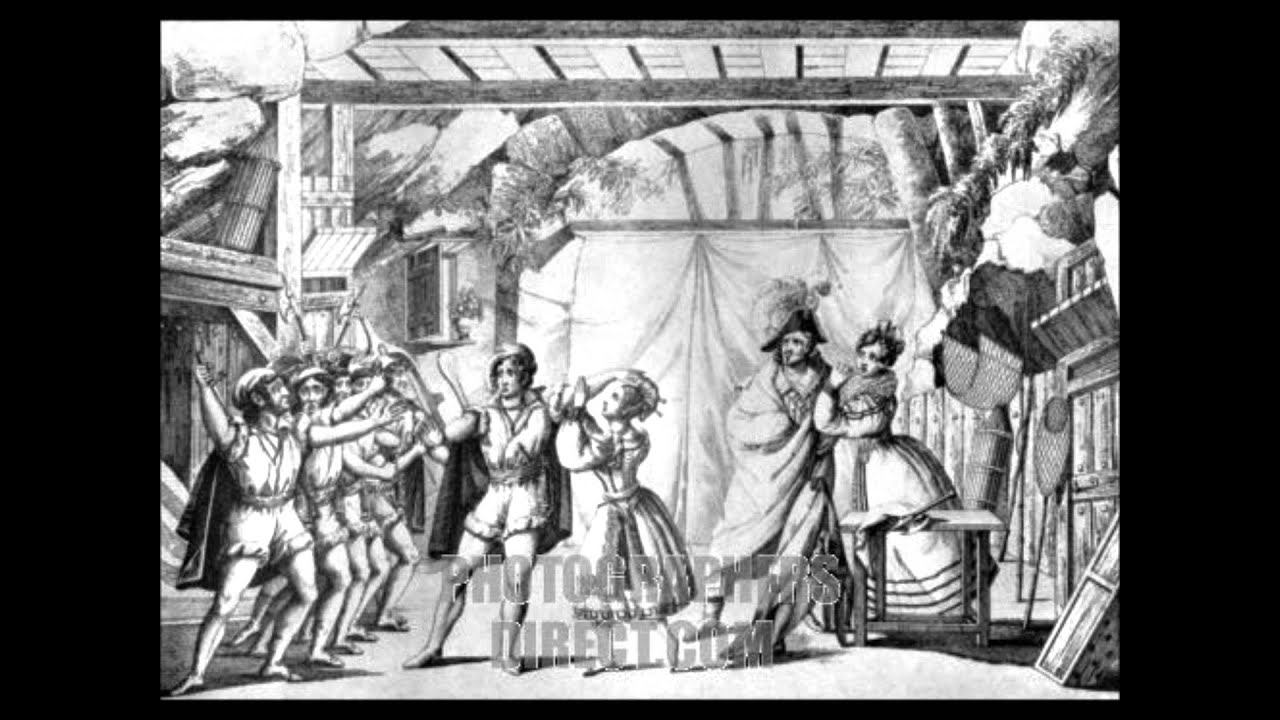
D.F.E. Auber - LA MUETTE DE PORTICI - Act IV Finale: "Honneur et gloire! Célébrons ce héros"
Автор: Meyerbeer Smith
Загружено: 2015-03-05
Просмотров: 4800
Описание:
LA MUETTE DE PORTICI
Opéra en 5 actes
Composer : Daniel-François-Esprit Auber
Libretto : Eugène Scribe et Casimir Delavigne
First performance : Théâtre de l’Opéra (Salle Le Peletier), Paris, 29 February 1828
PLOT: Naples, 1647. The Spanish control Naples. Alfonso, the Viceroy’s son, has seduced and abandoned Fenella, a Neapolitan maiden; her brother, the fisherman Masaniello, leads a revolution against the Spanish. Masaniello is crowned King of Naples but is murdered by his fellow conspirators, and Fenella throws herself off a balcony as Vesuvius erupts.
LA MUETTE DE PORTICI (also known as MASANIELLO) was revolutionary.
The opera was performed on the night of the Belgian Revolution of 1830; and it was the first opera played after the French July Revolution of 1830. “The opera,” Wagner wrote in his “Reminiscences of Auber” (1871), “was recognised as an obvious precursor of the July Revolution, and seldom has an artistic product stood in closer connection with a world-event.”
The opera was the first true French grand opéra, a serious work in five acts, based on a historical event, with spectacular events, couleur locale, choruses and ballet. (The heroine of the title – Fenella, the mute girl of Portici – is danced by a ballerina.) It influenced Rossini’s “Guillaume Tell” and Meyerbeer’s “Robert le Diable”, and was admired by Wagner:
“Such a vivid operatic subject was a complete novelty – the first real drama in five acts with all the attributes of a genuine tragedy, down to the actual tragic ending… Each of these five acts presented a drastic picture of the greatest vivacity, in which arias and duets in the conventional operatic sense were scarcely to be detected any more, or at least – with the exception of the prima donna’s aria in the first act – no longer had this effect. Now it was the entire act, as a larger ensemble, that gripped one and carried one away.”
No. XVI – Marche et Chœur : « Honneur et gloire, célébrons ce héros »
While a delegation from Naples honours Masaniello, Pietro and his fellow conspirators decide that their leader has betrayed the cause and must die.
Masaniello: Alfredo Kraus
Pietro: Jean-Philippe Lafont
Ensemble Choral Jean Laforge
Conductor: Thomas Fulton
Orchestre Philharmonique de Monte Carlo
Monte-Carlo, 1996
Повторяем попытку...
Доступные форматы для скачивания:
Скачать видео
-
Информация по загрузке:


![The Shadow of Calvary: Vivaldi Filiae maestae Jerusalem, RV 638 | [MuseLAB]](https://image.4k-video.ru/id-video/0sj824OYRoI)