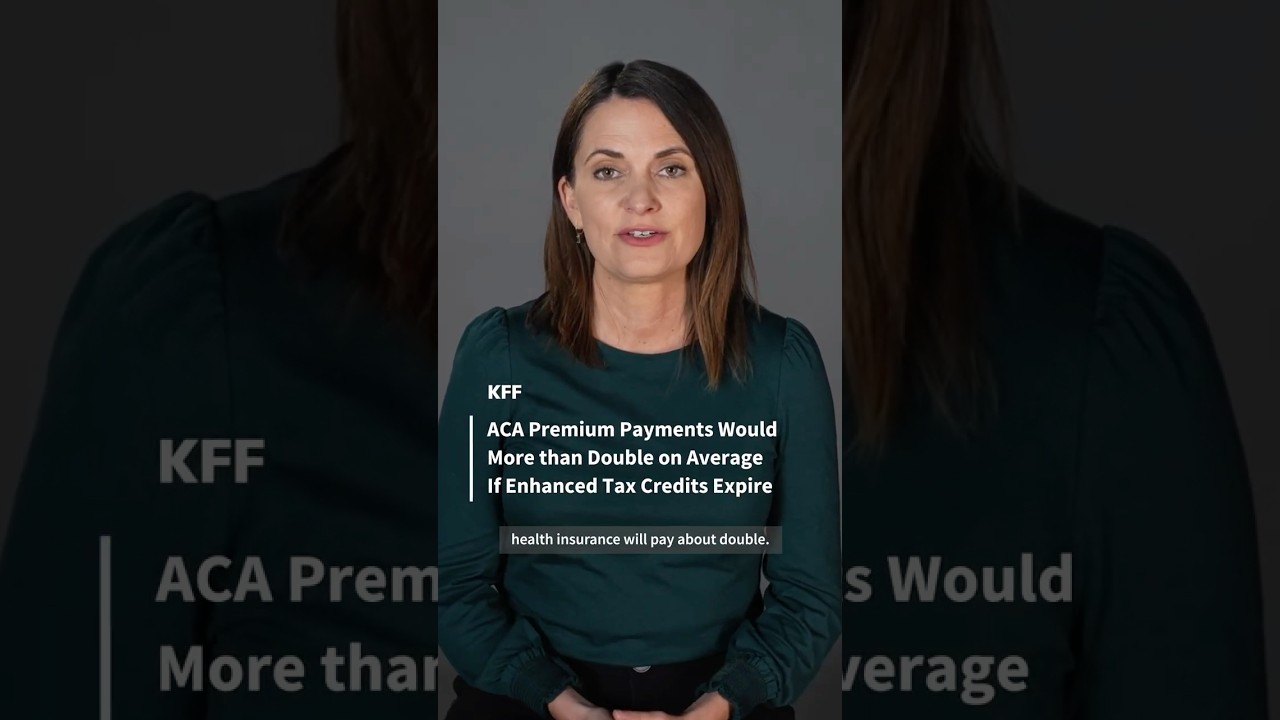
ACA Premium Payments Would More than Double on Average If Enhanced Tax Credits Expire
Автор: KFF
Загружено: 2025-10-23
Просмотров: 1274
Описание:
How much more could people who buy their insurance from the ACA Marketplaces pay if the enhanced premium tax credits expire at the end of the year?
KFF’s Cynthia Cox walks through three real-life examples of how the expiration of the enhanced premium tax credits would affect a family of four, a young working person, and a couple near retirement age.
Our calculator shows how an enrollee’s premium for 2026 would increase based on their zip code, income, age, and family size if Congress doesn’t extend the tax credits: https://www.kff.org/interactive/how-m...
Subscribe to our channel: / @kffvideos
KFF is the independent source for health policy research, polling, and news.
Visit our website: http://www.kff.org
Follow us on X: http://www.x.com/kff
Follow us on BlueSky: https://bsky.app/profile/kff.org
Transcript:
Cynthia Cox, Vice President and Director of the Program on the ACA, KFF
If these enhanced premium tax credits end, people who buy their own health insurance will pay about double.
KFF analysis shows that premium payments would increase by about 114% for people who are buying ACA coverage.
That varies from person to person. It depends on your income, where you live, how big your family is. If these enhanced premium tax credits expire, we're expecting that people are going to have to pay more than twice as much each month to keep that same plan.
Today, about 24 million people are signed up for health coverage through the ACA markets. That's more than double how many people were signed up before these enhanced tax credits came along.
So, a lot of people now rely on these ACA marketplaces for their health insurance.
And, of them, more than nine in ten get an enhanced tax credit to help them with their monthly cost.
So let’s run through some scenarios.
Let's start with a middle income family with two kids living in Alameda, California.
Right now with the enhanced premium tax credit they're spending about $5,000 a year for their health insurance premiums. If the enhanced tax credits go away, they'll still get some financial help, but they would have to spend about $9,000 to keep the same health insurance plan. That's about a 73% increase in what they're paying out of pocket for their premium.
Now, let's look at a younger person in Kansas. Let's say he's making $35,000 a year.
So, right now, he's paying about $1,000 over the course of the year for his premium payments. But next year, if the enhanced premium tax credits go away, he would be paying over $2,600 for the same plan. So for him, that's an increase in his costs of over 150%.
And the concern is that maybe a younger, healthier person like him might not feel like that's just affordable for them to keep getting that coverage.
Now, let's look at an older couple in New Orleans, Louisiana.
They're in their 60s. They're not quite eligible for Medicare yet. Their income is about $85,000 between the two of them. Right now with the enhanced premium tax credit, they're paying about $7,200 over the course of the year for their premium payments. But, without the enhanced premium tax credit, they would pay over $25,000 next year for their health insurance premiums.
One of the reasons that this older couple is experiencing such a steep increase in their premiums is because they make just above four times the federal poverty level. If the enhanced tax credits go away, this couple would no longer be eligible for any financial help, so they would have to pay the full price of health insurance.
On kff.org, we have a calculator where you could put in your own information, or that of someone else who's buying their own health insurance, to see how much more that person would have to pay without the enhanced tax credits.
Повторяем попытку...
Доступные форматы для скачивания:
Скачать видео
-
Информация по загрузке: