AT2019azh: Swallowed by Black Hole Emits Radio Signals Years Later
Автор: FSNews365
Загружено: 2025-09-30
Просмотров: 630
Описание:
Astronomers at Curtin University, alongside international colleagues, have carried out radio monitoring of the tidal disruption event AT2019azh. Findings, released on 22 September via arXiv, shed light on its progression.
When a star drifts near a supermassive black hole, tidal forces tear it apart, creating what astronomers call a tidal disruption event (TDE). Half of the stellar remnants are expelled, while the rest generate a striking flare as they accrete onto the black hole. AT2019azh, observed in 2019 at redshift 0.022 in galaxy KUG 0180+227, displayed distinctive blue hues and a high temperature, yet lacked the hallmarks of a supernova or active galactic nucleus, verifying its TDE identity.
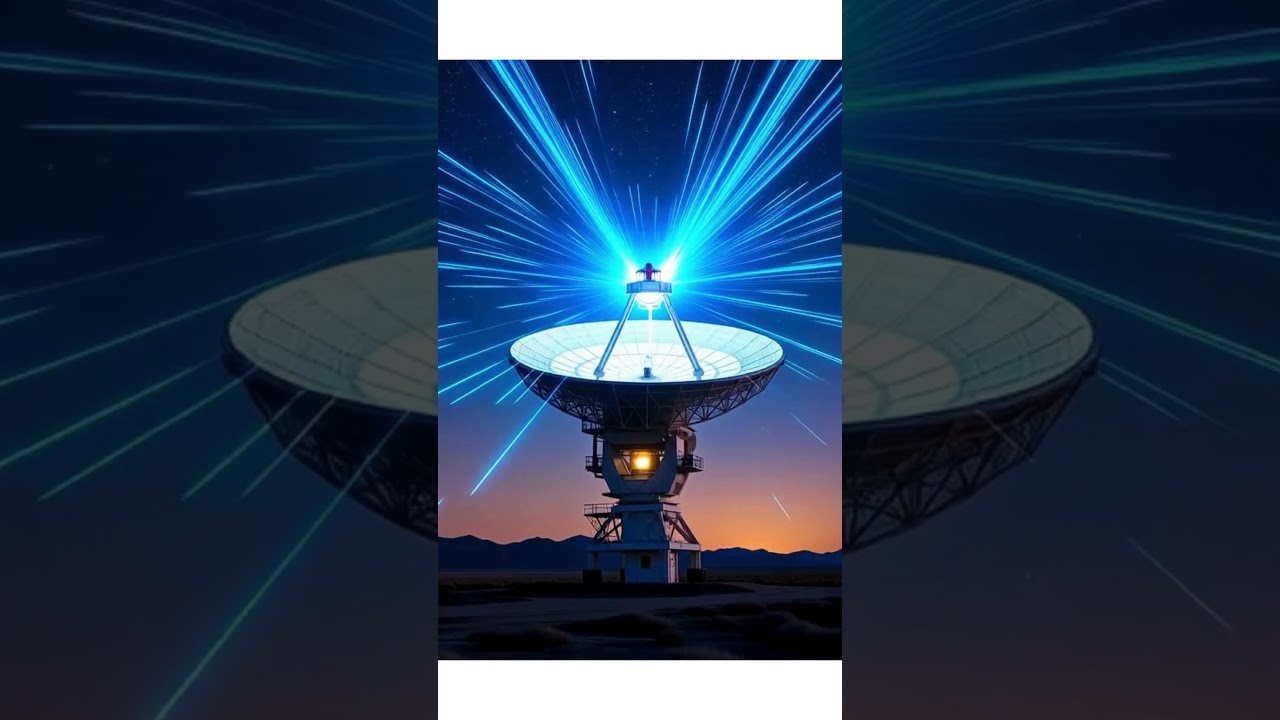
A Curtin University-led research group, headed by astronomer Matthew Burn, has undertaken extended radio observations of the tidal disruption event AT2019azh using the Very Large Array (VLA). Conducted between April 2022 and July 2024, the project was designed to trace how the event developed several years after a star was torn apart by a #blackholes.
“We monitored the #radio activity of AT2019azh between roughly 1,000 and 2,000 days after the disruption,” the team stated. “Such radio studies help us place strong limits on the nature of the expelled material and the surrounding environment of the black hole.”
Fresh observations reveal that the radio emission from #AT2019azh has continued to fade at all measured frequencies since its peak, which earlier research placed at roughly 650 days after the disruption. Unlike several other #tidal disruption events (TDEs), the source shows no signs of late-time re-brightening even six years on.
The data also demonstrate that, at every frequency, the emission declined steeply after its peak but later flattened once more than 1,000 days had passed — a trend most clearly detected at 9.0 GHz. In addition, the 5.5 GHz and 2.25 GHz signals both show flattening during the final three observation epochs, more than 1,700 days after the #stellar break-up.
Astronomers analyzing the light curve of AT2019azh report that its circumnuclear medium (CNM) density profile is exceptionally flat, more so than in other known tidal disruption events (TDEs).
The researchers argue that the results point towards an outflow created by a single ejection of material around the time the star was destroyed. They add that, based on the current pace of its evolution, the radio afterglow from AT2019azh could remain observable for decades to come.
#blackhole #AT2019azh #spacediscovery #astronomynews #radioastronomy #TidalDisruption #curtinuniversity #spaceresearch #astrophysics
Повторяем попытку...
Доступные форматы для скачивания:
Скачать видео
-
Информация по загрузке: