Magnificat in B-flat Major
Автор: New Choir
Загружено: 2019-12-25
Просмотров: 283
Описание:
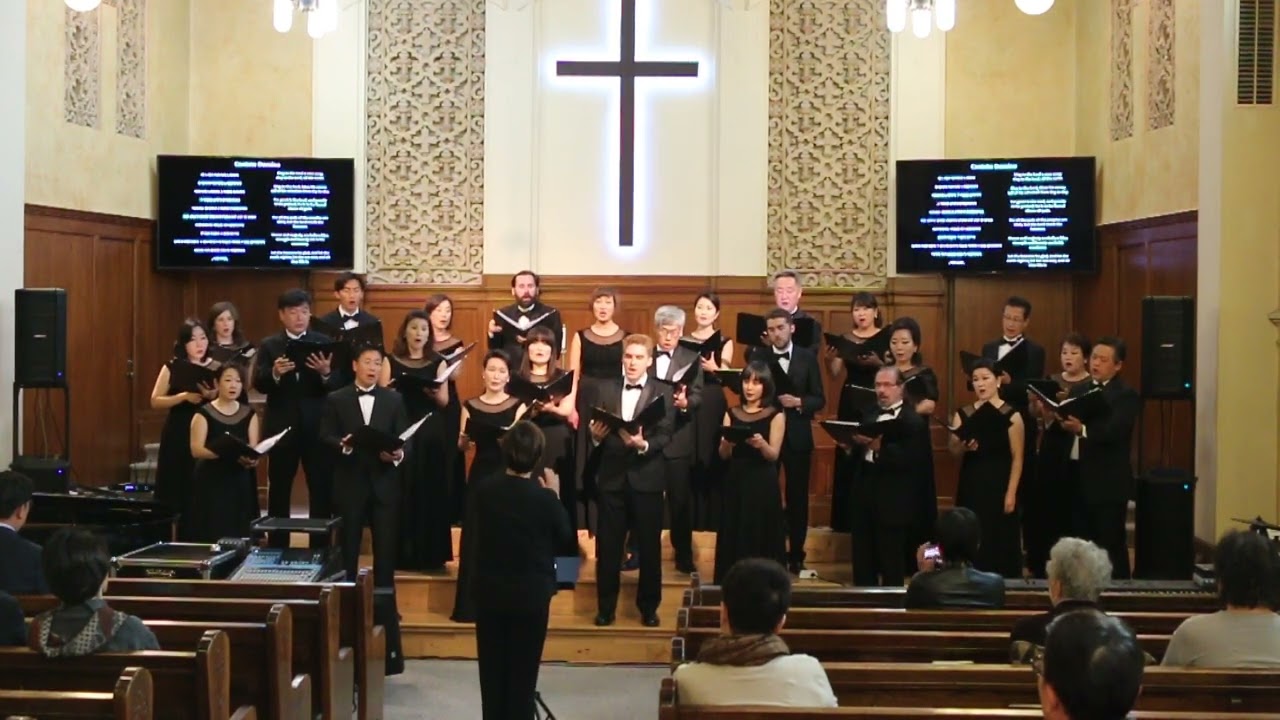
Magnificat in B-flat Major Francesco Durante (1684-1755)
Born in Frattamaggiore, near Naples, Francesco was sent, following the death of his father in 1699, to his uncle Angelo Durante, a priest and director of the Conservatorio di San Onofrio in Naples, where be studied counterpoint and keyboard techniques. In 1728 Francesco became the Master of Music at the conservatory “Dei Poveri di Gesù Cristo” in Naples where Pergolesi was one of his students. In 1742, Durante succeeded Porpora at Santa Maria di Loreto, the oldest and most prestigious Neapolitan conservatory where he brought about a renovation of the curriculum.
Unlike other Neapolitan composers, best known for their operas, Francesco Durante built his reputation on church music and vocal chamber and instrumental works. Though his catalog is not large, his work was respected for its variety and craftsmanship. His work reflects his role as an educator and was consistently performed up to the 19th century. Even today, his Magnificat setting is one of the staples in the choral repertoire.
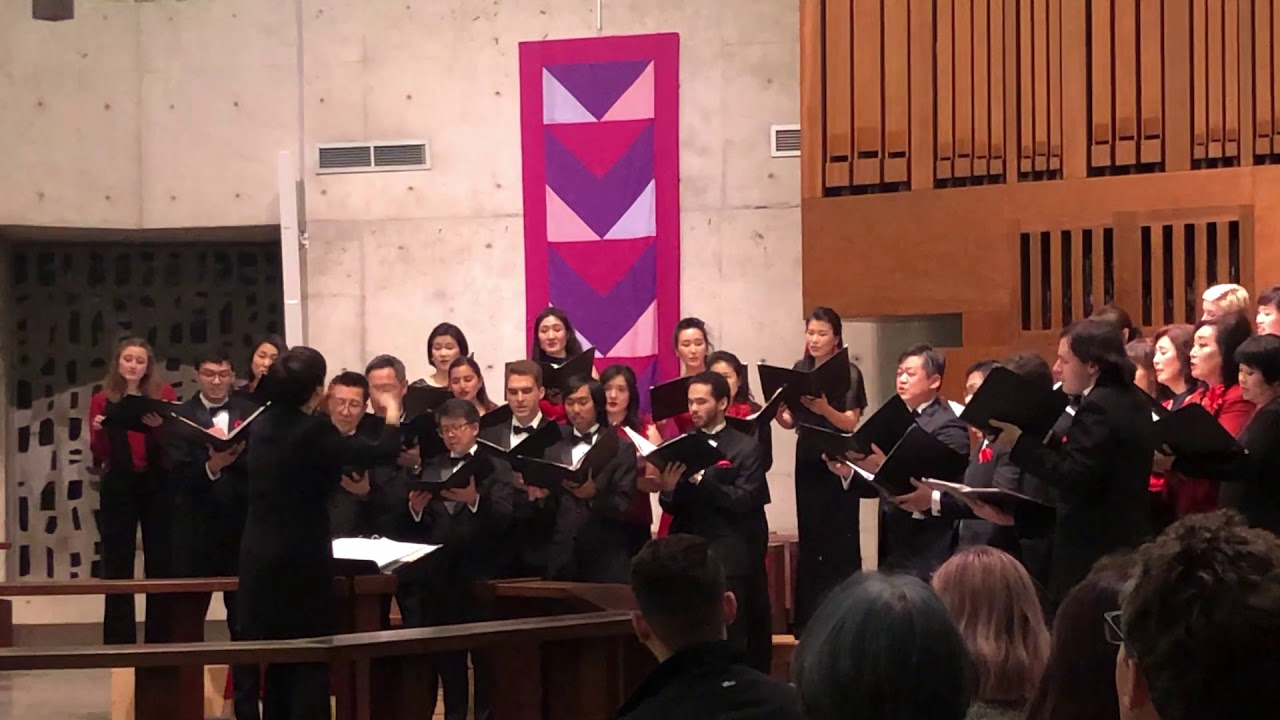
As the result of sloppy scholarship, for much of the 20th century, this work was attributed to Giovanni Pergolesi, a student of Durante. In recent decades, however, contemporary scholars have helped to authenticate this composer’s works. Among the revelations is the identification of the Magnificat in B-flat as the work Francesco Durante. In fact, to date, no setting of Magnificat by Pergolesi has been found while Durante’s catalog shows as many as nine settings in various keys and voicings. Indeed, this Magnificat exists in both 5-voice and 4-voice versions, the latter being that sung in our presentation.
Magnificat is a setting of the Advent canticle of the Virgin Mary. The text is found in the Gospel of Saint Luke 1:46-55. To this, the composer has added the traditional doxology Gloria Patri.
The theme of the opening chorus is based on the eighth tone Gregorian chant melody for the Magnificat to which rhythm has been added. The complementary melodies express Mary’s gladness and joy.
The sweetness of the soprano and alto duet “Et misericordia” contrasts with the violence of the following chorus which concludes this movement, “Fecit potentiam”, invoking God’s wrath on the haughty, while defending the humble.
Employing Palestrina’s polyphonic style, “Deposuit potentes” embodies more a spirit of humility than of power.
The tenor and bass duet, “Suscepit Israel”, offers a comforting dialogue embracing God’s mercy.
The jubilant “Sicut locutus est” reminds us that God does not forget the faithful.
The final doxology “Sicut erat in principio”, introduced by the Gloria Ptri and the conclusion of the previous movement, begins solemnly, recalling the mystery of the Trinity and then bursts into joy and fireworks, reprising the opening Magnificat theme, leading to the final Amen. This repetition of the opening theme to bracket a large work became a common practice of Neapolitan composers at the end of the 18th century.
Повторяем попытку...

Доступные форматы для скачивания:
Скачать видео
-
Информация по загрузке:





![[LIVE] Church Online | James River Church](https://imager.clipsaver.ru/qirxX1KhfwA/max.jpg)