Lunar Meteorite Strewn Field Discovered, New Hampshire Geology Geography
Автор: NewMoonMeteorites
Загружено: 2021-07-17
Просмотров: 735
Описание:
Lunar meteorites discovered in New Hampshire, 2019.. Soon to be Meteorite National Park. Fusion crust on broken trees. Microscopic photos of glass surface of Lunar meteorites. Thin section slides of fusion crust on meteorites. The photos are mostly in chronological order, showing 2 years of exploring/discovering the strewn field.
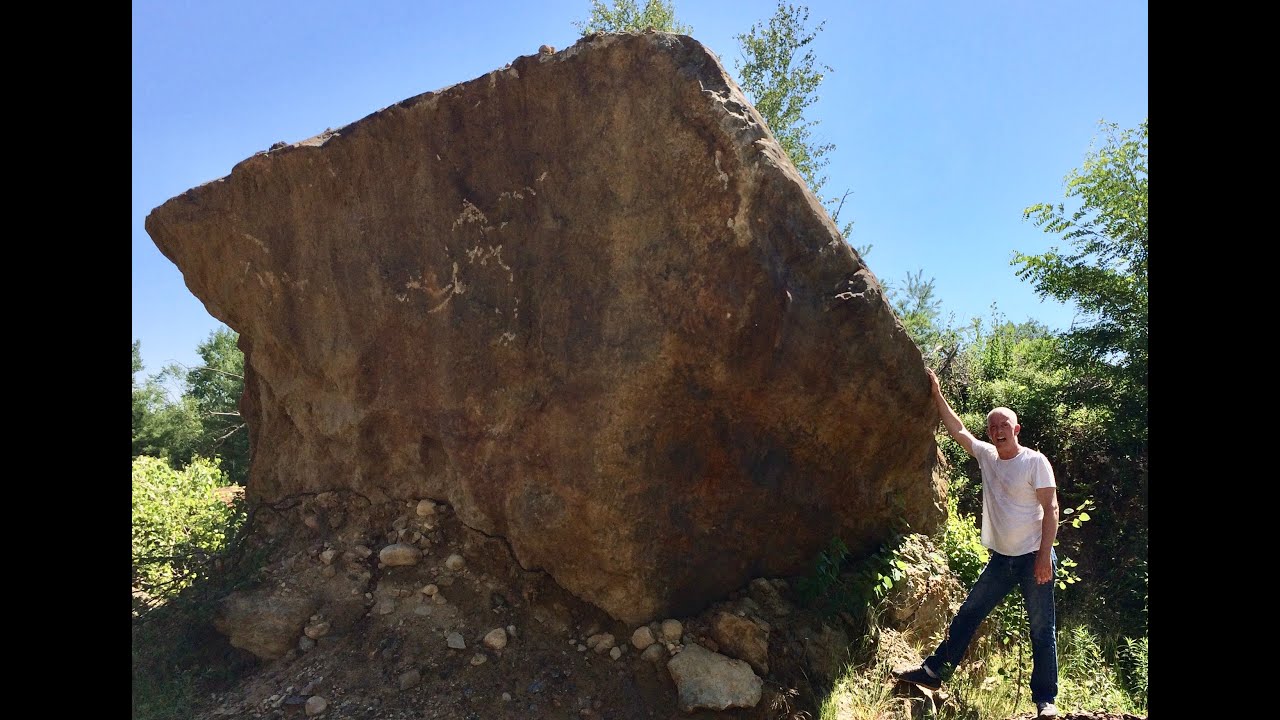
I am not a meteorite scientist or collector, but I studied Geology at UNH, so I know a bit about Earth rocks. In 1993, while working on the family property in Central NH, I found a 90 lb. rock that I was fairly certain was a meteorite. In 2003, after providing small samples and good photos, UNH, Harvard, and N. Arizona all reported it to be terrestrial, not a meteorite. November, 2018 I started researching and got a microscope and a chemical analysis, and had 10 thin section slides made.
IMPORTANT METEORITE FACT: If a rock has a coating of glass on its surface, (melted rock/fusion crust), it is a meteorite. Earth rocks don't have glass coatings on their surfaces. It's black on most meteorites, but depending on the rock type and degree of melting, can be any color, including white, clear, and metallic.
IMPORTANT METEORITE FACT #2: Lunar meteorites are known to look very similar to Earth rocks, similar chemistry. MOST OF THE MOON IS WHITE ROCK, (felsite, granite, gabbro, impact melt, quartz) called anorthosite. The dark spots you see on the moon are basalt, cooled lava/magma. Most of what has been found on Earth is basalt, (black, iron rich), until March of 2019.
December, 2018 New England Meteorite Testing and Maine Mineral and Gem Museum looked at my thin sections with their own microscopes. Both concluded that my rock is just a rock, not the largest Lunar meteorite on Earth, (at the time). All the thin sections clearly show S6 shock veins, melt pockets, and ringwoodite, which are only found on meteorites/impact rocks from large impacts. Did they just miss all the shock veins, melt pockets and ringwoodite in my million dollar meteorite, or lie to me?
January of 2019, Dr. Melinda Hutson, curator of Cascadia Meteorite Lab at Portland State University looked at my chemical analysis and wrote that "it's a Lunar basalt if you can get thin sections showing glass on the surface".
Before I got around to that project, I looked into a story I'd heard 15 years before. I quickly found Bob, who knew nothing about my meteorite, but he had a fairly similar meteorite that his brother found in his corn field one spring in the "1950's or '60's". Bob told me that a friend of his had a very large one like his in her back yard. Within a few weeks I had meteorites from a strewn field covering several hundred square miles, lots of them anorthosite, with lots of thick, beautiful fusion crust. My guess is it fell during one of the large winter storms during the heavy-snow winters of 1959-61, or hurricane Carol and Edna '54, with "widespread tree damage". I got 3 more chemical analysis, 3 in total match known Lunar basalts and 1 matches NASA's Lunar granite.
While exploring the strewn field I immediately noticed a significant amount of serious tree damage, scrapes and gouges on the broken trunks and limbs, and smears of a black glossy substance, with bits of rock fragments in it, and melted looking boulders near the base of the damaged trees, (see fusion crust on oak listing photos). Fusion crust on broken trees has never been found before.
May, 2019, after The Smithsonian dismissed my claims, I sent an email to NASA, followed by another email and 2 phone messages that summer. No reply.
July, 2020, UNH Biology Department Chair was unable to identify the glass-like coating/smear on hundreds of strangely broken trees. She sent it for chemical analysis which shows it to be a glass composed of mostly silica, then aluminum, calcium, magnesium, (same ratios as the Lunar granite from near the tree sampled. There is no other scientific possibility for glass smears on a tree, broken or not. That chemical analysis posted in photos of sample for sale. I asked if she could notify NASA of these findings. No reply. I made the same request of the Geology Chair and the President of UNH the previous winter, no reply.
Повторяем попытку...
Доступные форматы для скачивания:
Скачать видео
-
Информация по загрузке: