Relative Humidity, Wind and Heat: Hidden Forces Shaping a Farm in NW Andalusia
Автор: Suerte del Molino Farm
Загружено: 2026-03-15
Просмотров: 945
Описание:
Many people understand rainfall and temperature because they can see or feel them directly. Relative humidity is less obvious yet it has enormous influence over plants, soil and entire landscapes.
Relative humidity, often written as RH, describes the amount of water vapour in the air compared with the maximum amount the air could hold at that temperature. When the air is completely saturated the relative humidity is 100 percent. When the air is very dry the percentage can drop below 20 percent. On Mediterranean farms this difference can appear within hours.
The idea emerged in nineteenth century meteorology when scientists began measuring moisture in the atmosphere. It soon became important for agriculture because plant growth depends not only on water in the soil but also on moisture in the air. Today the concept is widely used in commercial horticulture, greenhouse production and climate science. Many small farmers do not measure it directly yet they recognise its effects through plant stress, stalled growth and failed harvests.
Plants constantly exchange water with the atmosphere through tiny pores in their leaves called stomata. When the air is humid the difference between the moisture inside the leaf and the moisture outside the leaf is small. Water loss slows and the plant can continue photosynthesis, growth and fruit ripening.
When the air becomes very dry the difference becomes extreme. Water is pulled rapidly out of the leaves in a process known as transpiration. If the roots cannot supply water fast enough the plant protects itself by closing its stomata. Growth slows, fruit ripening stops and prolonged stress can lead to death.
Wind, humidity and temperature work together to shape this process.
High temperatures allow the air to hold more water vapour which increases its drying power.
Low relative humidity creates a strong atmospheric demand for moisture.
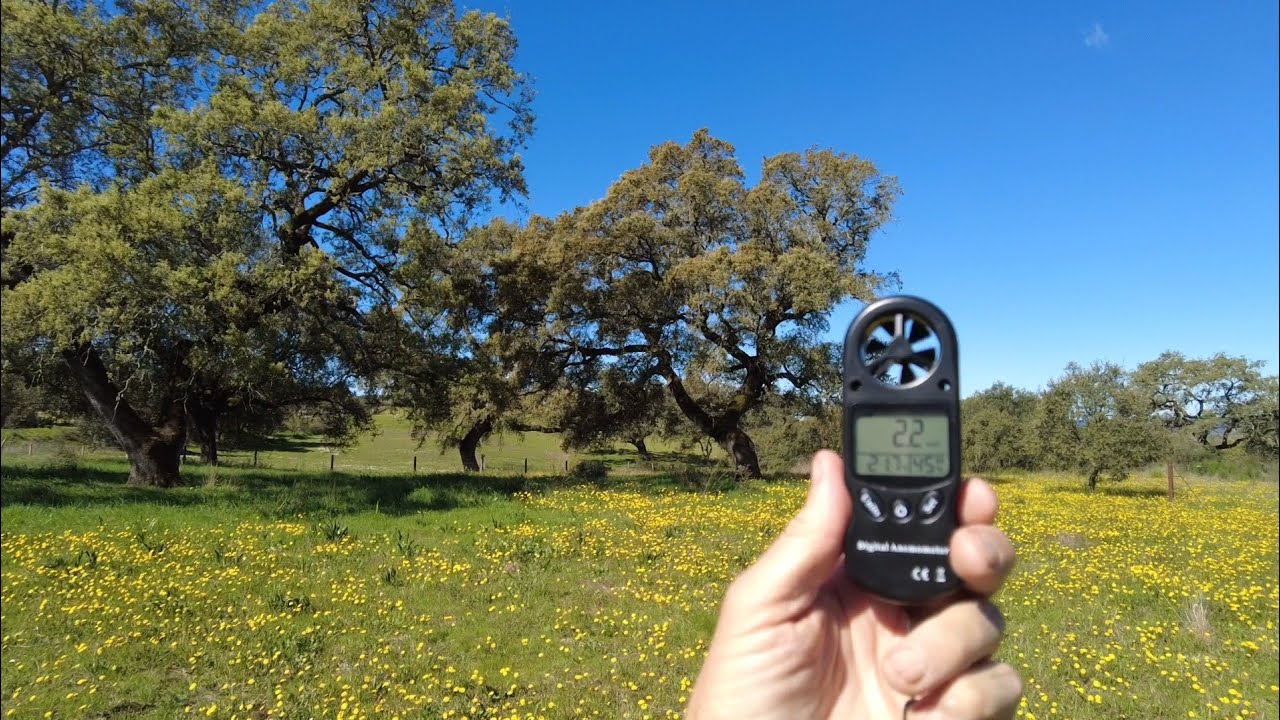
Wind removes the thin protective layer of slightly humid air that normally surrounds leaves. Once that layer disappears the plant loses water far more quickly.
This combination is common on inland farms in north west Andalusia. Long hot summers, dry air and strong winds can halt growth even where irrigation and mulch are present.
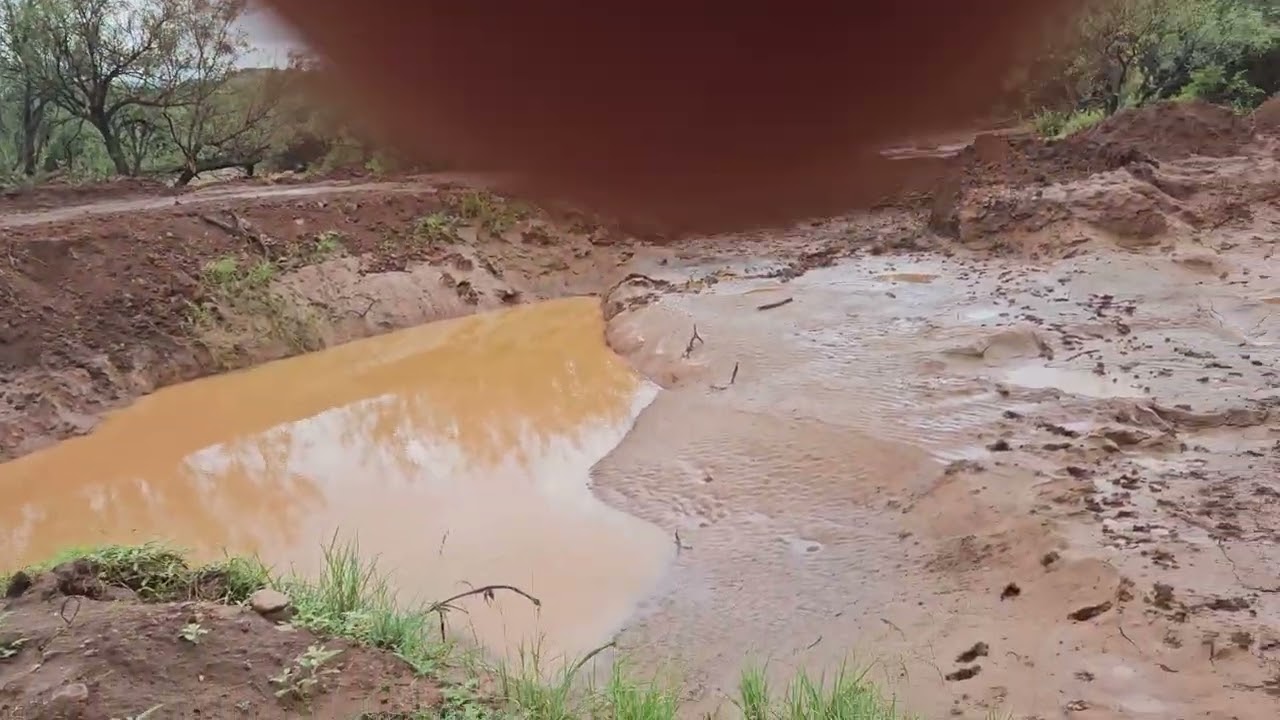
On a small off grid farm near Aroche the response is not simply to add more water. The strategy is to reshape the landscape so that the farm itself begins to moderate the climate. Swales planted with trees capture rainfall and recharge soil moisture. Weirs and check dams slow water moving through the valleys. Berm planting lifts trees above heavy clay soils while still giving them access to stored water.
Improving relative humidity at farm scale is possible through careful ecological design.
Ten practical approaches help shift conditions over time.
Plant dense windbreaks of trees and shrubs to slow hot drying winds.
Develop multi layer agroforestry systems with canopy trees, understory trees, shrubs and groundcover.
Expand water harvesting through swales, ponds, check dams and infiltration basins.
Maintain permanent soil cover using mulch, plant litter, grasses and living groundcovers.
Increase tree density along swales to create shade corridors and cooler air.
Establish hardy pioneer species that tolerate wind, heat and drought.
Allow strips of natural vegetation to regenerate between cultivated areas.
Plant mixed hedgerows combining evergreen shrubs, deciduous trees, climbers and grasses.
Create sunken basins or small sheltered gardens where moisture collects.
Encourage biodiversity because insects, fungi, grasses, shrubs and trees together create living humid microclimates.
None of these measures changes the regional climate. Yet together they slowly reshape the conditions across a farm. Wind speed falls, soil holds more water, shade spreads across the land and the air retains slightly more moisture.
Even a small increase in humidity can make the difference between plants merely surviving and plants growing strongly through the Mediterranean summer.
#MediterraneanClimate
#NorthWestAndalusia
#DrylandFarming
#RelativeHumidity
#Agroforestry
#PermacultureDesign
#WaterHarvesting
#RegenerativeAgriculture
#Swales
#Windbreaks
#MicroclimateFarming
#TreeBasedFarming
#ClimateResilientFarm
#AndalusiaFarming
#SuerteDelMolino
Повторяем попытку...
Доступные форматы для скачивания:
Скачать видео
-
Информация по загрузке: