Predictive Value Stream Simulation
Автор: Let's Fix Your Business
Загружено: 2018-12-28
Просмотров: 442
Описание:
"The Science of Lean Operations" Online Course - https://bit.ly/3rXPVHP
Predictive Simulation - • Predictive Value Stream Simulation
ROIC Improvement - • How To Improve ROIC In Your Business
Contact - https://bit.ly/contactmoses
Value Stream Mapping (VSM) is used widely to design and improve operations. But it is essential to be able to predict the following operational parameters in the as-is and to-be scenarios:
Throughput
Flow Times and Lead Times
Work In Progress (WIP)
Utilisation of Resources
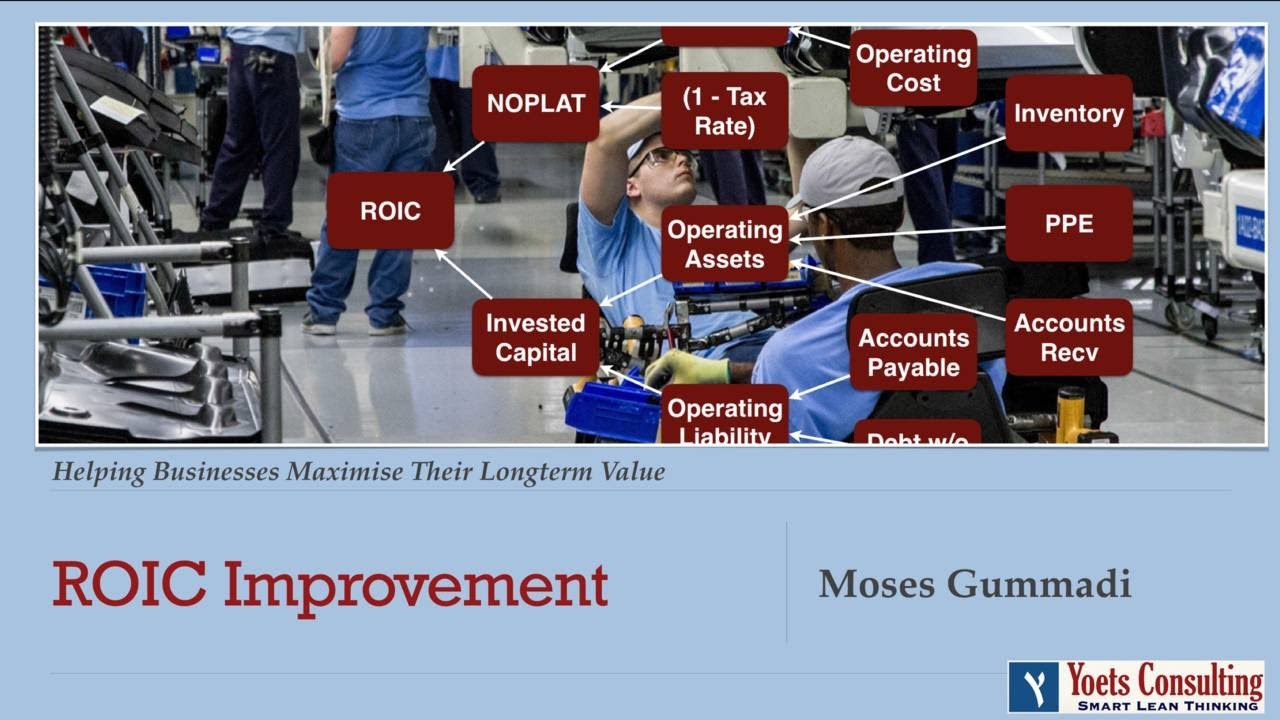
These parameters can be used to calculate the expected Revenues, Costs, Working Capital and more importantly the Return On Invested Capital (ROIC).
However, traditional VSMs are inadequate to predict the above parameters (even when using spreadsheets) due to the following reasons:
Using averages and not accounting for variability produces erroneous results
Complex flows (merges, splits, rework loops, etc) are difficult to model
Shared resources cannot be handled
Mixed models (multi product) and job shops can’t be modelled easily
Information Flow modelling (not drawing) is simply not possible
Scenarios and experimentation is difficult and time consuming
Predictive Simulation of Operations, using Discrete Event Simulation (DES) Software is the best option available, especially as we move towards Industry 4.0. It is possible to:
Map the process flow or material flow with complex routings
Establish the information flow
Model Kanbans, Supermarkets, Drum Buffer Rope, JIT, JIS
Assign resources (people/ machines) – including shared resources
Setup multiple shifts for people
Account for downtimes, MTBF, MTTR etc for the equipment
Account for variability in demand, products, processing, downtimes, etc
What Is Simulation
1. Simulation is a powerful, scientific approach for making confident and evidence based decisions that will improve your organisation’s output, efficiency, profitability.
2. Simulation software enables you to build a visual representation of your manufacturing or business process, assign resources, add rules, and mimic real life behaviour.
3. Simulation model allows you to test the impact of process changes and 'what if' scenarios. It is possible to determine a set of changes that give the best operational performance, and higher ROIC.
Simulation can be applied in the following business contexts - Operations Design, Operations Execution, Step Change (Transformation Projects), and Continuous Improvement.
Operations/ Plant/ Facility Design:
Modelling greenfield and brownfield designs to test and refine before implementation can help to get it right first time. Optimal material and information flows, shifts and staff allocations can be determined upfront.
Operations Execution:
During the operations execution, organisations face various risks that puts their ability to deliver in jeopardy. Examples include demand variation, supplier delays, short supplies, staff absences, machine breakdowns, etc.
In these situations, operations require alternative operating plans that are efficient and minimise the losses whilst maximising what is possible to deliver. Predictive Simulation approach can be used to develop and test what-if scenarios, ready for use when such a contingency is encountered.
It is also possible to make Industry 4.0 initiatives more effective by using sensor data in the Predictive Simulation models.
Step Change (Transformation Projects)
The impact of major investments on the Operations is not always easy to determine. For example, the ROI calculators used to evaluate investments such as Robots and AGVs depend on hand-calculated productivity improvements which are not accurate most of the time. Predictive Simulation on the other hand can actually determine the level of improvement in Throughput, Time In System, Lead Time, WIP, etc.
Predictive Simulation can also be used to evaluate a portfolio of operational change projects to determine their impact on the efficiency of operations.
Finally, Predictive Simulation helps identify bottlenecks in the operations and helps in the designing solutions.
Continuous Improvement
Continuous Improvement ideas, Kaizen projects etc can be tested before implementation to ensure they indeed make an impact to the operational performance.
#OperationalExcellence #DiscreteEventSimulation #PredictiveAnalytics
Повторяем попытку...

Доступные форматы для скачивания:
Скачать видео
-
Информация по загрузке: