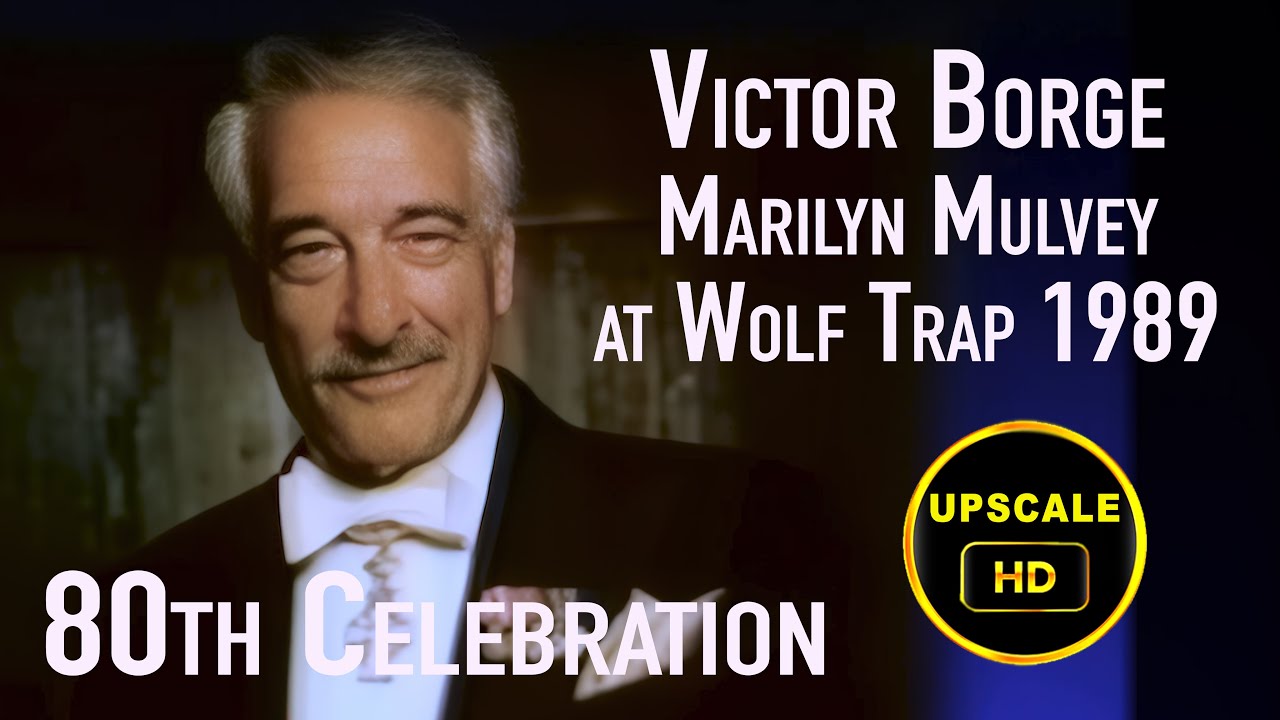
Victor Borge & Marilyn Mulvey & the Opera Recital at Wolf Trap 80th Celebration 1989
Автор: danjbab
Загружено: 2024-09-23
Просмотров: 982
Описание:
Victor Borge & Marilyn Mulvey & the Opera Recital at Wolf Trap 80th Celebration 1989
Victor Borge and Marilyn Mulvey had a notable professional partnership in the world of music and comedy, especially in Borge’s later years. Victor Borge, known as the “Clown Prince of Denmark,” was a Danish-American pianist, conductor, and comedian, famed for blending classical music and humor. Marilyn Mulvey, a talented American soprano, was frequently featured as a guest artist in Borge’s performances, and together they created memorable comedic musical performances.
Victor Borge:
Full Name: Børge Rosenbaum
Born: January 3, 1909, in Copenhagen, Denmark
Died: December 23, 2000, in Greenwich, Connecticut, USA
Career:
Borge was an accomplished pianist and conductor who became world-famous for his unique combination of music and comedy. His career spanned over seven decades, with his live performances and television appearances entertaining audiences around the globe.
Humor and Music: Borge’s performances were a delightful blend of slapstick humor, witty verbal jokes, and clever musical parody. He frequently poked fun at the conventions of classical music, often mixing physical comedy with his piano performances.
Marilyn Mulvey:
Profession:
American soprano singer
Partnership with Borge: Marilyn Mulvey, with her powerful voice and musical expertise, often appeared as a guest soprano in Victor Borge’s shows. Her ability to play the “straight” role against Borge’s antics made her a perfect counterpart in his performances.
Collaboration:
Performances: Borge often included opera and classical music in his shows, and he featured Mulvey to add a serious musical element. However, even though Mulvey was a classically trained soprano, Borge would often comically disrupt her performances, turning the serious art of opera into a humorous spectacle.
Comedy and Musical Parody:
One of their most famous comedic routines involved Mulvey singing operatic pieces while Borge would comically “misinterpret” or interrupt her, creating confusion and humor while still allowing her incredible voice to shine through. For example, in one performance, Borge would "assist" Mulvey by turning the pages of her music, only to flip through them too quickly or too slowly, causing exaggerated frustration.
Highlights of Their Partnership: Mulvey’s collaboration with Borge was a significant part of his late career, with performances in Borge’s live shows and television appearances. Their chemistry was central to Borge’s blend of high culture and humor, as Mulvey’s seriousness provided the perfect contrast to Borge’s comedic interruptions.
Conclusion:
Victor Borge and Marilyn Mulvey’s partnership showcased a unique combination of classical music and comedy. While Borge was a comedic genius with a love for music, Mulvey was a professional opera singer who played a key role in his performances, creating a dynamic onstage relationship that delighted audiences. Their work together left a lasting impact on the genre of musical comedy.
Wolf Trap National Park for the Performing Arts, commonly known as Wolf Trap, is a unique performing arts venue located in Vienna, Virginia, just outside Washington, D.C. It is the only national park in the United States dedicated to the performing arts and has a rich history tied to its natural setting, diverse performances, and cultural impact.
Origins and Early History
The Land:
The area that Wolf Trap occupies was originally farmland owned by Catherine Filene Shouse, a philanthropist and arts advocate. In the late 1930s, Shouse bought a 168-acre farm in Vienna, Virginia, where she eventually began hosting informal concerts and gatherings.
The Vision:
In the late 1960s, Catherine Shouse had the vision of creating a performance space that could offer arts experiences to people from all walks of life while preserving the natural beauty of the area. She donated 100 acres of her land, as well as funds for constructing the first building, to the federal government, under the condition that it be used for a venue dedicated to the performing arts.
Creation of Wolf Trap:
With Shouse's donation in 1966, Congress established Wolf Trap Farm Park for the Performing Arts in 1968 as part of the National Park Service. This marked the first time a national park had been created with a focus on the performing arts, blending nature and culture.
Wolf Trap’s history is one of innovation and vision, beginning with Catherine Shouse’s dream of combining the natural beauty of her Virginia farm with world-class performances. From its inception as the first national park dedicated to the performing arts, to the destruction and rebuilding of the Filene Center, Wolf Trap has remained a vital cultural institution. It continues to offer diverse programming, nurture young talent, and provide a space where art and nature come together for people to enjoy.
Повторяем попытку...
Доступные форматы для скачивания:
Скачать видео
-
Информация по загрузке:


