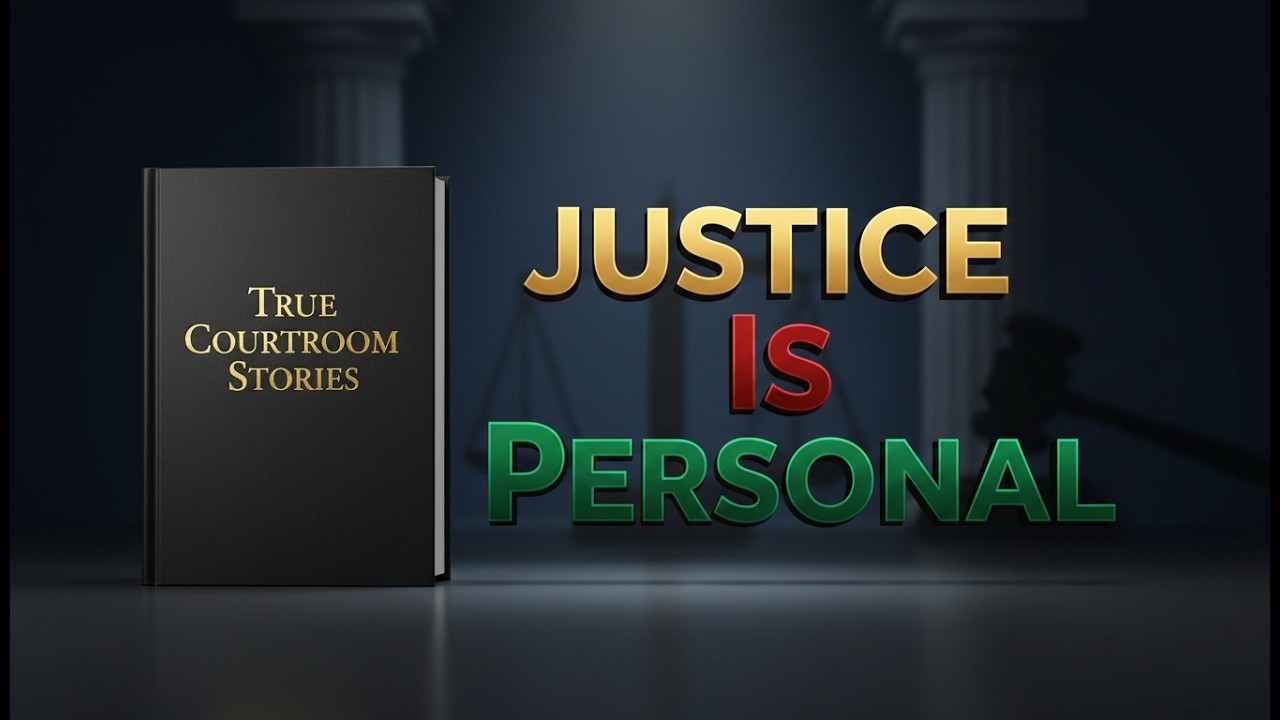
Episode 159 — Collective Punishment Forbidden | True Courtroom Stories
Автор: True Courtroom Stories: Based on judgements
Загружено: 2026-02-25
Просмотров: 1
Описание:
Episode 159 — Collective Punishment Forbidden | True Courtroom Stories
Assalam-o-Alaikum! Welcome to True Courtroom Stories, where we uncover the intricate truths behind the world’s most complex legal cases. In this episode, titled “Collective Punishment Forbidden”, we delve into one of the most fundamental principles of justice: individual responsibility and personal accountability.
Throughout history, acts of vengeance often transcended the individual, affecting entire families, tribes, or communities. Villages were burned, families were destroyed, and tribes suffered — all because one person committed a crime. This episode examines how classical courts, Islamic judicial foundations, and modern legal systems rejected such collective punishment, emphasizing that justice must always be personal.
Key Highlights of This Episode:
Islamic Judicial Foundation: The Quranic principle — “No soul shall bear the burden of another” — ensures that punishment is strictly personal. Family, tribe, or community cannot be held liable for one person’s actions.
Classical Judicial Moments: Historical courts intervened to prevent cycles of vengeance, stopping collective retaliation and enforcing individual accountability.
Global Legal Perspective: International war crimes law and human rights jurisprudence explicitly ban collective punishment, emphasizing fairness and individual liability.
Pakistan Legal Application: Pakistan’s criminal justice system upholds the principle of personal responsibility, rejecting community-wide sanctions or group punishment.
Ratio Decidendi: Justice is personal; punishment is never collective.
Moral Axis: When punishment becomes collective, justice disappears.
This episode explores the moral, legal, and ethical dimensions of collective punishment and highlights why it is universally rejected in Islamic law, global jurisprudence, and modern criminal justice systems. The discussion draws from deep research and analysis provided by Mr. Zaheer Ahmad Meer, based on social media and deep web sources.
Whether you are a law student, legal researcher, or simply someone interested in the philosophy of justice, this episode provides valuable insights into how justice must prioritize the individual, ensuring fairness and ethical accountability.
Why Watch This Episode?
Understand the historical context of collective punishment and its consequences.
Learn how Islamic and global legal systems prevent injustices caused by group liability.
Explore Pakistan’s legal approach to criminal responsibility and individual guilt.
Gain a deeper understanding of the moral principles that sustain justice.
Join us as we examine real cases, historical precedents, and legal interpretations that shaped the principle of personal responsibility in punishment. This episode is a must-watch for anyone interested in law, human rights, ethical jurisprudence, and criminal justice reform.
Research Credit: All research, analysis, and materials for this episode were meticulously provided by Mr. Zaheer Ahmad Meer, based on deep social media investigations and extensive web research.
Stay tuned to True Courtroom Stories for more episodes exploring complex legal dilemmas, historical cases, and the pursuit of justice across generations.
🔹 SEO Keywords for This Episode:
collective punishment, individual responsibility, Islamic law, human rights, war crimes law, Pakistan criminal law, justice system, personal accountability, legal principles, courtroom cases, True Courtroom Stories, historical legal cases, ethical justice, moral responsibility
🔹 Hashtags:
#TrueCourtroomStories #CollectivePunishment #JusticeIsPersonal #IslamicLaw #HumanRights #PakistanLaw #CourtroomDrama #LegalCases #WarCrimesLaw #PersonalAccountability #EthicalJustice #CriminalJustice #HistoricalCases #LegalEducation #JusticeSystem
Повторяем попытку...
Доступные форматы для скачивания:
Скачать видео
-
Информация по загрузке:




![ABC 20/20 [New] 2026 🍀🍀🍀 S48E17 Footprints in the Snow 🍀🍀🍀ABC 20/20 Season 2026 Full Episode](https://imager.clipsaver.ru/010-JwtJD_s/max.jpg)