Sidebar Speaker Series: AI Evals for Product Managers with Anshumani Ruddra
Автор: Sidebar
Загружено: 2026-02-16
Просмотров: 3
Описание:
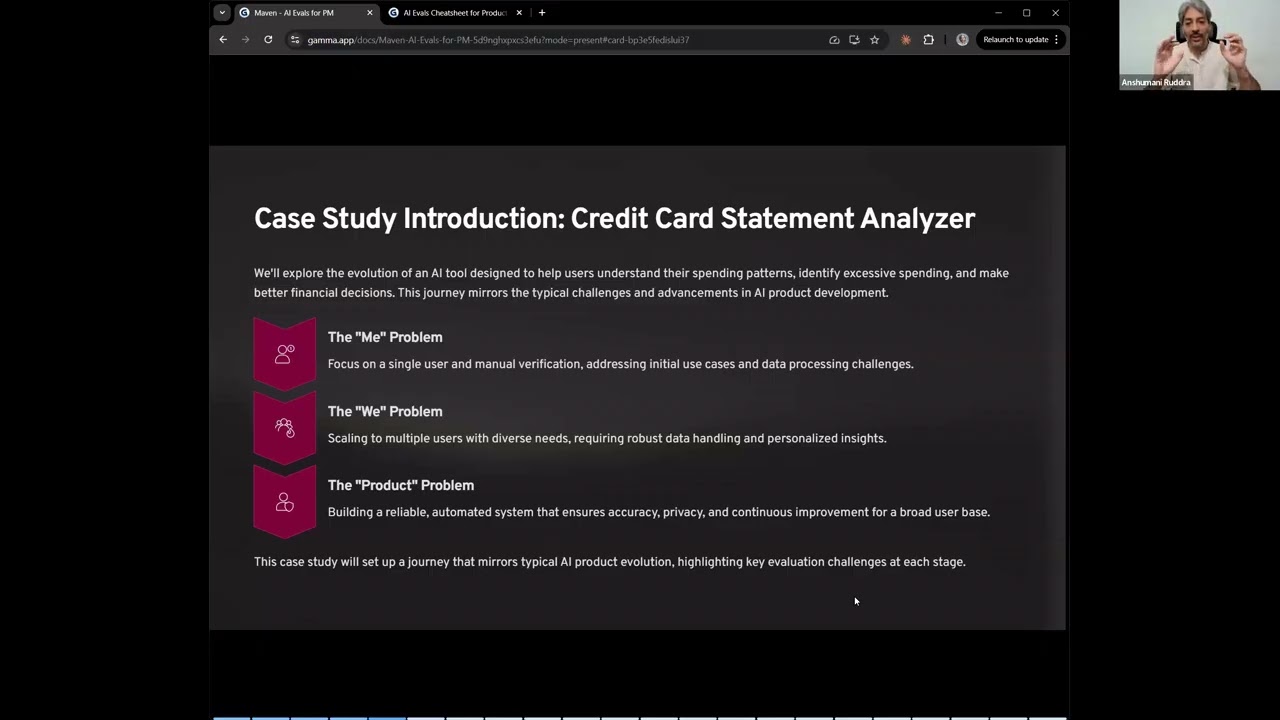
This is a Sidebar conversation with Anshumani Ruddra – a seasoned product leader at Google with over 22 years of experience crafting technology and user experiences across various domains. Anshu discussed the importance of evaluating AI products effectively, emphasizing user empathy, the need for a ‘golden set’ of evaluations, and integrating qualitative and quantitative metrics to ensure product success.
Key Insights
This is an insightful session featuring Anshumani Ruddra, a product leader with over 22 years' experience at Google, who specializes in crafting technology-driven products and experiences. The discussion delved into the evaluation of AI products, especially within the context of product management. Here are seven key takeaways for senior executives to implement in their careers immediately:
Understand User Needs
Empathy Matters: Recognize that as a Product Manager, understanding user needs is crucial in product evaluation. Insights into user behaviors will improve product quality.
Adapt to Failures: Learning from product failures can provide essential insights into unmet user needs; incorporate findings to enhance future product evaluations.
Build a Comprehensive Golden Set
Golden Set Importance: Create a curated dataset for evaluation that reflects the most common product inquiries and expected outputs. This reference will guide accurate evaluations.
Continuous Updates: Regularly append new examples to your golden set as product usage evolves and additional patterns of inquiries emerge.
Embrace a Multifaceted Evaluation Process
Beyond Accuracy: Employ multiple metrics including robustness and consistency in evaluations, not just accuracy. This holistic approach will yield more reliable product outputs.
Qualitative Inputs: Incorporate qualitative evaluations alongside quantitative measures to ensure a thorough understanding of product performance and user satisfaction.
Feedback Loops are Essential
Iterative Improvements: Continuously refine your evaluation methods based on user feedback and AI output assessments. This will help you adapt methodologies as products and markets evolve.
Human Oversight: Incorporate a human-in-the-loop system to bolster qualitative assessments. Combining algorithm results with human insight can improve overall accuracy.
Prioritize Relevance and Safety
Answer Relevancy: Ensure outputs remain relevant to users' requests; avoid providing information that could mislead or confuse, particularly in sensitive areas like health or insurance.
Safety Protocols: Establish checks to prevent harmful outputs from AI systems, particularly for any critical or life-affecting queries.
Adapt Evaluation Strategy by Product Type
B2B vs. B2C Differences: Tailor evaluation metrics based on whether products are for consumers or businesses; enterprise environments often require a higher accuracy standard due to the limited scope of inquiries.
Context-Specific Evaluations: Differentiate the evaluation criteria based on product complexities and user expectations to ensure relevance and usefulness in varying contexts.
Foster a Culture of Learning
Open to Learning: Encourage teams to learn from AI evaluations as a collaborative process; sharing insights from failures and successes will promote a culture of development.
Stay Agile: Remain flexible in your product development approaches, allowing room for rapid pivots as new information and insights are gained.
These actionable insights can profoundly impact senior executives by allowing them to enhance their product evaluation processes and better align their strategies with user needs. Embracing these recommendations will ultimately lead to more successful and user-centric product outcomes.
Повторяем попытку...
Доступные форматы для скачивания:
Скачать видео
-
Информация по загрузке: