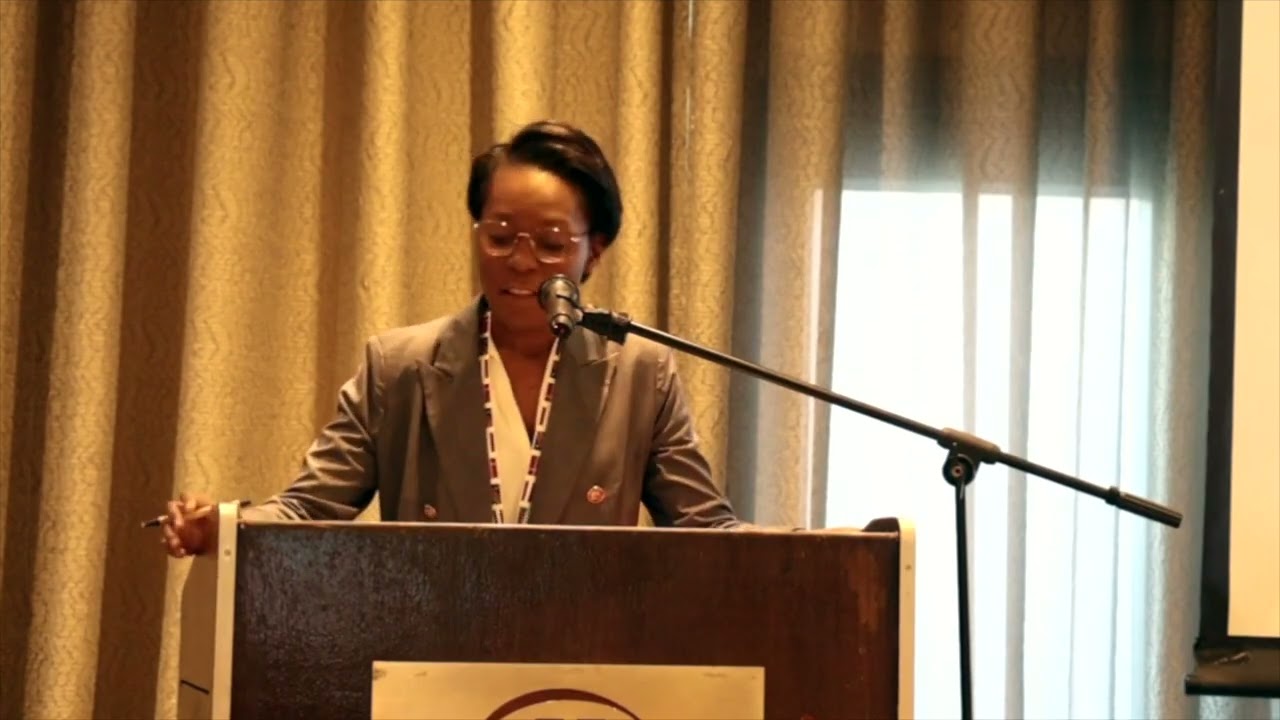
Socio-Economic Impact and the Just Transition by Ms Kauna Ndilula, CEO, Business Financial Solutions
Автор: KOOLIKE DOCUMENTARY HOUSE
Загружено: 2026-03-07
Просмотров: 1
Описание:
The emergence of Namibia as a global hub for green hydrogen production represents a significant shift in the international energy landscape, driven by the country's exceptional solar and wind resources. This transition is characterised by high-level diplomatic and economic cooperation between Namibia and European nations, specifically Denmark and the Netherlands, who are seeking to secure sustainable energy supplies to meet their decarbonization goals.
The Strategic Importance of Green Hydrogen in Namibia
Green hydrogen is produced through the process of electrolysis, where renewable electricity is used to split water into hydrogen and oxygen. The chemical equation for this process is:2H2O(l)→2H2(g)+O2(g). Namibia is uniquely positioned for this industry due to its high solar irradiance and consistent wind speeds, particularly in the Tsau //Khaeb National Park near Lüderitz. According to academic assessments of renewable energy potential, Namibia’s capacity for low-cost hydrogen production is among the highest in the world, potentially reaching costs below $2 per kilogram by 2030.
Diplomatic Engagement: Denmark and the Netherlands
In June 2023, a high-level diplomatic mission led by Dutch Prime Minister Mark Rutte and Danish Prime Minister Mette Frederiksen visited Namibia to formalise energy partnerships. This visit underscored Europe's "hurry" to transition away from fossil fuels and secure reliable green energy imports. President Hage Geingob emphasized that this relationship must be a "partnership of equals," moving away from traditional donor-recipient dynamics toward a "win-win" economic model.
The Netherlands, through the Port of Rotterdam, aims to become the primary gateway for Namibian hydrogen into the European industrial heartland. The delegation included executives from Gasunie and Invest International, signalling that the partnership is backed by both infrastructure management and substantial financial capital. Denmark’s involvement focuses on technical expertise and the "just transition," ensuring that the shift to green energy provides social mobility and skills development for the local population.
Economic and Infrastructure Development
The scale of the proposed projects is immense. The Hyphen Hydrogen Energy project, for instance, is a multi-billion-dollar initiative aimed at producing 300,000 tons of green hydrogen annually. Such projects require massive infrastructure, including:
• Desalination Plants: To provide the fresh water necessary for electrolysis without depleting local drinking water.
• Port Expansions: Specifically at Lüderitz and Walvis Bay, to handle the export of ammonia (a common carrier for hydrogen).
• Renewable Grids: Large-scale solar and wind farms that will eventually contribute to the Southern African Power Pool (SAPP).
Socio-Economic Impact and the "Just Transition"
A central theme of the Windhoek Business Forum was the integration of the green energy sector with Namibia’s broader economy. Ms Kauna Ndilula, CEO of Business Financial Solutions, highlighted the need for financing mechanisms that support local Small and Medium Enterprises (SMEs) within the hydrogen value chain. Prime Minister Frederiksen noted that the transition must not threaten the livelihoods of those in the traditional mining sector but should instead offer "human-centric" financing for re-skilling.
Furthermore, the Netherlands signed a letter of intent for a visa-waiver agreement for diplomatic passport holders, a symbolic and practical step toward deeper bilateral integration. The collaboration also extends to South Africa, where the European leaders met with President Cyril Ramaphosa to discuss similar regional energy synergies.
Environmental and Technical Challenges
While the potential is vast, the technical execution remains complex. The efficiency of electrolysis is a critical factor, often governed by the Faraday efficiency and the energy losses in the conversion process. The total energy required (E) can be modelled as: E=ΔHn⋅ηwhere ΔH is the enthalpy of hydrogen production, n is the amount of substance, and η is the efficiency of the electrolyser. Maximising η through advanced Danish and Dutch technology is a primary goal of the partnership.
Повторяем попытку...

Доступные форматы для скачивания:
Скачать видео
-
Информация по загрузке: