Why Bond Prices and Yields are Inversely Related
Автор: InformedTrades
Загружено: 2015-03-17
Просмотров: 121744
Описание:
Help us make better videos: http://www.informedtrades.com/donate
Trade stocks and bonds with Scottrade, the broker Simit uses: http://bit.ly/scottrade-IT (see our review: http://bit.ly/scottrade-IT2)
KEY POINTS
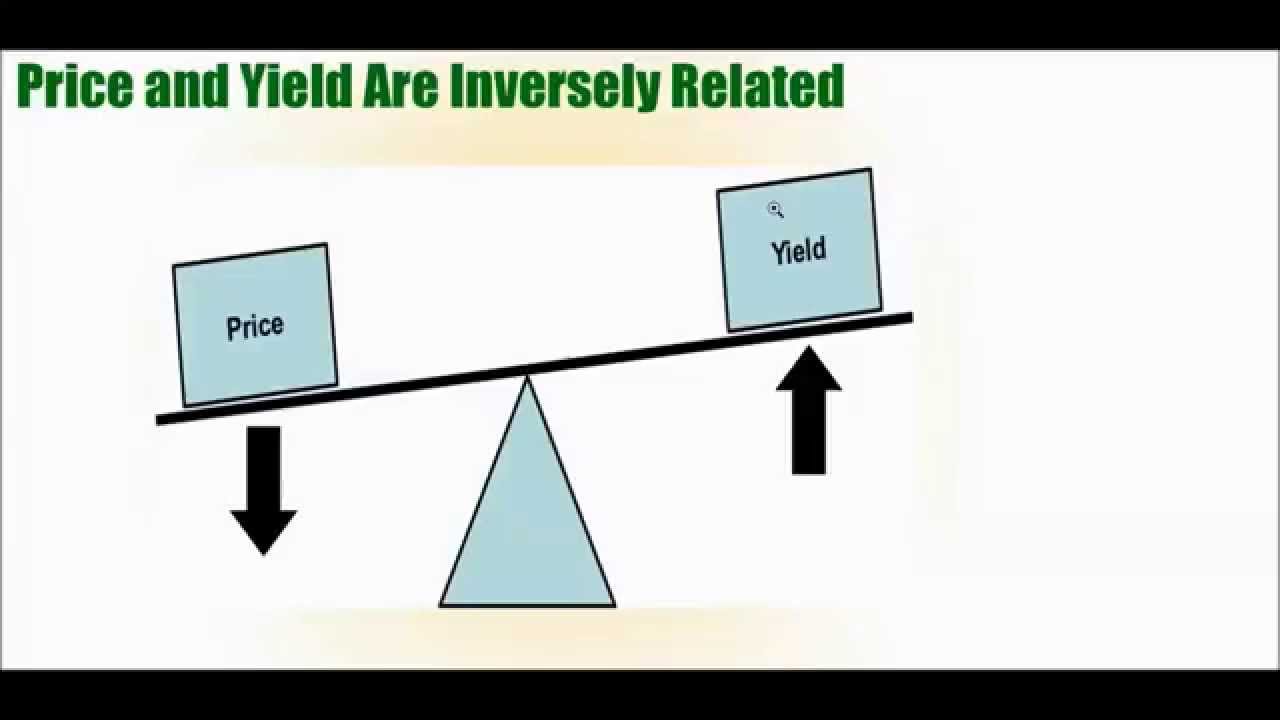
1. Bond prices and bond yields move in opposite directions. When bond prices go up, that means yields are going down; when bond prices go down, this means yields are going up. Mathematically, this is because yield is equal to:
annual coupon payments/price paid for bond
A decrease in price is thus a decrease in the denominator of the equation, which in turn results in a larger number.
2. Conceptually, the reason for why a decrease in bond price results in an increase bond yields can be understood through an example.
a. Suppose a corporation issues a bond to a bondholder for $100, and with a promise of $5 in coupon payments per year. This bond thus has a yield of 5%. ($5/$100 = 5%)
b. Suppose the same corporation then issues additional bonds, also for $100 but this time promising $6 in coupon payments for year -- and thus yielding 6%.
No rational investor would choose the old bond; instead, they would all purchase the new bond, because it yielded more and was at the same price. As a result, if a holder of the old bonds needed to sell them, he/she would need to do so at a lower price. For instance, if holder of the old bonds was willing to sell it at $83.33, than any prospective buyer would get a bond that earned $5 in coupon payments on an $83.33 payment -- effectively an annual yield of 6% (5/83.33). The yield to maturity could be even higher, since the bond would give the bondholder $100 upon reaching maturity.
3. The longer the duration of the bonds, the more sensitivity there is to interest rate moves. For instance, if interest rates rise in year 3 of a 30 year bond (meaning there are 27 years left until maturity) the price of the bond would fall more than if interest rates rise in year 3 of a 5 year bond. This is because an interest in interest rates reduces the relative appeal of existing coupon payments, and the more coupon payments that are remaining, the more interest rate fluctuations will impact the price of the bond.
4. Lastly, a small note on jargon: when investors or commentators say, "bonds are up," (or down) they are referring to bond prices. "Bonds are up" thus means bond prices are up and yields are down; conversely, "bonds are down" means bond prices are down and yields are up.
Повторяем попытку...
Доступные форматы для скачивания:
Скачать видео
-
Информация по загрузке:


![[2026] Feeling Good Mix - English Deep House, Vocal House, Nu Disco | Emotional / Intimate Mood](https://image.4k-video.ru/id-video/cxLdtvzf2sI)


