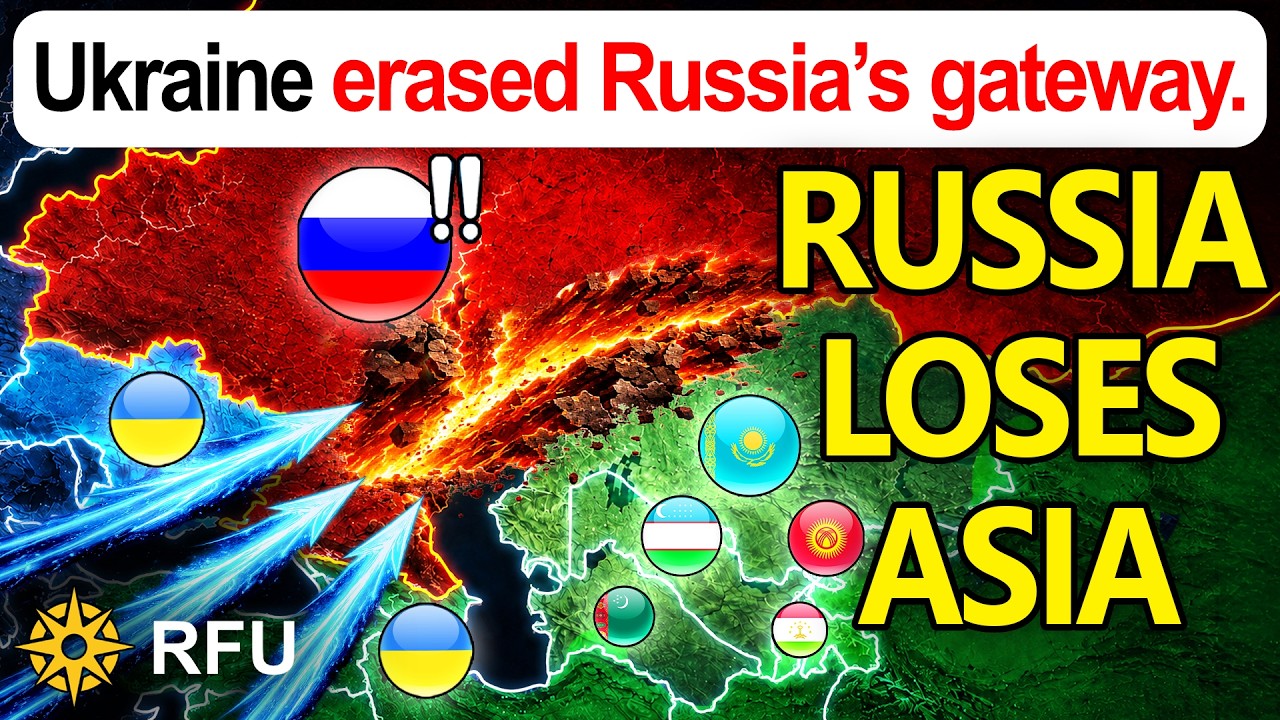
Unexpected: Ukraine cuts Russia off from Asia and breaks its eastern reach
Автор: RFU News — Strategic Geopolitics
Загружено: 2026-07-24
Просмотров: 119137
Описание:
💎 Special Offer: starting from just $4.99! Get 50% OFF full access to the map + exclusive strategic updates: https://www.rfunews.com/pricing
Ukraine has massively eroded the political and economic influence Russia built across Central Asia by disrupting the supply networks that made Moscow an indispensable regional partner. Russian analysts are warning that Ukrainian long-range strikes have damaged the refineries and transport infrastructure supporting exports, leaving Russia less capable of guaranteeing the fuel deliveries neighboring economies once treated as secure. Those deliveries kept regional economies dependent on Russian supplies and infrastructure, allowing the Kremlin to turn economic reliability into political leverage. After the ban on gasoline, kerosene, and diesel exports, Russia is rapidly losing control over one of its main sources of regional pressure, while every disrupted delivery gives neighboring governments another reason to reduce their exposure to Russia.
In the most extreme cases, Kyrgyzstan imports more than ninety percent of its gasoline from Russia, while Tajikistan obtains virtually all of its petroleum products and remains heavily dependent on Russian supplies. In June, Russian rail shipments of aviation fuel to Central Asia fell by more than ninety-two percent from the previous month, while gasoline deliveries declined by thirty-four percent. Some exports continued under pre-existing agreements, but those exceptions did not make Russian supply reliable again, as these countries have begun sharing in the Russian fuel crisis. Countries facing shortages are now buying fuel from Kazakhstan and other regional producers that are self-sufficient in their fuel production, creating contracts and transport networks that will remain in place even after Russian production recovers.
As a result, the damage will be difficult for Russia to reverse because Central Asian governments cannot base their economies on a supplier whose refineries remain vulnerable and whose own shortages come before deliveries abroad. Once another supplier has proven that it can keep vehicles moving and businesses operating, governments have little reason to return to the same level of dependence on Russia. The shift became clear when Russia began seeking roughly fifty thousand tons of gasoline from Kazakhstan. As such, it has become incredibly clear that a country that once supplied all of Central Asia and used this to its advantage was now asking to help cover shortages at home, weakening Moscow’s standing as the main energy provider.
Russia will lose far more than fuel sales as competing countries take over the commercial relationships and transport links that once carried Russian influence deeper into Asia. The oil-rich countries of Kazakhstan and Azerbaijan gain leverage when their fuel keeps neighboring markets supplied, while more regional trade crosses the Caspian Sea instead of moving north through Russia. The trade impact is already visible on the route between the Kazakh port of Aktau and the Azerbaijani port of Alat near Baku, where container traffic reached seven thousand four hundred fifty-one units in May, more than double the volume recorded during the same month one year earlier. Every shipment and every new purchase of oil gives Kazakhstan and Azerbaijan more income, attracts investment, and increases the capacity of a trade system that Moscow does not control. These connections also make regional governments harder for Russia to pressure because they no longer depend on a single route or supplier. Moscow must now compete for markets that once had few alternatives while spending more resources protecting the refineries and transport infrastructure required to keep its remaining exports moving.
Overall, Central Asia is moving toward a regional order in which Russia can no longer rely on fuel dependence and geographic isolation to preserve its dominance. Fuel contracts and Caspian trade routes are shifting steadily toward Kazakhstan and Azerbaijan, giving both countries a larger role in regional commerce. Even if Russia repairs its refineries, it will return to markets where trade, investment, and supply networks increasingly operate without it. Ukraine’s strikes are therefore turning Russia from Central Asia’s dominant economic partner into one competitor among several.
Повторяем попытку...
Доступные форматы для скачивания:
Скачать видео
-
Информация по загрузке: