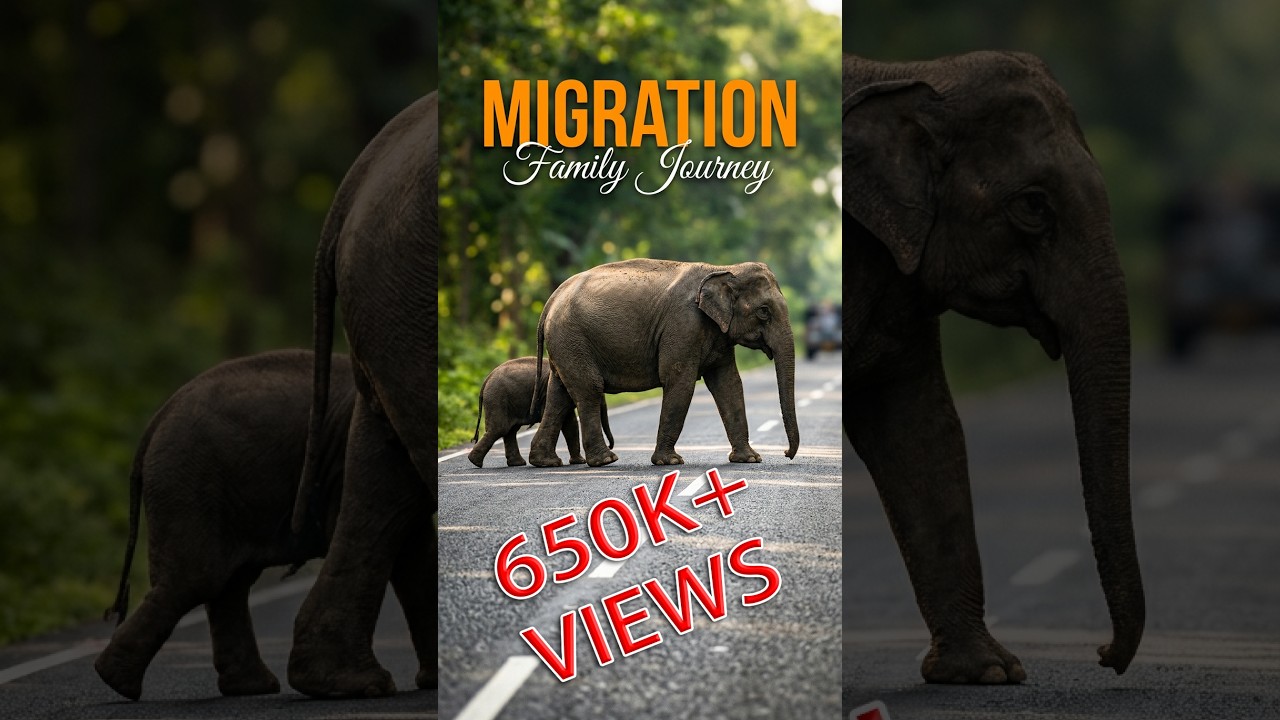
Elephant herd cross state highway during their migration.
Автор: The Wild Chronicles with Rahul Chakraborty
Загружено: 2026-08-21
Просмотров: 406175
Описание:
Wild elephant families frequently cross state and national highways as they traverse traditional, historic migratory corridors that intersect modern infrastructure. These seasonal movements are essential for finding food, water, and maintaining genetic diversity, but they put herds—including vulnerable calves—at high risk of vehicle collisions and human-wildlife conflict.
-------------------------------------------------------------------------------------------------------------------------------------------------
Why elephant migrate?
Elephants migrate mainly to find food, water, and safe spaces. They move across long distances to follow seasonal rains and fresh plant growth.
Main Reasons for Migration:
Finding Water: Herds travel long distances during dry times to reach lakes, rivers, or waterholes.
Seeking Food: They move to find fresh grass, leaves, and nutrient-rich plants.
Human Pressures: Loss of forests, farming, and building roads force elephants to move out of old habitats.
Generational Memory: The oldest female, called the matriarch, leads the group along ancient pathways she remembers.
-------------------------------------------------------------------------------------------------------------------------------------------------
Elephant what problems facing during migrate?
During migration, elephants face severe threats like blocked pathways from roads and farms, dangerous train tracks and busy highways, deadly electric fences, and a lack of food and water due to dry weather. These physical barriers force them into villages, leading to dangerous fights with people.
Main Migration Problems:
Blocked Paths: Roads, buildings, and large farms cut across old walking routes.
Accidents: Fast trains and cars on highways hit and kill migrating elephants.
Dangerous Fences: Electric wires set up by farmers cause painful shocks or death.
Hunger and Thirst: Dry land and missing plants make it hard to find meals.
Human Fights: Herds looking for food enter farms, causing angry responses from people.
-------------------------------------------------------------------------------------------------------------------------------------------------
Elephant what types of problems facing during migrate?
When elephants migrate, they face severe dangers because human development blocks their ancient paths. They struggle to find food and water as forests are cut down for farms and towns.
1.Physical and Infrastructure Barriers:
Roads and highways: Heavy traffic cuts off paths and risks truck collisions.
Railway lines: Trains hit and kill herds moving through low-visibility areas.
Fences and walls: Electric or metal fences trap herds and split family groups.
Canals and pipelines: Deep ditches block young calves and adults from crossing.
2. Human-Elephant Conflict:
Crop raiding: Hungry herds enter farms for food, leading to angry mobs and farmer retaliation.
Poaching and panic: Encounters with panicked villagers or poachers put elephants in mortal danger.
Electrocution: Unsafe power lines or illegal farm fences shock elephants to death.
3. Environmental and Resource Stress:
Water scarcity: Droughts dry up traditional water holes, forcing herds into dangerous populated zones.
Habitat loss: Fragmented forests reduce the vital nutrition and space growing herds need to survive.
-------------------------------------------------------------------------------------------------------------------------------------------------
How to maintain human elephant coexistence?
Maintaining human-elephant coexistence requires combining habitat protection, community-led local defense tools, early warning systems, and fair economic support for people living near wildlife areas. Cooperation between villagers and forest departments helps keep both people and elephants safe.
1. Protecting Habitats and Corridors:
Save paths: Keep traditional elephant travel routes open so animals can find food and water without walking through towns.
Restore forests: Plant native trees and improve water sources inside protected parks so elephants stay away from farms.
2. Using Safe Deterrents:
Solar fences: Build low-cost solar-powered fences around fields to block crop-raiding safely.
Natural deterrents: Use hanging beehive fences, loud noises, bright lights, or chili-based pastes that scare elephants without hurting them.
3. Supporting Local Communities:
Early warnings: Share fast text alerts or app notifications about nearby elephant movements.
Quick pay: Provide fast financial support or crop loss compensation for farmers so they do not retaliate against wildlife.
Повторяем попытку...
Доступные форматы для скачивания:
Скачать видео
-
Информация по загрузке: