The Indian Judiciary - Civics Chapter 3, ICSE Class 8, India's Judicial System Structure & Powers
Автор: Dohrao
Загружено: 2026-01-07
Просмотров: 18
Описание:
https://plz.in/c8civics3
The Indian Judiciary serves as the third pillar of democracy, tasked with interpreting laws, resolving disputes between citizens or government bodies, and acting as the final interpreter and guardian of the Constitution.
Operating under a single integrated system, the judicial hierarchy places the Supreme Court at the apex, followed by High Courts at the state level and subordinate courts in the districts.
The Supreme Court, led by the Chief Justice of India and 33 other judges appointed by the President, exercises extensive authority through its original, appellate, advisory, and revisory jurisdictions, including the power of Judicial Review to declare laws null and void if they contravene the Constitution. While Supreme Court judges retire at age 65, High Court judges - who oversee state-level matters such as marriage, divorce, and appeals from lower courts - retire at age 62.
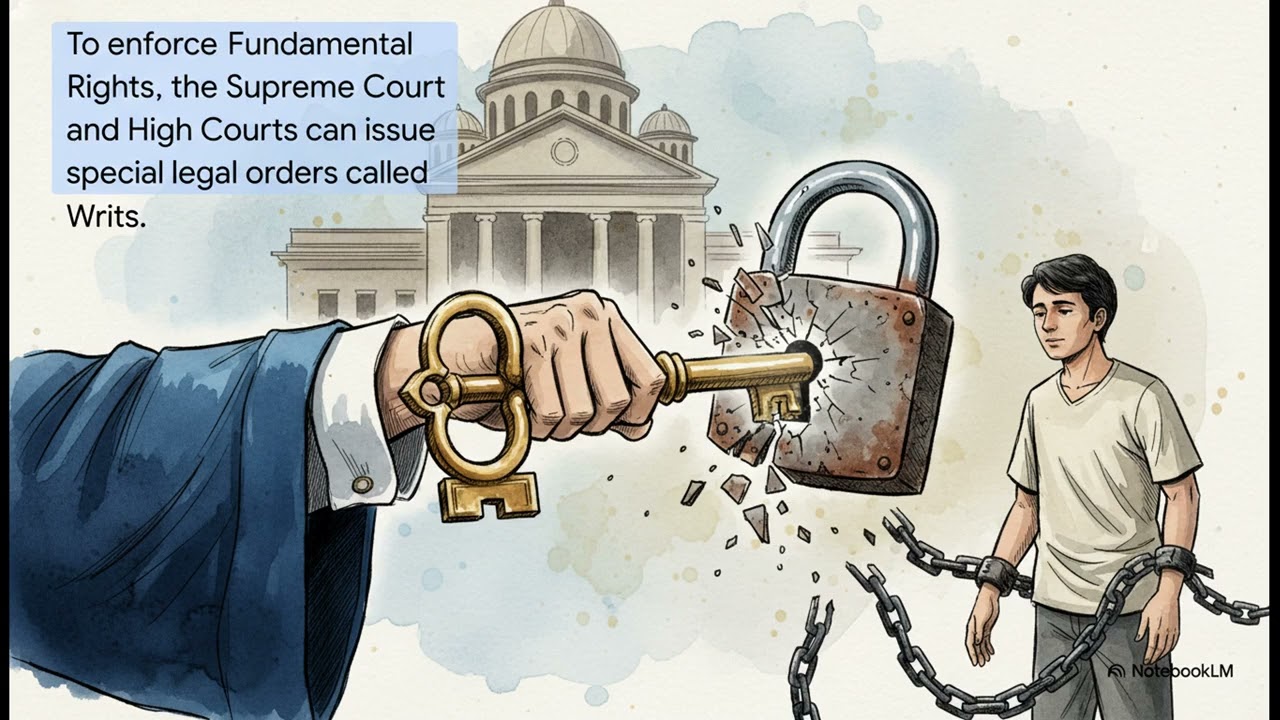
Both tiers of the superior judiciary function as Courts of Record, meaning their decisions are preserved as evidence and legal precedents, and they protect fundamental rights through the issuance of important writs such as Habeas Corpus and Mandamus.
Other Chapters from ICSE Class 8 Civics Book:
1. The Union Legislature: • The Union Legislature, India's Parliament ...
2. The Union Executive: • The Union Executive, India's Executive Bra...
3. The Judiciary: This chapter itself
4. Union Nations: • United Nations - Civics Chapter 4, ICSE Cl...
5. Agencies of the UN: • Agencies of the UN, UN's Super Agencies - ...
#dohrao #dohraoicseclass8 #dohraoicseclass8civics
Повторяем попытку...
Доступные форматы для скачивания:
Скачать видео
-
Информация по загрузке:


![[SpecPro] Special Writs - Writ of habeas corpus, habeas data, kalikasan (Video6)](https://image.4k-video.ru/id-video/VJOzeo_bwH4)


