Tide-Wrestling: How River Communities Harvest Nature's Driftwood Gold
Автор: Kona Beg
Загружено: 2026-04-02
Просмотров: 9572
Описание:
The Floating Forest: Salvage Economics on the World's Great Rivers
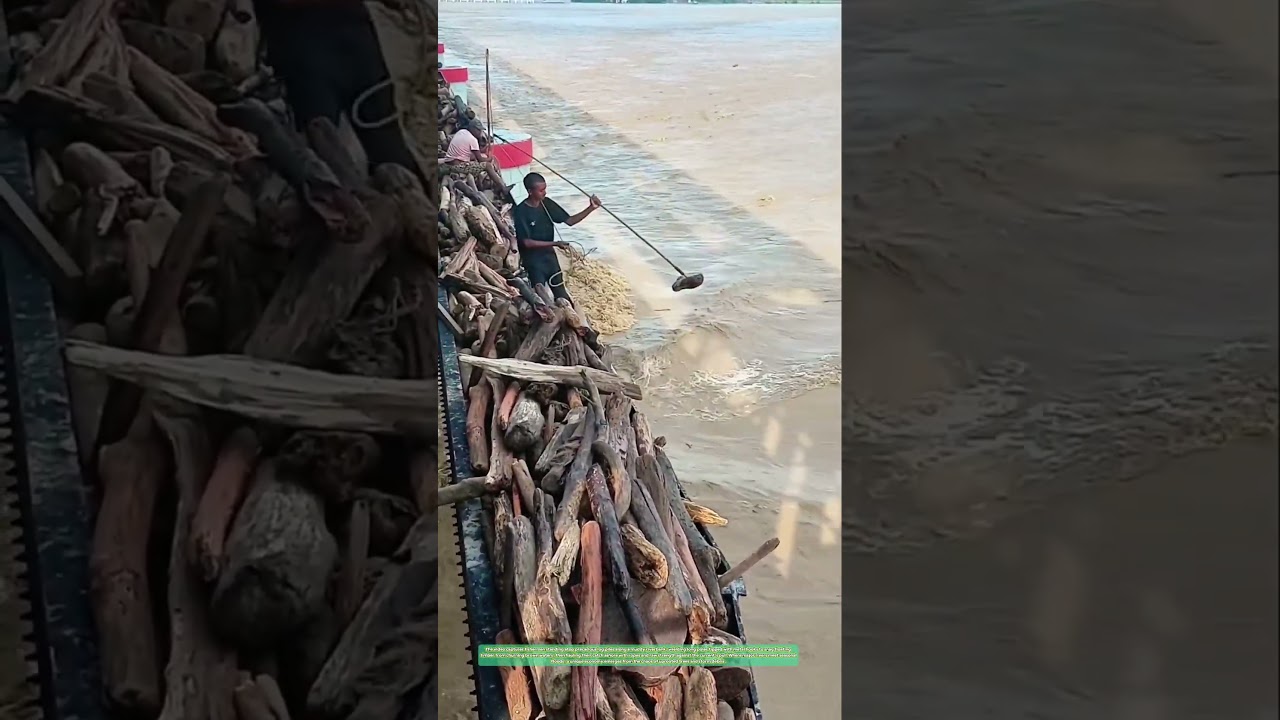
Where major rivers meet seasonal floods, a unique economy emerges from the chaos of uprooted trees and storm debris. This footage reveals a livelihood that predates industrial logging—river scavenging, where communities harvest the water's bounty of driftwood for construction, fuel, and artisan crafts. The practice remains vital across Southeast Asia, the Amazon basin, and the Ganges delta, where millions depend on free timber because legal forestry remains economically inaccessible.
The technique on display combines maritime and terrestrial skills in unexpected ways. The pole—essentially a harpoon modified for wood rather than fish—features a curved metal tip designed to catch under branches or bite into bark without splitting waterlogged grain. Operators must read the river's surface, identifying submerged shapes by subtle disturbances in current patterns. A floating log moves at water speed; the retrieval window closes in seconds as the object passes downstream.
What distinguishes this from casual beachcombing is the organized infrastructure. The stacked timber behind the workers represents days of accumulated labor, sorted by size and wood species. Hardwoods like teak and ironwood command premium prices for furniture making; softer varieties become cooking fuel or raw material for charcoal production. The red container visible in the background likely holds provisions for week-long harvesting expeditions, as prime driftwood events follow unpredictable flood schedules.
• Hydraulic Literacy: Experienced scavengers interpret water color, debris patterns, and current speed to predict where timber concentrates. Inside bends trap floating material; bridge pilings create natural collection points. This knowledge, passed through generations, functions as a form of applied fluid dynamics.
• Risk Calculations: The churning water hides submerged logs capable of crushing legs. Crocodiles and venomous snakes inhabit many driftwood rivers. The workers' bare feet on slick wood piles represent calculated risk—shoes provide protection but reduce the tactile feedback essential for maintaining balance on shifting surfaces.
• Property Ambiguity: Driftwood occupies legal gray zones. It escaped private land as flood debris, yet territorial claims emerge at collection points. The rope systems visible here—securing harvested logs to shore anchors—serve dual purposes: preventing loss and marking possession in contested spaces.
• Carbon Capture: Every ton of salvaged driftwood represents carbon diverted from atmospheric release. If left to decay in water, anaerobic decomposition produces methane; if burned for fuel, CO2 emissions still fall below those of fossil alternatives. Some communities specifically target hardwoods that sank during transport, ancient timber preserved in oxygen-poor river mud.
• Craft Continuity: The best pieces—gnarled roots, burls, naturally polished surfaces—supply a global market for rustic furniture and eco-tourism decor. A single sculptural root section might sell for 200 in urban galleries, though middlemen typically capture most value while harvesters receive pennies per kilogram.
The fishermen in this footage engage in what economists call "common pool resource extraction"—harvesting from systems no individual owns yet everyone depends upon. Their poles reach into waters that connect to oceans thousands of miles away, pulling up trees that may have grown in distant watersheds before floods liberated them. Each retrieved log writes a brief chapter in a longer story of erosion, transport, and eventual human reuse.
In an era of plastic pollution and synthetic materials, this river economy persists because it answers genuine needs with genuinely available resources. The strength required to wrestle a waterlogged tree from flood currents has not changed across millennia, even as the markets for the final product have transformed from local necessity to global aesthetic.
Повторяем попытку...
Доступные форматы для скачивания:
Скачать видео
-
Информация по загрузке: